17 SEP 2026 — Hang Ten Systems has raised $53 million five weeks after raising $32 million, led this time by Xora, the Singapore-based deep-tech firm backed by Temasek. The company was founded in May 2026 and has between twenty and twenty-five employees.
The company has raised $85 million for a consultancy with fewer staff than a mid-sized restaurant. The size of the round is less interesting than what it is betting on.
What the company sells
Hang Ten provides advisory and delivery work to large enterprises: AI strategy, software development and modernisation, migrations, and work in finance, analytics and human resources. Its founder is Vishal Sikka, formerly chief executive of Infosys, which is to say someone who has run one of the largest traditional services firms in the world and is now selling against it.
The pitch is the delivery model. Hang Ten builds on an in-house framework, Hobie, that packages reusable AI skills, and uses an AI-native model where agents generate most of the code. Sikka's claim is that this collapses the economics of the work: "The build part itself has basically become close to zero marginal cost, close to zero time."
Named customers are Fresenius Kabi, Saudi Aramco and Siemens Energy, out of a mix of twenty-one large enterprises, with multiple seven-figure contracts and eight-figure deals being pursued. The target client has revenue above $10 billion.
Why a Singapore fund led it
Xora is Temasek's early-stage deep-tech platform. Its managing partner and chief investment officer, Phil Inagaki, framed the thesis around the gap rather than the technology: enterprise AI adoption was being held back by implementation challenges, particularly the need to deploy systems securely, quickly and economically.
This is a services problem, not a model problem, which explains why a hard-technology fund is writing a cheque for a consultancy. The bet is that the bottleneck in enterprise AI has moved from model capability to project delivery.
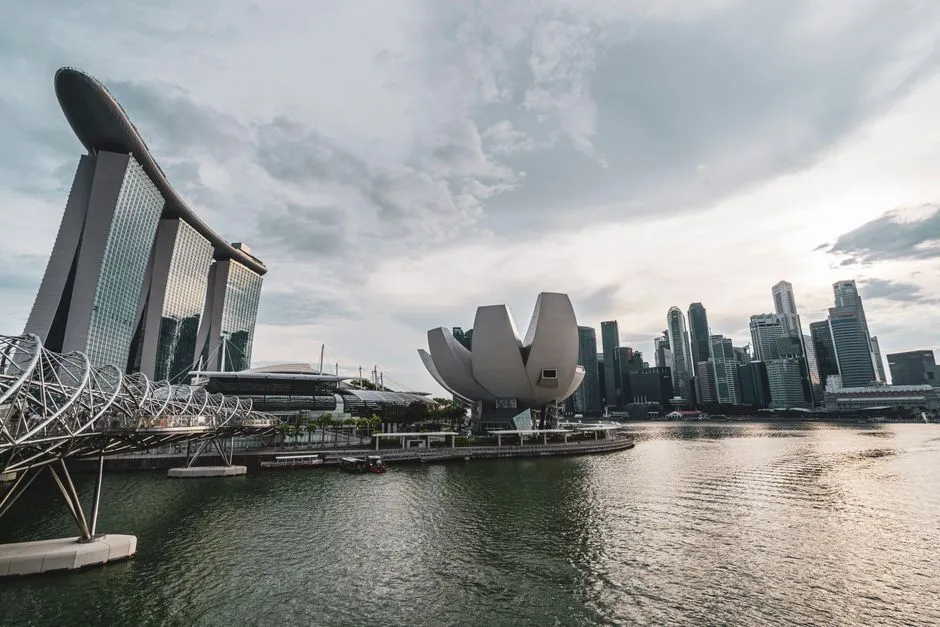
For this region, the detail that matters is the flow of capital. Singapore state-linked money is funding a Palo Alto firm whose customers are in the United States, Europe, the Middle East and Asia. Temasek has been building exposure to the AI supply chain for two years; this is a position in the layer that sells it to everyone else.
The staff are spread across the United States, the Middle East and Australia. For twenty-five people, that is less a global footprint than a map of where the first contracts are. Saudi Aramco is both a customer and, through Aramco Ventures, an investor, and the Middle Eastern presence follows from that rather than from a market entry plan. Sanjay Rajagopalan, who was at Infosys with Sikka, is co-founder and chief design officer.
The investor list is the signal
Alongside Xora and Mayfield, which led the first round, the register includes Aramco Ventures, Intel's chief executive Lip-Bu Tan, Micron's chairman and chief executive Sanjay Mehrotra, and Jerry Yang, who has joined the board.
A normal seed syndicate for a services company does not include two chip executives and an oil major's venture arm. These investors are the ones most likely to know early whether large enterprises are deploying AI or only budgeting for it, and their own businesses depend on the answer.
What the raise does not prove
Five weeks between rounds reads as momentum and can mean several things. A company signing seven-figure contracts in its first quarter is unusual, and the contracts are real. Advisory revenue, though, arrives quickly and says little about whether the delivery model works, because the hard part of enterprise software is the years after the build.
The zero-marginal-cost claim also deserves scrutiny. Even if agents generate most of the code, lowering the cost of writing software, the costs that dominate large enterprise projects remain. Changing requirements, integration with systems nobody documented, testing, compliance sign-off and the political work of getting anything into production do not obviously get cheaper. Nothing published so far shows a delivered programme where they did.
What to watch
Start with the eight-figure contracts. A seven-figure advisory engagement is a foothold; the multi-year programmes are where a delivery model is tested against the parts of enterprise work that resist automation.
Then headcount. A consultancy that stays at twenty-five people while contract value grows would be evidence for the claim. One that scales staff with revenue is the old model with better tooling, which is a fine business and a different one.
The regional question matters most here. The capital is Singaporean and the customer list so far is not. Whether Xora's involvement pulls engagements into Southeast Asia is the part that would register locally.
View author profile → · Editorial policy