SANTA CLARA, 11 AUG 2026 — AMD has agreed to buy Taalas, a three-year-old Toronto company whose chips do something the rest of the industry has spent a decade engineering around. They hold the model's weights in the silicon itself, etched at manufacture, instead of streaming them out of memory.
The deal, announced on 6 August for undisclosed terms, is expected to close in the fourth quarter subject to regulatory approval. The Register reports it is a full acquisition, not a talent hire.
What AMD says it is buying
AMD's own description is restrained. Taalas, it says, optimises inference by "building the hardware around the model", and its technology "optimizes inference dataflows, significantly reducing compute and memory bottlenecks associated with general-purpose architectures." The plan is to fold that into the accelerator roadmap and to build system-level products pairing it with AMD Instinct GPUs.
Taalas was founded in 2023 and is led by co-founder and chief executive Ljubisa Bajic. AMD frames the purchase around inference being, in its words, one of the fastest-growing segments of the AI market — the part of the workload that runs every time somebody uses a model, as opposed to the far smaller part that trains it once.
What the architecture actually does
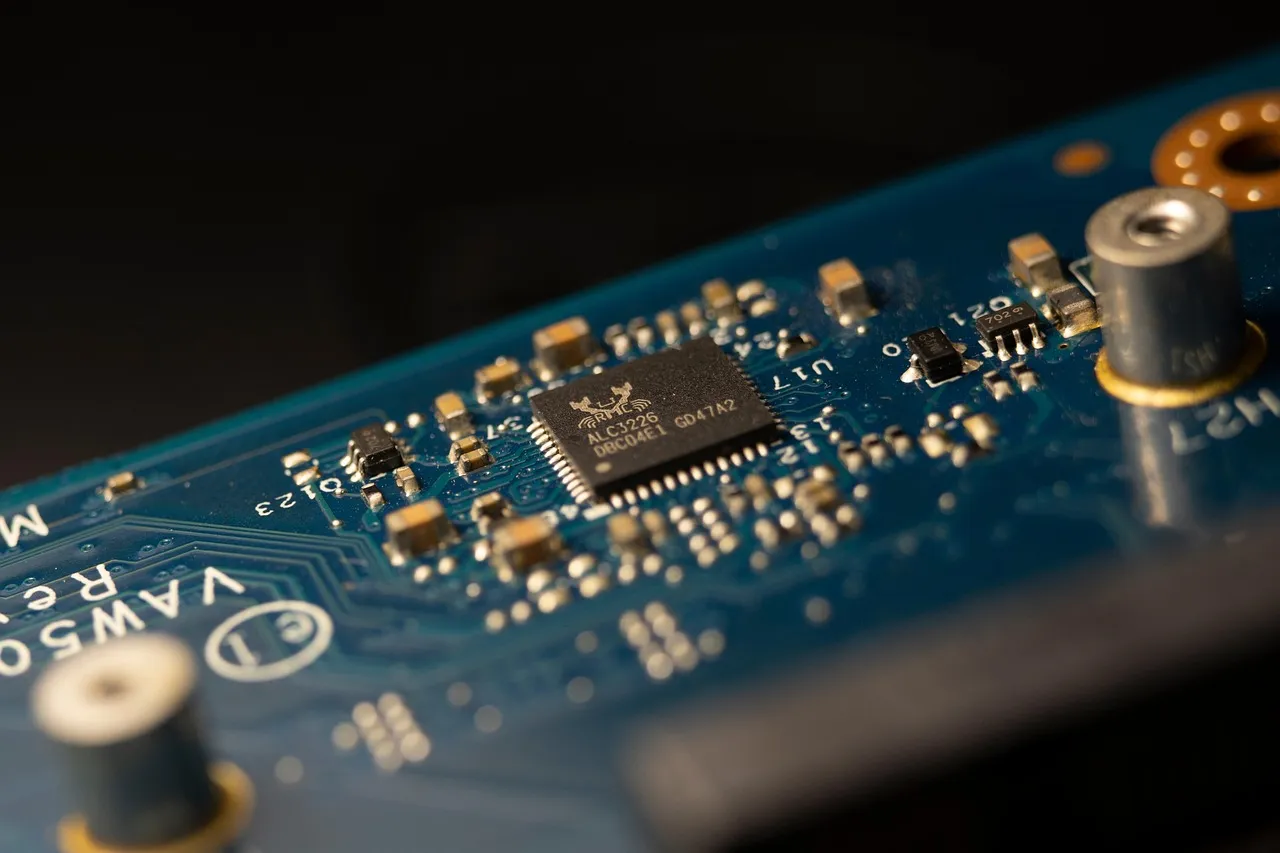
The technical description is more interesting than the press release. According to The Register, Taalas builds what it calls model-specific integrated circuits, or MSICs, and a chip has two regions: a mask-ROM fabric where the model weights are physically etched, and an SRAM fabric holding key-value caches and fine-tuning adapters.
Mask ROM is written once, during fabrication, by the photolithographic mask itself. It cannot be rewritten afterwards. Putting weights there removes the memory bandwidth problem by removing the memory: there is no fetch, because the values are the circuit.
| General-purpose accelerator | Model-specific IC | |
|---|---|---|
| Where weights live | High-bandwidth memory, fetched per token | Etched into mask ROM at fabrication |
| Changing the model | Load different weights | New mask, new chip |
| What stays flexible | Everything | KV cache and fine-tuning adapters, in SRAM |
| Cost of being wrong | Reallocate the hardware | A silicon re-spin |
Taalas has published performance figures for its HC1 part serving Meta's Llama 3.1 8B: 16,960 tokens per second, which the company put at 48 times an Nvidia GPU and 8.5 times a Cerebras accelerator at the time it announced them. Those are the company's own numbers, on its chosen model, and no independent benchmark has been published. The company has also argued that etching a model's weights into silicon costs about a hundredth of what training a frontier model does.
The bet underneath it
Strip away the throughput claims and the whole design rests on one assumption: that a model will stay useful long enough to be worth committing to a photomask.
Nothing about the last three years supports that assumption comfortably. Frontier models have been replaced on a cadence measured in months, and the open-weight releases that would be the obvious candidates for this treatment — Llama, Qwen, DeepSeek, Gemma — have iterated just as fast. The Register puts the constraint plainly: once the chips are deployed you are stuck with that model, and any change larger than a LoRA adapter needs a re-spin.
There is a reading in which that is fine. A great deal of production inference does not run on the frontier model at all. It runs on a small, older, cheap model doing one narrow job — classification, extraction, moderation, retrieval scoring, speech — where the workload is enormous, the accuracy requirement was settled a year ago, and nobody is itching to upgrade. If your traffic is a billion calls a day against an 8B model you have already tuned and validated, the case for burning it into silicon is a straightforward cost argument rather than an act of faith.
That is a real and large market. It is also not the market the AI industry talks about, and it is worth being clear that AMD has bought an option on the boring half of inference.
What it would take to be wrong safely
Every design that commits early trades flexibility for performance. The question is how it contains the failure.
The SRAM region is the hedge. Keeping key-value caches and fine-tuning adapters in writable memory means a deployed part can still be specialised after manufacture — a LoRA adapter is a small, low-rank update, and adapters are how most organisations customise an open-weight model in practice. A fleet of etched chips could plausibly be re-pointed at a new customer, a new domain or a new language without new silicon.
What it cannot absorb is a new base model. If the field moves to an architecture the mask does not implement, or a better model of the same size appears and the accuracy gap becomes commercially embarrassing, the chips do what they were built to do at a speed nobody wants any more.
That risk is a scheduling problem more than a technical one. Mask sets and fabrication run to months; open-weight model releases have been running faster. A design whose lead time exceeds the refresh rate of its payload is betting that the refresh rate slows down.
Why AMD, and why now
AMD is the second source in a market where the first source sets the price. Competing with Nvidia on general-purpose accelerators means competing with CUDA, and fifteen years of accumulated software gravity, on Nvidia's chosen ground.
Model-specific silicon sidesteps that. A chip that only runs one model does not need a general-purpose programming ecosystem, because there is nothing general to program. The moat that protects the incumbent does not extend to a part whose whole value proposition is that it does exactly one thing.
Whether it works is a separate question, and the answer will not arrive with this deal. AMD says it intends to integrate the technology into its roadmap and pair it with Instinct GPUs, which is the language of a component, not a product line. No shipping part, no date, no customer.
What to watch
The first thing worth knowing is which model AMD etches first, because that choice is the entire thesis stated out loud. An 8B open-weight workhorse says the company is going after high-volume commodity inference. Anything nearer the frontier would say something much more surprising.
The second is whether the re-spin problem gets an engineering answer rather than a marketing one. Splitting weights between etched ROM and writable SRAM already concedes that some of the model has to stay changeable. Where that line falls, and how much of a model can drift before the silicon is scrap, decides whether this is a product or a demonstration.
And watch the close. Terms were not disclosed, which for a company with roughly three years of history and a working part usually means the number would either flatter or embarrass somebody.

View author profile → · Editorial policy