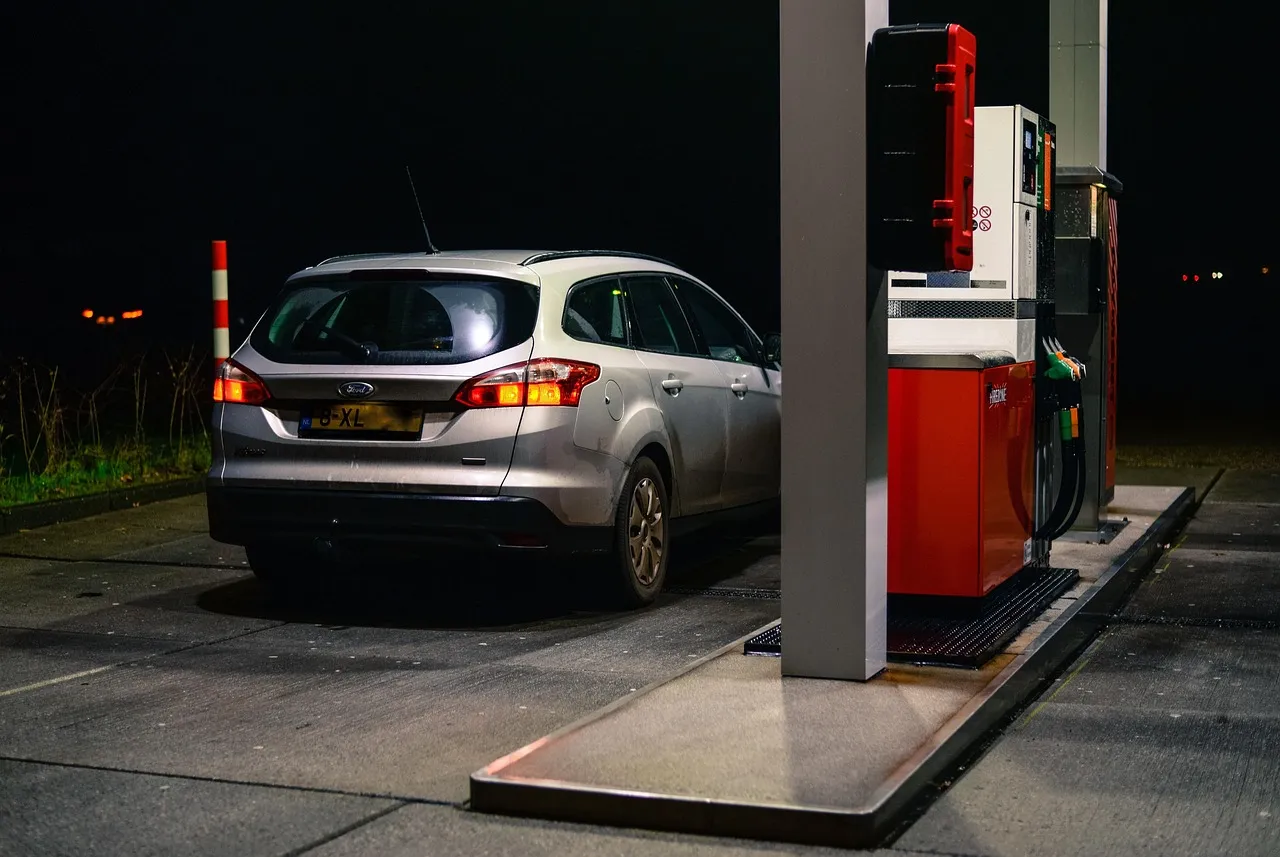
A driver from Kuala Lumpur lands in Los Angeles, pulls into a filling station and sees the grades posted as 87, 89 and 91. At home the choice is RON 95 or RON 97. The American fuel looks markedly worse.
It is not. American 87 corresponds to roughly 91 or 92 RON, and the gap to Malaysian RON 95 is about three or four numbers rather than the eight the pumps appear to show.
Two tests, and only one of them reaches the pump
Most people assume America measures octane differently. The real difference is not in the laboratory tests, but in which number gets printed on the pump. The same two laboratory methods are used on both sides of the Pacific: ASTM D2699 produces the Research Octane Number and ASTM D2700 the Motor Octane Number, both run on a variable-compression single-cylinder engine, the first under gentle conditions and the second under hot, fast ones.
What differs is which result is printed. Most of the world posts the RON alone. The United States posts the average of the two, and American regulation defines it arithmetically:
"the rating of the anti-knock characteristics of a grade or type of gasoline as determined by dividing by 2 the sum of the research octane number plus the motor octane number"
The number on an American pump is not a different measurement. It is a different quantity altogether, an average that includes a test result a Malaysian driver never sees.
The conversion, and why it cannot be a fixed offset
Because the American figure is the mean of the two results, the distance between the two conventions is exactly half the spread between them. That spread has a name — sensitivity — and for ordinary finished petrol it runs around eight to ten numbers, putting the posted figures four to five apart.
The United States Energy Information Administration puts 95 RON at 90 to 91 on the American scale and calls 98 RON comparable to a 93 American premium. A national laboratory's reference figures for American regular give RON 91 and MON 83, which average to the 87 on the sticker.
Writing this down as "add five to get RON" is tempting and wrong, because sensitivity is a property of the blend rather than a constant. Ethanol's own spread runs from twenty to twenty-nine. A rule of thumb built on ordinary petrol falls apart precisely where the blends differ, which in this region is most of them.
The yellow sticker has been explaining this for decades
The instruction is on every pump in the United States, in type whose size is prescribed to the half point:
"The line '(R + M)/2 METHOD' is set in 10 point Helvetica Bold, all capitals, with letterspace set at 10½ points."
A federal rule specifies the letterspacing of a sentence that tells every American driver their octane number is an average, and almost nobody reads it.
One ASEAN country writes it the American way
Philippine pumps post RON like their neighbours. Philippine law does not. The Clean Air Act of 1999 defines octane rating as the anti-knock index — the same sum divided by two — and sets a minimum of 87.5 on that scale for unleaded premium. A statute in South East Asia carrying the American convention is the sort of detail that survives in the law long after the forecourt has moved on.
What the number does not measure
Octane describes resistance to knocking, not the energy in the fuel. The two are frequently assumed to move together, but one blendstock makes the difference clear: ethanol rates 120 to 135 RON while carrying about 77,300 Btu per gallon against petroleum gasoline's 114,000. That is roughly a third less energy in the highest-octane component in the tank.
This distinction matters in a region moving towards ethanol blends. Vietnam replaced mineral RON 95 with E10 nationwide in June 2026, and Thailand is steering drivers to E20 by pricing it below the E10 grades. A higher blend is not a weaker fuel in knock terms, and it does hold less energy per litre.
When paying for the higher grade is not waste
The flat version of this advice — premium in an ordinary car is money burnt — is close enough to true that the American regulator sued over the opposite claim, finalising a settlement with Exxon in September 1997 and stating that most cars will not benefit from higher octane than the manual asks for.
That last part matters, and it is the part that usually gets dropped. The United States Department of Energy's own consumer guidance allows that higher octane may slightly improve performance and economy under severe duty — towing, heavy loads, hot weather — while giving little or nothing in ordinary driving. The mechanism explains the shape: a modern engine retards timing when its knock sensor hears detonation, so more headroom only buys something when the engine was knock-limited to begin with. It usually is not, which is why about nine in ten American cars are specified for regular.
The same sensor logic runs the other way too. Fill a car that wants premium with a lower grade and the engine compensates; the driver loses a little performance and economy and may never hear a knock.
Malaysia now has two prices for the same petrol
Since 30 September 2025 the RON 95 at a Malaysian pump has had two prices depending on who is buying. Eligible Malaysians under the BUDI95 scheme pay RM1.99 a litre; everyone else pays a floating unsubsidised price, RM4.37 in the week of 17 September 2026. The subsidised rate is capped by volume each month.
Any comparison of regional fuel costs that quotes one of these two numbers without the other is wrong for half the population. The fuel is identical; who buys it determines the price.
Four things that read as octane facts and are not
The Euro 4M and Euro 5 labels describe sulphur, benzene and volatility limits, not octane. The octane rating is specified separately.
Vietnam's RON95-III and RON95-V are both RON 95; the roman numeral is the emission standard the fuel meets, not a higher grade.
The 95 is not a count of anything in the molecule. It is the percentage of isooctane in the reference blend whose knocking behaviour matches the fuel under test.
And Indonesia's Pertalite at RON 90 sits below American regular once converted, to around 85 or 86 on the American scale. This makes it the lowest mainstream grade in the region, not a mid-tier one.
Sources, and the parts that are softest
The arithmetic definition and the sticker typography are from the United States Code of Federal Regulations, title 16 part 306, read from the Government Publishing Office's 2023 annual edition; the live regulations site refuses automated requests, so the ASTM revision years cited there should be re-checked against the current text. The conversion figures, the ethanol properties and the fleet share are from the Energy Information Administration's analysis of gasoline octane costs. The knock guidance is from the Department of Energy's fueleconomy.gov and the settlement from the Federal Trade Commission's own announcement. Malaysian prices are from the Ministry of Finance and the national statistics department's fuel price dataset, with the current week's figures from national news agency reporting of the ministry's weekly release.
Two of the sources are weaker than the rest. The Philippine statutory text was read from a legal library rather than a government site, because all three official copies refused the request; the section numbers should be confirmed against an official print before anyone relies on them. And the Thai and Indonesian grade figures rest on regional press rather than on the energy ministries themselves, which is also why one widely repeated claim — that Thai E20 reaches 98 or 99 octane — is left out here: the specification says not less than 95, and the higher figure appears to be a garbling. All sources were read on 18 September 2026.

View author profile → · Editorial policy