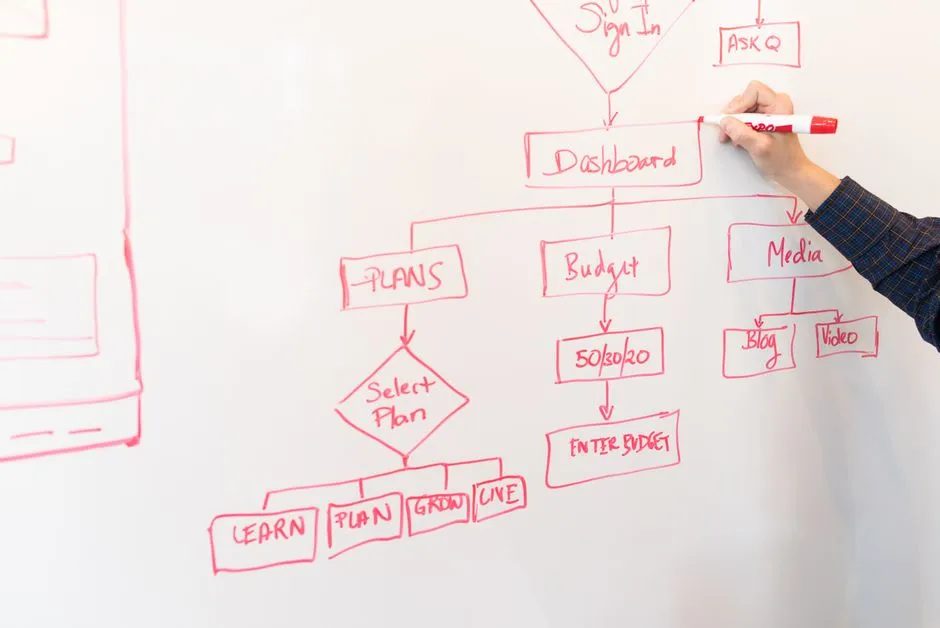
Visual AI workflow builders give you a drag-and-drop canvas for connecting LLM calls, tools, and data sources into a flow you can ship as an API, chatbot, or scheduled automation. Four projects dominate the category in 2026: n8n, Dify, Langflow and Flowise — all in the top 20 of our traction leaderboard, all self-hostable, and all speaking the Model Context Protocol in both directions.
The canvases look alike, but the legal realities do not: one is an MIT project owned by IBM, another an Apache-core project owned by Workday, a third has a source-available license, and the last is not open source at all. Pick on screenshots alone and you can end up with the wrong license for your business model.
This guide is for automation leads adding AI to business workflows, engineers building LLM apps with retrieval, and agencies weighing what they may legally host for clients. Almost every figure below comes from the projects' own sites, docs, license files and release pages, or from our own traction data — the few secondary-sourced items are flagged where they appear.
n8n: general automation that grew an AI layer
n8n is the broadest tool here — a general-purpose workflow automation platform whose integrations page lists "1953 integrations" and over 10k workflow templates (n8n.io, 20 Jul 2026). Its AI layer is built on LangChain-based nodes: the docs describe an agent as "a chain that knows how to make decisions," shipped as one Agent node that changes behaviour with its settings. MCP works in both directions per the docs — an MCP Server Trigger node exposes n8n workflows to MCP clients over SSE and streamable HTTP, and an MCP Client Tool node lets n8n agents call external MCP servers. A dedicated Evaluation node handles outputs, metrics and eval-aware branching.
Cloud pricing was displayed in euros at access: Starter €20/month billed annually (2.5k executions), Pro €50/month (10k executions), Business €667/month (40k executions, SSO, environments), Enterprise custom. Billing counts full workflow executions, not steps. Self-hosting via Docker is free under the Sustainable Use License with no execution limits; n8n publishes no minimum CPU/RAM figures on the hosting docs we checked.
n8n is the only one of the four still independent. It announced a $180M Series C on its own blog, and it ships fast: the stable release at access was [email protected], published 20 Jul 2026, with stable minors landing roughly weekly.
Dify: the LLM-app platform with the deepest RAG story
Dify, from LangGenius, Inc., positions itself as "The Platform for Production-Ready Agentic Workflows" — less a general automation tool, more a full LLM-app platform: visual workflows, an agent framework, publishing, APIs and observability in one system. Its RAG feature, the Knowledge Pipeline, lets you "extract, clean, chunk, index, and test retrieval" before a knowledge base goes live, ingesting files, websites, online documents and drives (dify.ai). Version 1.16.0, released 17 Jul 2026, added Dify Agent (Beta) with sandboxed execution. MCP runs both ways per the docs: Dify consumes external MCP servers as tools (HTTP transport only) and publishes Dify apps as MCP servers for clients such as Claude Desktop and Cursor. Model providers install as plugins from the Dify Marketplace; no official plugin count is published, so we will not quote one.
Cloud pricing: a free Sandbox (200 message credits, 1 member, 5 apps, 30-day logs), Professional at $590/year and Team at $1,590/year, plus custom Enterprise. The self-hosted Community Edition is free with a single workspace. Note the footprint: Dify's docs ask for at least 2 CPU cores and 4 GiB RAM, and the default Docker Compose stack runs 15 containers — comfortably the heaviest deployment of the four. Releases arrive roughly fortnightly to monthly.
Langflow: MIT-licensed, Python-native, IBM-owned
Langflow calls itself a "low-code AI builder for agentic and RAG applications" — an open-source, Python-based framework with drag-and-drop components and a Playground for real-time testing. It is the Python-native option (n8n and Flowise are TypeScript/Node), so flows can be run as a Python dependency or served over an API, and it sits closest to the LangChain ecosystem — if you are weighing that ecosystem itself, see our LangChain vs LlamaIndex vs LangGraph guide. The docs state MCP support in both directions: connecting to external MCP servers and exposing Langflow as an MCP server. It claims "hundreds of pre-built flows and components" and support for all major LLMs; no precise integration count is published. Unlike n8n and Flowise, no first-party evaluations product is documented on the pages we checked.
Two things stand out. First, the license: plain MIT, the only fully OSI-approved, unrestricted license among the four. Second, the pricing: there is no public paid Langflow tier — the site advertises a free cloud account and a free Desktop app, with enterprise routes running through IBM/DataStax offerings rather than a Langflow price list. Self-hosting is the lightest here: Python 3.10–3.14, a minimum of a dual-core CPU with 2 GB RAM, 4 GB recommended.
Ownership: DataStax acquired Langflow in 2024; IBM announced its acquisition of DataStax on 25 Feb 2025, committing in its release to keep supporting the Langflow community, and industry press reported the deal closed in May 2025. One caution from Langflow's own release notes: v1.10.1 shipped "multiple critical security fixes," including protections against code injection and authentication bypass — do not expose an unauthenticated Langflow instance to the internet. Latest stable at access: v1.10.2, 7 Jul 2026.
Flowise: the lightweight agent builder, now inside Workday
Flowise's tagline is "Build AI Agents, Visually." The docs describe three builders at different altitudes: Assistant (beginner-friendly agents with tools and RAG over uploaded files), Chatflow (single-agent chatbots with Graph RAG, rerankers and retrievers) and Agentflow, "the superset of Chatflow & Assistant," for multi-agent orchestration. MCP is covered with "MCP client/server nodes, tool listing, SSE, auth support," and evaluations are first-class: datasets, evaluators and evaluation runs, plus execution logs, visual debugging and Prometheus/OpenTelemetry support. Integration claims are the smallest of the four: "100+ LLMs, Embeddings, Vector DBs" and 100+ sources and tools.
Cloud pricing on the homepage: Free at $0, Starter at $35/month, Pro at $65/month, Enterprise by contact. One caveat we must flag: the per-tier prediction and storage limits sit behind a cloud sign-in, so we cannot cite official numbers for what each tier includes — check before you commit. Self-hosting needs NodeJS 20+ (npm install -g flowise and a start command), with no published minimum hardware specs. The core is Apache 2.0; the enterprise directory is commercially licensed.
Workday announced its acquisition of Flowise on 14 Aug 2025 (terms undisclosed), framing it as the agent builder for the Workday platform. The product continues — cloud tiers are still sold — but the cadence is the slowest here: the latest release, [email protected], landed 25 Jun 2026, about four weeks before our access date.
License accuracy: what you may actually do
The marketing and the legal text diverge, so the actual LICENSE file from each repo (as of 20 Jul 2026) is what matters.
| Project | License | Status | What it actually means |
|---|---|---|---|
| n8n | Sustainable Use License v1.0 (+ Enterprise License for .ee. files) | Fair-code, not open source | n8n's own docs say it: OSI licenses cannot restrict use, "so we do not call ourselves open source." Internal commercial use IS permitted — a company may run n8n for its own business automation free of charge. What is restricted is redistribution and resale: white-labelling n8n or hosting it as a paid service for others requires an enterprise license. |
| Dify | "Dify Open Source License" — modified Apache 2.0 | Apache 2.0 with conditions | Two added conditions: no multi-tenant operation (one tenant = one workspace) without written authorisation, and the Dify logo and copyright notices in the console may not be removed or modified. Commercial single-tenant use is otherwise permitted. The additions mean it is not OSI-approved Apache 2.0 despite the name. |
| Langflow | MIT | OSI open source | Unrestricted: use, modify, resell, host for clients, single- or multi-tenant. The only license here with no strings attached. |
| Flowise | Apache 2.0 core + commercial license for the enterprise directory | Core is OSI open source | Everything outside the enterprise directory is genuine Apache 2.0, including commercial hosting. Enterprise features (the files under that directory's own commercial LICENSE.md) are proprietary. |
Head-to-head: the feature table
| Fact | n8n | Dify | Langflow | Flowise |
|---|---|---|---|---|
| License | SUL v1.0 | Modified Apache 2.0 | MIT | Apache 2.0 core |
| Cloud entry point | €20/mo Starter (annual), 2.5k executions | Free Sandbox; Professional $590/yr | No public paid tier (free cloud) | $0 Free; Starter $35/mo (limits behind sign-in) |
| Agents | Yes — one configurable Agent node (LangChain-based) | Yes — agent framework; Dify Agent (Beta) in v1.16.0 | Yes — built-in agent components | Yes — Agentflow multi-agent orchestration |
| RAG / knowledge base | Via AI nodes and vector-store integrations | Knowledge Pipeline: extract, clean, chunk, index, test retrieval | Agentic + RAG apps are the headline use case | RAG over uploads; Graph RAG, rerankers, retrievers |
| MCP | Client + server (SSE, streamable HTTP) | Client + server (HTTP transport only) | Client + server | Client + server (SSE, auth) |
| Integrations (own claims) | "1953 integrations"; +10k templates | Plugin marketplace, no public count | "Hundreds of pre-built flows and components" | "100+ LLMs, Embeddings, Vector DBs" |
| Self-host min specs | Not published | ≥2 cores, ≥4 GiB RAM, 15 containers | Dual-core, 2 GB RAM min (lightest) | Node 20+; no specs published |
| Version at 20 Jul 2026 | 2.30.8 (20 Jul) — ~weekly | v1.16.0 (17 Jul) — fortnightly-monthly | v1.10.2 (7 Jul) — every 2–4 weeks | 3.1.3 (25 Jun) — slowest cadence |
| Owner | Independent ($180M Series C, own blog) | LangGenius, Inc. | IBM, via DataStax | Workday (Aug 2025) |
The ASEAN angle: no APAC clouds, so self-hosting is the path
None of the four offers an APAC cloud region. n8n's own security page states that the hardware and data behind n8n Cloud are hosted in the European Union on Microsoft Azure, and Dify's documentation states that Dify Cloud user data is stored on AWS servers in the US-East region. Langflow and Flowise publish no cloud data-region information at all. For teams in Singapore, Malaysia, or Indonesia with data-residency obligations under PDPA or GDPR, the only realistic route is self-hosting. All four self-host free of platform fees, and Langflow's 2 GB minimum makes even a small regional VPS viable. (For how these vendors handle your data more broadly, see our AI tool company data-safety guide.)
For agencies and systems integrators, the license is the deciding factor. n8n's Sustainable Use License prohibits hosting for multiple clients without an enterprise deal; Dify's multi-tenant clause requires written authorisation. Langflow's MIT license and Flowise's Apache 2.0 core permit it outright. If client hosting is your business model, that single fact may decide the comparison for you.
How to choose
General business automation with AI sprinkled in: n8n
If most of your workflows are "when X happens in one SaaS, do Y in another" and AI is one step among many, n8n's 1953 integrations and template library are unmatched here, and per-execution pricing keeps multi-step flows cheap. The trade-off is the fair-code license: fine for internal use, a blocker for resale.
An LLM-app platform with RAG and observability: Dify
When the product IS the AI app—a support assistant over your docs, an internal knowledge tool—Dify is the most complete platform here, with its Knowledge Pipeline, publishing surface, and tiered observability. Budget real hardware for its 15-container stack, and respect the single-workspace limit on the free Community Edition.
LangChain-ecosystem prototyping in Python: Langflow
If your team writes Python and lives near the LangChain ecosystem, Langflow is the natural canvas: MIT-licensed, lightest to run, and flows drop into Python code. Keep instances authenticated, and note there is no documented evaluations product or paid support tier outside IBM channels.
Lightweight LLM orchestration on a budget cloud: Flowise
If you want a visual agent builder running this afternoon on a $0 or $35 tier, Flowise's three-builder ramp from Assistant to Agentflow is the gentlest on-ramp, and its Apache core is agency-friendly. Accept the slowest release cadence of the four and unpublished cloud tier limits, and watch how Workday steers the roadmap.
FAQ
Are these tools actually open source?
Two and a half of four. Langflow is MIT and Flowise's core is Apache 2.0 — both OSI-approved. Dify's modified Apache 2.0 adds multi-tenant and logo-retention conditions, so it is not OSI open source despite the branding. n8n's own docs say it plainly: "we do not call ourselves open source" — though free internal commercial use is explicitly allowed.
Can I run them in Docker on a laptop?
All four ship Docker installs. Langflow is the easiest fit (2 GB RAM minimum, or the free Desktop app for macOS 13+/Windows); n8n and Flowise publish no hard minimums. Dify is the stretch: 15 containers, 2 cores and 4 GiB RAM per its docs — on a Mac, a VM with 2 vCPU and 8 GiB.
Which should I use for a Telegram or WhatsApp chatbot?
n8n is the pragmatic pick: multi-service plumbing is its home turf, and the Agent node adds the AI brain in the same flow. Dify or Flowise make sense when the bot's value is retrieval over your documents — build the RAG app there, then connect the channel via its API.
Do visual builders replace coding?
No. They compress the plumbing — auth, retries, model wiring — but real deployments still need code for custom logic and testing, and self-hosting means operating servers and security patches (Langflow's v1.10.1 critical fixes are the reminder). Treat them as accelerators for engineers, not substitutes.
- n8n LICENSE.md — GitHub, n8n-io/n8n (accessed 20 Jul 2026)
- Sustainable Use License — n8n Docs (accessed 20 Jul 2026)
- Pricing — n8n.io (accessed 20 Jul 2026)
- Series C announcement — n8n Blog (accessed 20 Jul 2026)
- MCP Server Trigger node — n8n Docs (accessed 20 Jul 2026)
- Dify Open Source License — GitHub, langgenius/dify (accessed 20 Jul 2026)
- Pricing — Dify.AI (accessed 20 Jul 2026)
- Deploy with Docker Compose — Dify Docs (accessed 20 Jul 2026)
- Publish as MCP server — Dify Docs (accessed 20 Jul 2026)
- MIT License — GitHub, langflow-ai/langflow (accessed 20 Jul 2026)
- Installation — Langflow Docs (accessed 20 Jul 2026)
- IBM to acquire DataStax — IBM Newsroom (accessed 20 Jul 2026)
- Flowise LICENSE.md — GitHub, FlowiseAI/Flowise (accessed 20 Jul 2026)
- Flowise documentation — docs.flowiseai.com (accessed 20 Jul 2026)
- Workday acquires Flowise — Workday Newsroom (accessed 20 Jul 2026)
- Security — n8n (Cloud hosted in the EU on Microsoft Azure) (accessed 20 Jul 2026)
- Dify Cloud — Dify docs (user data on AWS US-East) (accessed 20 Jul 2026)
- n8n releases — GitHub (Dify, Langflow and Flowise release data checked likewise via the GitHub API) (accessed 20 Jul 2026)

View author profile → · Editorial policy