South Korea has an official system for writing Korean in Latin letters. It was revised in 2000, it is used on road signs and station names across the country, and it is precise enough that you can apply it by hand once you know the rules.
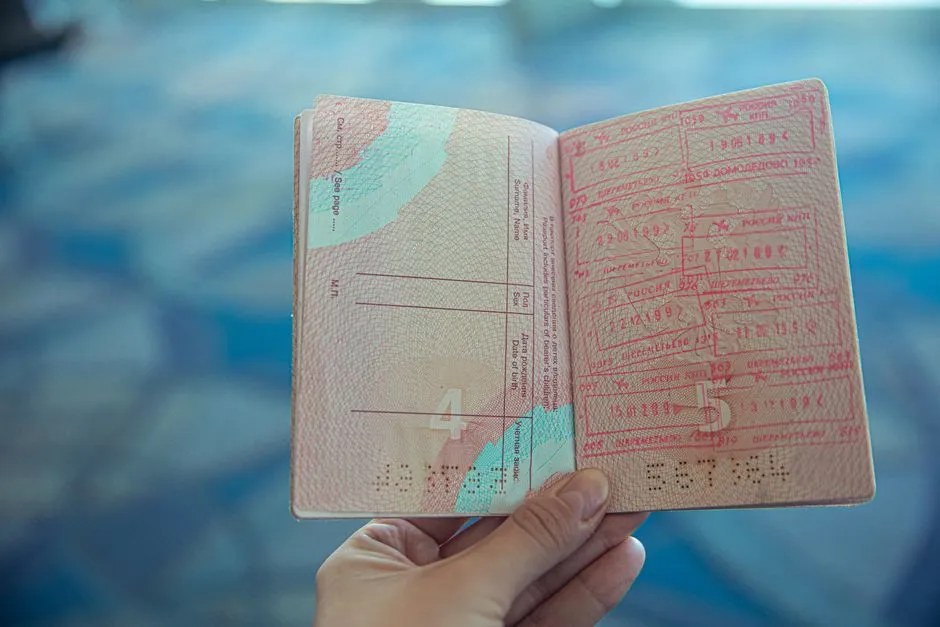
Apply it to the four most common surnames and you get Gim, I, Bak and Choe. Almost nobody writes them that way. The passports say Kim, Lee, Park and Choi.
The usual explanation — that custom has simply overridden the rule for surnames — is incorrect. Surnames are not exceptions to the standard. They were left outside it, deliberately, and the rule that was supposed to cover them was never issued.
The clause that deferred the problem
When the romanisation system was set out in 2000, the treatment of surnames was held back with a provision to the effect that it would be determined separately. The reasoning was practical rather than linguistic. Spellings like Kim and Park were already fixed in passports, in academic citations, in company registrations and on decades of published work. Requiring Gim and Bak would have meant either invalidating those or maintaining two spellings of the same name indefinitely.
The standard therefore declined to legislate, on the understanding that a separate rule would follow.
It was attempted twice, and neither attempt took effect
This part of the history changes the character of the gap. The National Institute of Korean Language did not leave the question alone. It published proposals for unifying surname romanisation in 2002, and again in 2009.
Both remained drafts. Neither was enacted. Twenty-six years after the deferral, the separate rule the standard anticipated still does not exist.
A gap left by neglect might close at any time. One that has survived two serious attempts to close it points to the real difficulty — that the cost of standardising is borne by living people with existing documents, and that no formulation has yet made that cost acceptable.
What this means when a system asks for "the correct spelling"
The practical consequence is that for a Korean surname there is no single correct romanisation to appeal to, and a form that asks for one is asking a question the standard does not answer.
Place names are different. Busan is Busan because the standard says so; the old spelling Pusan is superseded. For a surname there is no equivalent authority: Lee, Yi and Rhee are all in current lawful use by different families, and none of them is the standard form, because there is no standard form.
Three consequences follow for anyone handling this data.
Treat the spelling on the document as authoritative, always. It is not an approximation of a correct answer that exists elsewhere.
Do not normalise surnames. A system that "corrects" Rhee to Yi, or maps every 이 to Lee, is destroying a distinction its owner chose and may have held across generations. Families that emigrated at different times often romanised the same surname differently, and those differences are now load-bearing in documents.
Do not treat two spellings as evidence of two people, or one spelling as evidence of one. Deduplication on romanised Korean surnames is unreliable in both directions, and it is unreliable for a reason that will not be fixed by a better algorithm.
The same name, spelled differently on purpose
The variation the gap permits is wide. The surname written 이 in Hangul appears in the wild as Lee, Yi, Rhee and Ri. The one written 박 appears as Park, Pak and Bak. The one written 최 appears as Choi, Choe and Chwe.
None of these is a misspelling. They are different romanisation traditions — some following older systems, some following English orthographic intuition, some inherited from how a family's documents were first written abroad. Our Korean name generator works from Hangul for exactly this reason: the Hangul is the stable form, and any Latin spelling is a choice made downstream of it.
Why the official forms did not win
This might look like institutional weakness.
The standard governs how the language is written in Latin letters. A surname is language, and it is also an identifier attached to documents, property, qualifications and family records. Changing how it is spelled reaches an identifier that other systems have already recorded.
A standards body can revise how a station name is signposted at essentially no cost. It cannot revise a surname without reaching into passports and land registries held by millions of people who did not ask for the change and who gain nothing from it. That asymmetry, rather than any failure of drafting, is the reason two proposals stalled.
The registration rules are a separate question
None of this concerns what a Korean name may contain. That is governed by the family register and the list of characters permitted in given names, which has been expanded repeatedly and carries its own length limits — a different body of rules with a different history, which we have covered separately.
This guide is only about the Latin spelling, and specifically about the fact that the authority which would settle it has, twice, declined to.
Where this comes from, and what will date
The romanisation system and its deferral of surnames are from the revised standard of 2000 and commentary on it; the two unification proposals are those of the National Institute of Korean Language in 2002 and 2009, both of which remained drafts.
One figure is deliberately absent. A frequently cited statistic gives the share of Kim, Lee and Park holders who use the standard-conformant spellings as a very small percentage, and it traces to a 2009 study we have not read in the original. It would have been the most quotable number here, which is precisely why it is not in the guide.
What would date this: enactment of a surname rule. If that happens, the deferral described here closes and the guide is superseded. Nothing else here is time-sensitive — the variation in existing documents is fixed, and would survive a new rule in any case, because documents already issued do not re-spell themselves.