
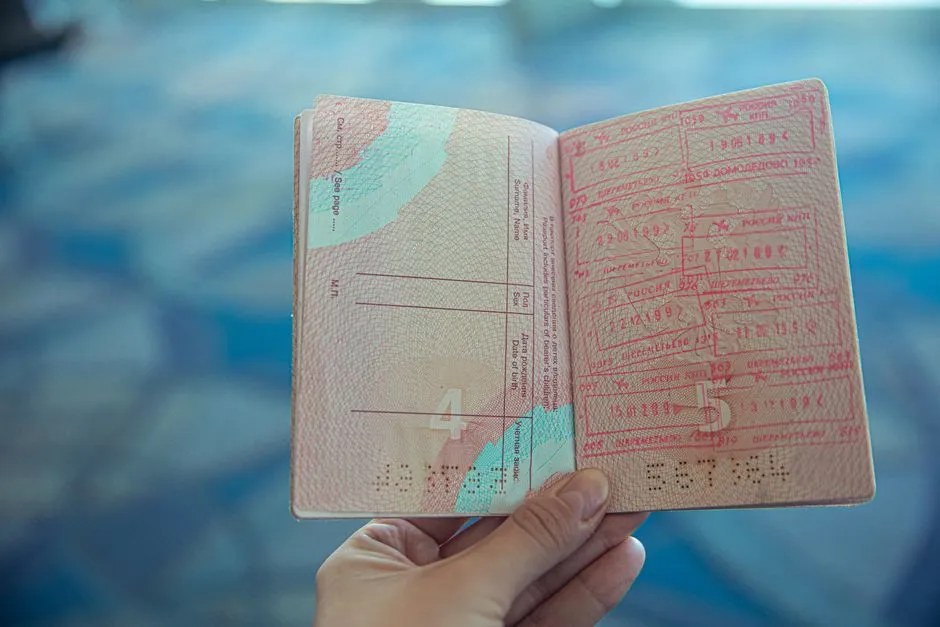
Millions of people have one name. It is normal in Indonesia, common in parts of Malaysia and Myanmar, and found in India, Afghanistan and elsewhere. It is also, routinely, treated by booking systems and border desks as an error to be corrected — usually by inventing something to put in the empty box.
The most common invention is FNU, for "first name unknown". It appears on visas, on airline records, sometimes on the identity documents of people who have lived their whole lives with one name. That convention is not in the standard that governs travel documents.
What the standard actually says
Machine-readable passports are specified by ICAO Doc 9303. Part 3 covers the specifications common to all machine-readable travel documents, and its section on writing the holder's name divides that name into two parts: a primary identifier and a secondary identifier.
The primary identifier is usually the family name. But the document is explicit that it does not have to be. The issuing state decides which part of the name is primary, and the standard lists what that may be — the family name, the maiden or married name, the main name, the surname, and in some cases, in its own words, "the entire name where the holder's name cannot be divided into two parts".
That clause settles it. A single name is not an incomplete two-part name. It goes in the primary identifier field, entire, and there is no second part because there is nothing to divide.
The machine-readable zone at the foot of the page follows the same logic. The rule for filler characters says they are inserted after the final secondary identifier — or, again in the document's own words, "following the primary identifier in the case of a name having only a primary identifier". The specification anticipates the single name and tells the encoder exactly what to do with it.
FNU is not in the document
We searched the full text of Part 3 for FNU, for "first name unknown", for "no name", and for "unknown name". None of them appear. The only occurrence of a string of X characters is a date mask, not a name placeholder.
This is a claim about a specific document. Part 3 is the part that specifies how names are written and encoded across all machine-readable travel documents, so if a placeholder convention were part of the standard, that is where it would live. It is not there.
FNU is not a deprecated or misapplied ICAO rule. It is a convention invented by downstream systems — databases and forms that require a non-empty given-name field — and then propagated as other systems copied it.
Why the invention causes real trouble
A placeholder becomes data. Once FNU is written into a booking, a visa record or a loyalty account, it is a name as far as every later comparison is concerned.
The immediate problem is a mismatch. Airlines and border systems check that the name on a ticket matches the name on the document. If the passport carries a single name in the primary field and the booking carries FNU as a given name, the two records disagree — and the disagreement was manufactured by the system that demanded the placeholder, not by the traveller.
A subtler failure occurs when systems duplicate the single name into both fields, so a person named Suryadi becomes Suryadi Suryadi. That produces a record which matches nothing, including itself, and which reads as a data-entry error to the next human who sees it.
What to do about it, in the order that helps
Start from the document, not from the form. Look at your own passport and note which field the name occupies and what the machine-readable zone at the bottom shows. That is the authoritative version of your name for travel, and it is what any booking should be made to match.
When a form demands a given name and you have none, enter the single name in the field that corresponds to the primary identifier — the surname or family-name box on most forms — and leave the other blank if the form permits it. Where a form refuses to submit with a blank, that refusal is the form's defect, and it is worth saying so to whoever is collecting it rather than accepting a placeholder that will follow you.
If a placeholder has already been recorded, it is usually easier to correct at the point of booking than after travel. Airlines distinguish between correcting a name and transferring a ticket, and a mismatch traced to a placeholder is a correction.
The registration question is a different one
Everything above is about a name that already exists on a document. Whether a single name can be registered in the first place is a separate matter, decided by civil registries rather than by ICAO, and the answer varies by country — Indonesia, for instance, asks for at least two words in new registrations while leaving existing single names valid and permitting one word where an applicant insists.
We have written about those registry rules separately. The registry question is whether a name may exist at all; this one is what a system does with a name that already lawfully exists.
If you are building the form
For anyone specifying a name field, three things cost nothing at design time.
Make the given-name field optional in practice as well as in the schema. A validator that rejects a blank makes the field required whatever the schema says.
Do not invent data to satisfy a constraint. If a downstream system needs a non-empty string, that is a conversation to have with the downstream system, not a reason to write a word into a person's name.
And test with a single-name record. It is one row in a fixture, and it catches the duplication bug, the placeholder bug and the validation bug in one pass. Our Indonesian name generator and Malay name generator will produce realistic examples if you need them, and single-name records are common enough in both traditions to be worth including deliberately.
Where this comes from, and what will date
The name conventions and the machine-readable zone rules were read from ICAO Doc 9303 Part 3, the consolidated edition, and the two quoted phrases are that document's own wording. The absence of FNU is a search of that same text rather than a claim about every ICAO publication.
One caution about this guide's own citations. Doc 9303 is revised periodically and section numbering has moved between editions, so check the current edition rather than a section number quoted anywhere, including here. The underlying provision has been stable for as long as machine-readable passports have existed: a name that cannot be divided into two parts goes in the primary field, whole.