Our Indonesian word unscrambler was built on a list of 46,765 words, and when we checked where they came from, the answer was film subtitles. Every one of them is in FrequencyWords, a 2018 list of the 50,000 most frequent words in Indonesian subtitles from OpenSubtitles, trimmed to plain letters and two to fifteen characters. The page used to credit the list to KBBI, the official dictionary. It now names the real source.
The source matters. With the subtitle list as it shipped, a random seven-letter rack, drawn using Indonesian text frequencies, makes a median of 81 words. After we filter out the non-Indonesian entries, the same racks make a median of at least 23. A word using all seven letters turns up for only a few racks in a hundred. What follows changes one thing at a time to show where those numbers come from.
Take out the words that are not Indonesian
A subtitle list records what was typed on screen, and films are full of English, names and typing slips. We sorted all 46,765 entries using the 29,932 root words (kata dasar) of the Indonesian lexicon Kateglo and a reverse-affix analysis. About 7,800 are Indonesian root words and about 16,400 are roots with prefixes, suffixes or endings attached. About 7,000 are ordinary English words, nearly 900 are names, and over 900 are typos such as tidka. Most of the 13,800 we could not classify turned out, on a hand-checked sample, to be more names, English, typos and noise. One entry, chffffff, is a subtitle colour code. Our estimate is that about 25,000 entries, roughly 54%, are Indonesian words in any register.
The noise is concentrated in the rare words, which is where anagram solving happens. Among the 5,000 most frequent entries about 82% are Indonesian; beyond the 20,000th it is about 42%. So for the tool's own example, belajar (to study), the list as shipped returns 109 words, of which 39 are Indonesian; the rest include balraj, able and earl.
The list also lacks a great deal of Indonesian. About three quarters of Kateglo's root words are not in it, including tafsir and larung, and neither is silaturahmi. If a solver does not find a word, that says something about its list, not about the word.
Let the affixes in
Indonesian builds words by adding affixes (imbuhan) to a root: ajar becomes belajar, mengajar, pelajaran, diajarkan. Adding affixes seems like it should multiply the words a rack can make, but for short words, it barely does. Taking the Indonesian entries alone, a random seven-letter rack makes a median of 22 words from root words, and 23 once affixed forms are allowed. The issue is length. In this list, a root word averages 6.0 letters and an affixed form 9.2, so a random rack rarely holds both a root and its affix.
Where affixes do matter is the full-rack word. With root words only, 1.7% of random seven-letter racks spell a seven-letter word. With affixed forms, 3.9% do. Counting forms that only add an ending such as -ku or -nya, as in rumahku (my house), it is 5.3%. Whether those endings count is a question for the rules of whatever game you are playing, and we could not find a published ruling for Indonesian Scrabble either way, so we show both. Our guide to using AI in your own language takes one long word, membiayainya, apart into its four pieces.
Count each word once
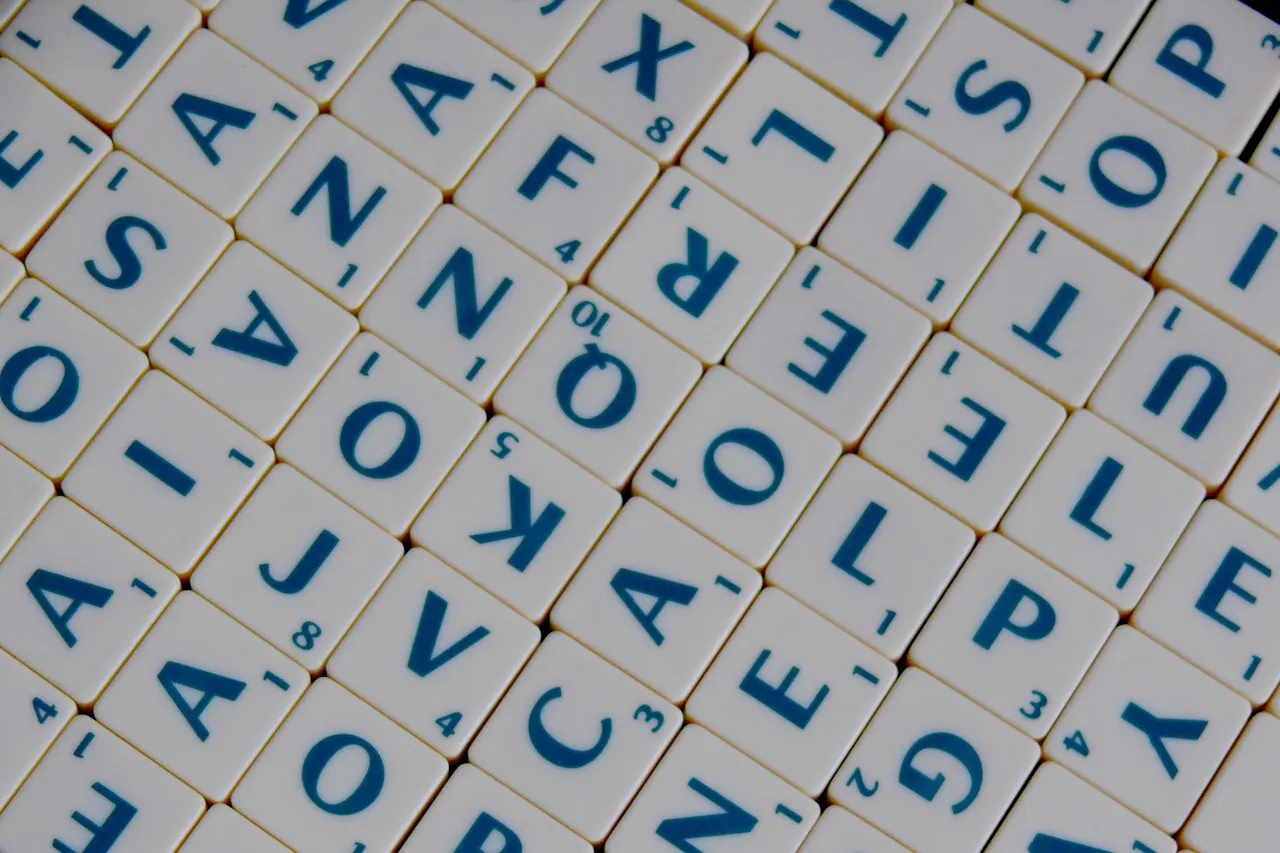
The letter A makes up about a fifth of written Indonesian: 20.4% in a table published by the software firm Stefan Trost Media, whose corpus is unnamed, and 21.0% in our own count of the subtitle text. English is usually put at around 8%. But in the word list it is 14.6%.
The difference is how the counting is done, not something about the language. Running text repeats short, A-heavy words such as yang, dan, ada and apa thousands of times. A solver counts each word once. A player choosing letters by the running-text figures is working from the wrong distribution for a word list. The kind of text matters as well: our guide on how many Chinese characters cover 90% of what you read found that film subtitles lean on far fewer characters than books and articles do.
One more letter shifts. Among five-letter Indonesian words in this list, N drops from second place to ninth, because so much of it sits in -an, -kan and meN-, which a five-letter word rarely has room for. That is a tendency in one list, not a rule of the game, but it is worth knowing for a five-letter puzzle.
Put the hyphens back
Every list like this loses the same words. Of the 50,000 subtitle entries, 2,102 were dropped because they contain a hyphen, and 943 of those are reduplicated words (kata ulang) such as anak-anak, laki-laki, hati-hati and tiba-tiba, some of the most ordinary words in the language. Another 153 were longer than fifteen letters, such as mempertimbangkan (to consider). A solver built for single words of up to fifteen letters cannot return either kind.
The dictionary that could settle what counts is not available as a list. KBBI, the official dictionary published by Indonesia's language agency, had 210,595 entries after its October 2025 update, and it is updated every six months. Its entries include phrases and sub-entries rather than a flat list of spellings, so that number is not comparable with 46,765, and its content is copyrighted, so a solver cannot simply copy it. The online KBBI is still where to check whether a word exists.
Choose the words by hand
Katla, the Indonesian version of Wordle, launched on 20 January 2022 and was reported to have around 80,000 players within a month. For its first three days its answers were drawn at random from KBBI. Its creator then switched to a list chosen by hand, because the dictionary's non-standard words and consonant-only abbreviations were confusing players. A word list harvested from subtitles contains whatever was said on screen; a list someone curates contains what they decided a player should be asked to find.

View author profile → · Editorial policy