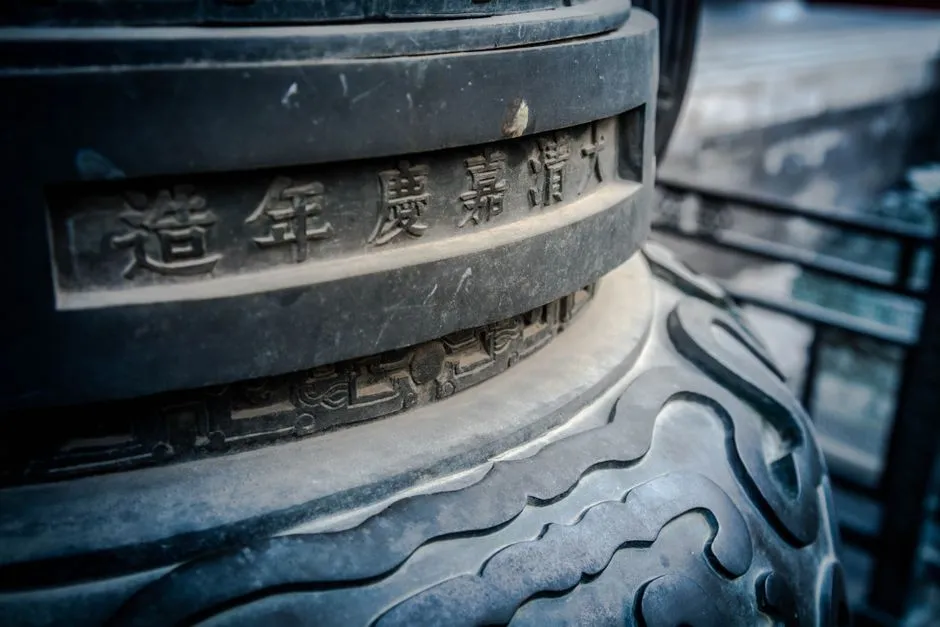
Chinese emperors named their years. An era name, 年號 (年号, niánhào), labelled a run of years, and a date was written as the name plus a year count: 光緒三十四年 is year 34 of the Guangxu (光绪) era, most of it 1908. How many names there were depends on which courts are counted. In the Dharma Drum Institute's calendar database (DILA, 2012 release) we count 725 eras under 529 distinct names, from 建元, conventionally 140 BCE, to 1912. The Chinese Wikipedia list, which adds rebels and border states, holds about 810 by our parse. 太平 (Tàipíng) has four courts in DILA and ten on the longer list. In the last two dynasties a new reign seldom started its own count at once: of 15 Ming successors who inherited a running era, 14 waited for the next New Year, and so did all 9 in the Qing.
Broader catalogues name far more eras by admitting rebel and border courts
DILA's Time Authority Database keeps the dynastic courts and the Sixteen Kingdoms. The Chinese Wikipedia list of era names, built on 李崇智's catalogue, also takes in rebels, Goguryeo, Nanzhao, Bohai and claimants after 1912. Folding repeats and variant spellings, our approximate parse of it leaves about 810 distinct names. Lin Shih of Academia Sinica gave a third count at a 2014 conference: "there are a little more than 500 era names" in the tables behind the academy's converter (slides).
Early Han eras took their names from omens after the fact
Emperor Wu of Han is conventionally the first ruler to name an era, but his first names were given later. The Shiji (封禪書) records officials proposing that his reign's periods 「宜以天瑞命,不宜以一二數」, take names from heavenly omens instead of numbers (our translation). The first became 建, the second 光 after a long star, the third 狩 after a one-horned beast.
A later name came by edict. After the sacrifice on Mount Tai in the fourth month of 110 BCE, the Hanshu (武帝紀) has the emperor decree 「其以十月為元封元年」, backdating 元封 to the tenth month, where the Han year then began. DILA follows the edict: 3 November 111 BCE (dates before 1582 here are Julian). The Wikipedia list notes that some scholars think 元封 too was named in retrospect, citing 辛德勇 (2013).
Popular titles such as 建武 and 太平 label eras at court after court
In DILA, 116 names appear under more than one regime, but about 40 of those uses are a vassal or neighbouring state keeping another court's era; Wu-Yue, Min and the Former Liang, which kept the Western Jin's eras, account for most. Counting fresh proclamations only, our filter leaves about 93 names. 建武 (Jiànwǔ) and 太和 (Tàihé) lead with six courts each; 建武 reaches seven if the Former Liang is counted.
Our Chinese reign era converter runs on the DILA data (CC BY-SA 3.0 Unported per the release's licence file; the institute's site names 2.5 Taiwan) and returns every court that used a name. Until 16 October 2026 it had three faults, corrected in a revision that day. It merged two eras sharing a name within one dynasty, so 上元元年 came back as one range, "674 – 761". A mislabelled month in the DILA release meant 光緒三十四年十月廿二日, the day the Empress Dowager Cixi died, returned nothing. And a 民國 date in lunar months was read as Gregorian. The revised version gives 上元元年 as 674 under Gaozong and 760 under Suzong, converts that Guangxu date and 15 November 1908 into each other, and refuses a lunar 民國 date with a pointer to the lunar-solar date converter.
An accession year goes by the outgoing emperor's era name in most Ming and Qing successions
A new era's first year is its 元年 (yuánnián), commonly taken to be the year an emperor took the throne. Often it was the year after. Under the convention labelled 踰年改元, a new emperor kept his predecessor's era until the next New Year. Across DILA's records, that happened in about half of the successions where an era was inherited; the rest changed within the year, later, or never. The one Ming exception is 泰昌, which took the last five months of 1620. The Ming count includes the Yongle emperor, who restored the count of 洪武.
Kangxi (康熙) shows the arithmetic. The Draft History of Qing has his father die in the first month of 1661, and 康熙元年 began at the New Year of 18 February 1662 (Academia Sinica's converter agrees). Kangxi year N is therefore 1661 + N; counting from the accession year puts every date a year early. Entered in our converter, 康熙元年正月初一 returns 18 February 1662.
Dynastic histories rename the whole year after a mid-year decree
Of 714 eras whose DILA record starts at year one, nearly 390 were decreed after the first month, by our count, dynasty foundings included. DILA, like Academia Sinica, starts an era on its decree day, so a first year can look tiny: 中平 (Zhōngpíng) gets two days in February 185.
The histories, by contrast, rename the whole year. The Old Book of Tang (舊唐書) records a decree of December 766 as 「改永泰二年為大歷元年」, turning the second year of 永泰 into the first of 大曆. The Book of the Later Han (後漢書) heads all of 184 「中平元年」 and dates Zhang Jue's rising to its second month, though the decree comes in the twelfth. Neither converter accepts 中平元年二月; it must be entered as 光和七年二月. Frequent changes multiplied such years: DILA holds 18 era names from 684 to 705, when Wu Zetian controlled the court. Fourteen fall in her own Zhou dynasty.
Dates in the last lunar month answer to an era year the Western calendar has already left
Because the Chinese calendar is lunisolar, its New Year falls in late January or February. This means every era year straddles two Western years. Over about 275 complete Qing lunar years, we count 9.5% of days in the following Western year, a figure for the Qing only.
光緒三十四年十二月 began on 23 December 1908 and ran to 21 January 1909, so about two-thirds of it fell in 1909. The heritage site Bukit Brown, describing a Singapore tomb inscribed with Guangxu 34, reasons that "his 34th year would be 1908". For most of that lunar year the sum holds; from 1 January it does not. The same post shows a 民國 32 tomb dated by the moon, so a Republic year on stone does not guarantee a Gregorian month.
The 1917 restoration renamed the Republic's year for less than a fortnight
The last imperial era, 宣統 (宣统), ended with the abdication on 12 February 1912. The Republic of China counted 1912 as its first year, so 民國 year N is 1911 + N, a count still used officially in Taiwan. The Chinese Wikipedia list records rebels in Qinghai using 宣統 from 1916 and, citing 李崇智, Zhang Xun's restoration of 1 July 1917, which declared the Republic's sixth year 宣統's ninth (「改民國六年為宣統九年」). It was called off 12 days later. Japan still names its years by era, as the guide to Japanese era years sets out.

View author profile → · Editorial policy