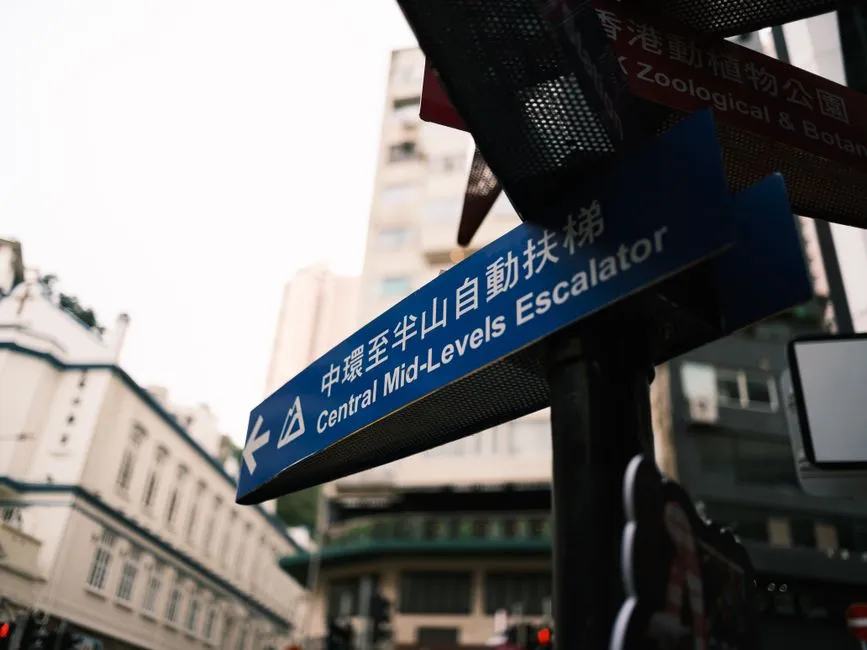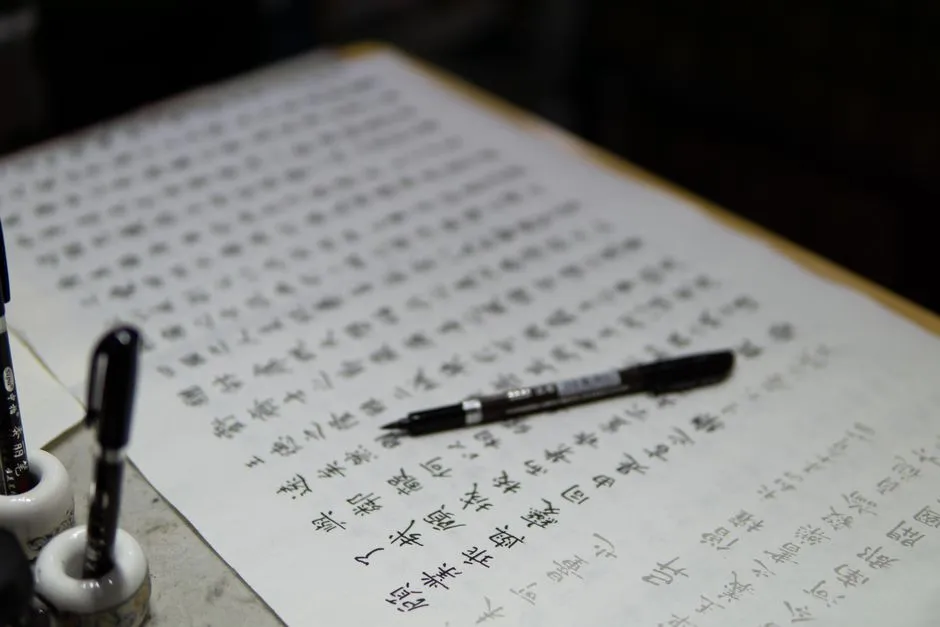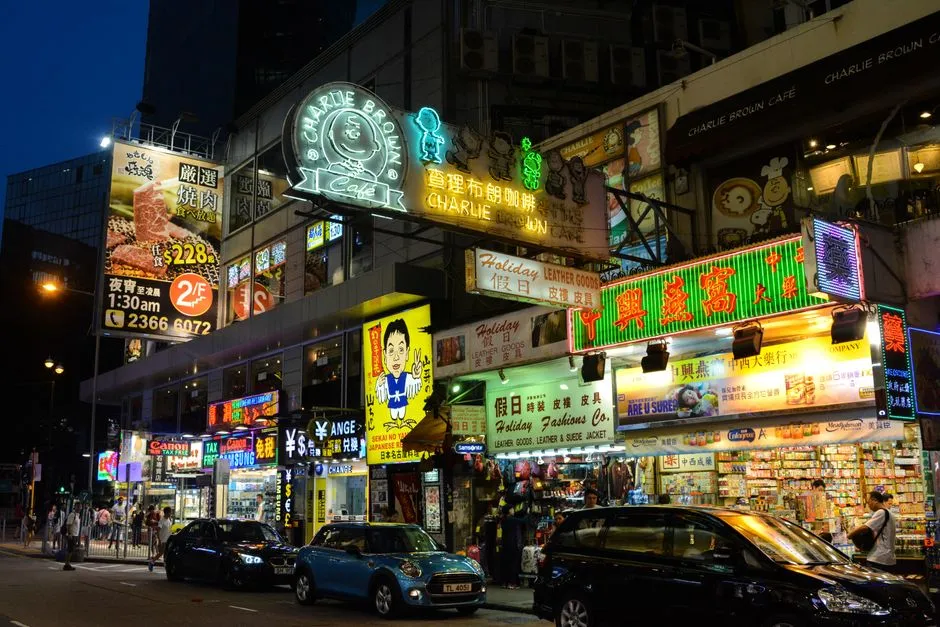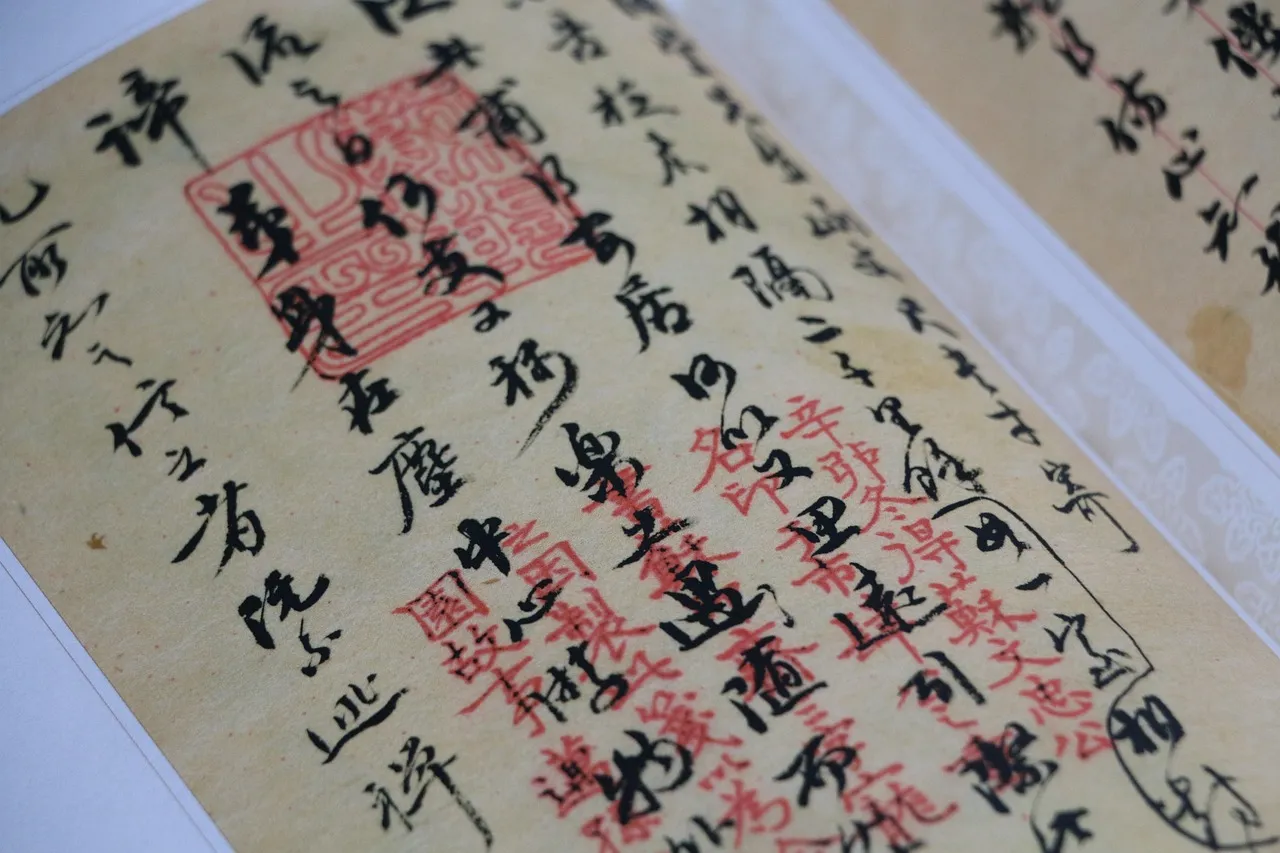
Taiwan's full stops sit in the middle of the character square; mainland China's sit at the bottom left. On a computer, however, they are the same character, 。 (U+3002); the difference comes entirely from the font. This is a common pattern. The mainland standard (GB/T 15834-2011), Taiwan's standard (the Ministry of Education's revised handbook of 2008), and Hong Kong's usage agree on most marks, but a character converter won't touch the handful of differences.
This guide takes one passage written in mainland style and converts it, one step at a time, into Taiwan's style, then notes what Hong Kong does. The punctuation checker flags half-width marks in Chinese text against the mainland standard.
The passage
We'll use a short passage punctuated in the mainland style. It is constructed to include a quotation inside a quotation, a dash, two book titles, a short story's title, a foreign name, an ellipsis, and a question that ends in surprise.
他说:“今天的会议——就是‘预算’那个——推迟了。”我读了《呐喊》里的《狂人日记》,还有马克·吐温……真的吗?!
Step 1: convert the characters
A character converter such as OpenCC, which many websites and apps use to turn simplified text into traditional, does the first step. Converted to Taiwan's standard forms, the passage becomes:
他說:“今天的會議——就是‘預算’那個——推遲了。”我讀了《吶喊》裡的《狂人日記》,還有馬克·吐溫……真的嗎?!
Every character has changed where it needed to. Every punctuation mark is exactly where it was. We ran the converter's mainland-to-Taiwan and mainland-to-Hong Kong conversions on this passage, and neither touched a single mark. Our own simplified–traditional converters do the same. The rest of the work is by hand.
Step 2: swap the quotation marks
The mainland standard uses curly double quotation marks, “ ”, with single ones, ‘ ’, for a quotation inside a quotation. Taiwan's handbook uses corner brackets in the opposite order: single brackets 「 」 for the outer quotation, and double brackets 『 』 for the one inside.
他說:「今天的會議——就是『預算』那個——推遲了。」
The mainland standard does not use corner brackets in horizontal text at all. It keeps them for vertical text, where it prescribes corner-bracket forms in place of curly quotes.
Step 3: mark the short story's title
Both standards put book titles in 《 》. They differ on titles of shorter works, like a story in a collection. The mainland standard uses 《 》 for a standalone short story title, nesting single angle brackets—《…〈…〉…》—only when one title appears inside another. Taiwan's handbook, in its angle-bracket form, uses 《 》 mostly for books and 〈 〉 mostly for articles and chapters. This changes the story's title to 〈狂人日記〉.
我讀了《吶喊》裡的〈狂人日記〉
The handbook's other form marks titles with a wavy underline instead, and writers may use either.
Step 4: the dot in a foreign name
The dot between the parts of a transliterated name is the interpunct. The mainland standard writes it as a half-width ·, taking half a character space. Taiwan's handbook writes it as a full-width ., centred in a full space. 马克·吐温 becomes 馬克.吐溫.
What stays the same
Knowing which marks to leave alone is as useful as knowing which to change.
- The dash. Both standards use a dash two character-spaces long for a break in thought.
- The ellipsis. Both use six dots, ……, taking two character spaces. Three ASCII dots are not a Chinese ellipsis in either.
- The full stop, comma and colon. Same characters. Only their position in the square differs, and that is the font's job.
The mainland standard allows a question mark followed by one exclamation mark, ?!, for a question asked with strong feeling, and allows up to three question marks or three exclamation marks in a row in moments of unusually strong emotion — while saying that without such a need, repeating them is best avoided. We have not found a corresponding rule in Taiwan's handbook, so the passage keeps its ?! unchanged.
Step 5: let the font place the marks
The finished passage in Taiwan's style:
他說:「今天的會議——就是『預算』那個——推遲了。」我讀了《吶喊》裡的〈狂人日記〉,還有馬克.吐溫……真的嗎?!
Its full stop, comma and colon are the same characters as before. What centres them is a traditional-Chinese font set for Taiwan, which is what a browser or word processor chooses when the text is marked as Taiwanese Chinese (the language tag zh-Hant-TW on a web page). The same text shown with a mainland font puts them back at the bottom left. The W3C's working notes on Chinese text layout describe exactly this: the marks are positioned differently by region, and Unicode does not give the two positions separate code points, so the font decides.
Hong Kong
Hong Kong has no punctuation standard of its own that we could find. The government's Chinese writing manual for civil servants refers readers to the mainland standard and uses curly quotation marks in its own examples, while noting that corner brackets are traditionally used in vertical writing. In practice, corner brackets remain common in Hong Kong print, and full stops are usually centred, as in Taiwan. A passage for a Hong Kong audience can reasonably follow either set of quotation marks, provided it follows one consistently.
For Singapore and Malaysia we found no official Chinese punctuation standard.
Sources used
The mainland rules are from the full text of GB/T 15834-2011, Use of Punctuation Marks, in force since 1 June 2012; the clause numbers referred to are 4.2.3.3, 4.3.3.3 and 4.3.3.4 on repeated marks and 5.1 on positions. Taiwan's rules are from the Ministry of Education's revised handbook of punctuation, dated December 2008. The Hong Kong manual is the Civil Service Bureau's general guide to Chinese writing, 2019. The layout description is the W3C's Requirements for Chinese Text Layout. The converter test was run on 21 September 2026 with OpenCC's standard conversion tables.

View author profile → · Editorial policy