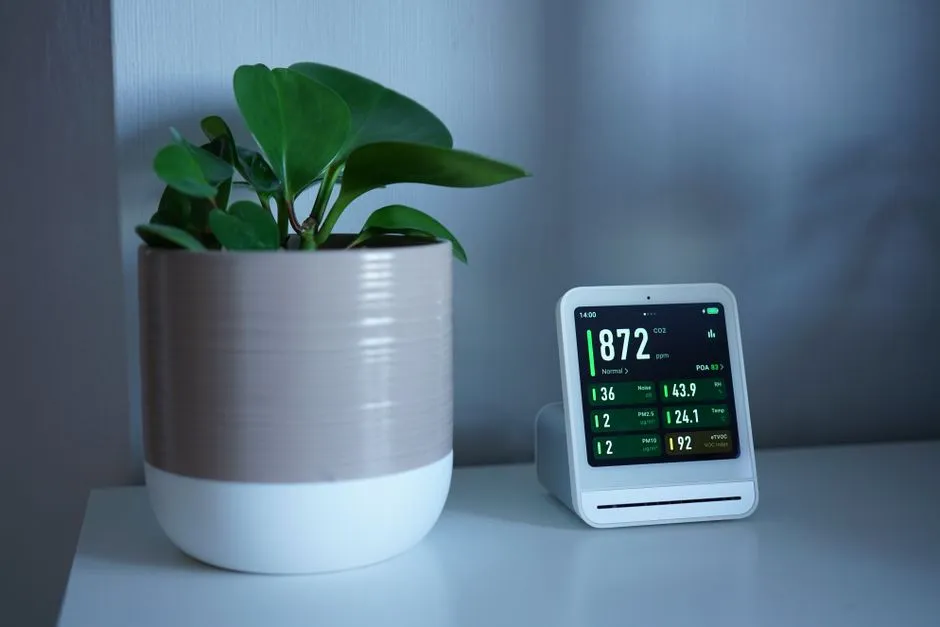
The pen you dip into a glass of water at a filter demonstration is labelled a TDS meter, and the number it shows is labelled ppm. It is not measuring total dissolved solids. It cannot.
Total dissolved solids is defined as a weight. You filter a sample, evaporate the water, and weigh what is left at 180 °C. A meter that touches the water for two seconds has weighed nothing.
The regulation keeps them apart
US environmental regulations list approved test procedures for water analytes, and total dissolved solids and conductivity appear as two separate rows with two separate methods. Row 54:
"Residue—filterable, mg/L … Gravimetric, 180° … 2540 C-2020 … D5907-18 (B)"
Row 64 lists specific conductance as a different analyte entirely, with its own approved method:
"Specific conductance, micromhos/cm at 25 °C … Wheatstone bridge … 120.1 (Rev. 1982) … 2510 B-2021"
⚠️ There is no conductivity method approved for total dissolved solids. Not a discouraged one — none. The sample-preservation table separates them too, allowing 7 days for filterable residue and 28 for specific conductance, which are different numbers because they are different tests on different chemistry.
A handheld meter performs the second procedure and prints the first one's units.
The manufacturer explains this in the manual
This is not a secret, and it is not a criticism the makers would dispute. One widely sold combo meter's own user guide says:
"The COM-100 features three different conversion factors to convert from EC to TDS, using the KCl, 442™ and NaCl scales…"
And explains why the conversion is needed at all:
"All elements have some electrical charge. Therefore, it is possible to closely estimate the quantity of TDS by determining the EC of the water. However, since different elements have different charges, it is necessary to convert the EC to TDS using a scale that mimics the charge of that water type."
Read that carefully. The instrument measures charge-carrying capacity, then multiplies by a factor chosen to mimic an assumed water chemistry. The ppm reading is the product of one measurement and one assumption, and only the first is on the label.
How much the assumption is worth
The conversion factor is not a constant. Published values for natural water rise with conductivity, and across the ordinary range they run from about 0.50 to 0.82.
Take one water at 220 µS/cm and apply the range:
| Factor | Reading shown |
|---|---|
| 0.50 | 110 ppm |
| 0.70 | 154 ppm |
| 0.82 | 180 ppm |
0.82 ÷ 0.50 = 1.64⚠️ That is a 64% spread from a single water sample on the same instrument. The only difference was the conversion curve selected in the meter's settings. The three scales the manual offers are not refinements of each other; they model potassium chloride, a synthetic natural-water blend, and sodium chloride, which are different assumptions about what is dissolved in your glass.
Why this matters at the demonstration table
The reason to care is that the meter is most often seen being used to sell something. Two glasses, one tap and one filtered, one pen, two numbers — and the number falls, so the filter works.
What actually fell is conductivity. A filter that removes calcium and magnesium lowers conductivity a great deal and lowers dissolved solids somewhat. A filter that removes nothing but adds a little sodium can lower the reading too, depending on the curve. And the things people most want removed from drinking water — bacteria, viruses, most pesticides, many pharmaceuticals — carry little or no charge and move the reading barely at all.
A low ppm number is not a safety statement. Distilled water and water contaminated with an uncharged organic compound both read low.
What this does not mean
It does not mean the meters are fraudulent or useless. Conductivity is a real, reproducible measurement, and for a given water source a change in the reading does track a change in dissolved ionic content. Used as a relative indicator on one water over time — has my supply changed, is my membrane still working — it does its job well.
It does not mean the makers are hiding anything either. The manual we quoted is explicit about the conversion, names the three scales, and states their assumptions. The information is on the page; it is simply not on the display.
The units on the display are borrowed. The meter gives a conductivity measurement dressed up as a mass concentration, and its accuracy as ppm depends entirely on how well your water's chemistry matches the standard the curve was built from.
What to do with it
Use it as a comparator, never as a value. Same meter, same water source, readings over time — that is a legitimate use and a good one.
Do not compare a ppm reading against a health guideline. Guidelines for dissolved solids are written for the gravimetric method, and your pen is not performing it; and guidelines for the things that actually make water unsafe are not expressed in dissolved solids at all.
⚠️ And if someone shows you two numbers falling, ask which scale the meter is set to. If they do not know, the demonstration has one measurement and one unexamined assumption in it, and you have just been shown the assumption.
Where this comes from, and what will date it
The two rows and their methods are quoted from the US Environmental Protection Agency's table of approved inorganic test procedures, fetched here as the regulation's own XML and searched directly — 2.6 MB, with the term "Residue" appearing 19 times as a control so that the absence of a conductivity method for the TDS row is a real absence rather than a failed download.
The conversion quotations are from the instrument maker's own published user guide. The factor range and the worked spread are ours, computed from published natural-water conversion tables.
⚠️ Two limits. The 0.50 to 0.82 range is for natural waters; industrial or brackish samples sit outside it and the spread there is wider, not narrower, so the figure is conservative. And we have described what the instrument does and what the regulation approves — not tested any particular meter against a gravimetric result, which is a laboratory exercise rather than a documentary one.
This will not date. The definition of the analyte is a weight, the instrument measures charge, and no revision to either is in prospect. What could change is the labelling. A conductivity meter that also estimates dissolved solids would be describing itself accurately, and some are already sold that way.

View author profile → · Editorial policy