1 SEP 2026 — Magna is putting another US$35m into Yuma Energy, taking its total to US$87m in a Bengaluru battery-swapping network that has completed more than 60 million swaps. Between 80 and 85 per cent of those swaps are still for vehicles belonging to Yulu, the parent that spun Yuma out. It is a captive utility trying to become a public network, and that transition is the whole investment case.
The numbers
Yuma Energy was spun out of the Indian mobility company Yulu in early 2023 as a joint venture with the Canadian automotive supplier Magna International, which took 51 per cent. This round raises Magna's total to US$87m and increases its majority stake further, diluting Yulu's 49 per cent.
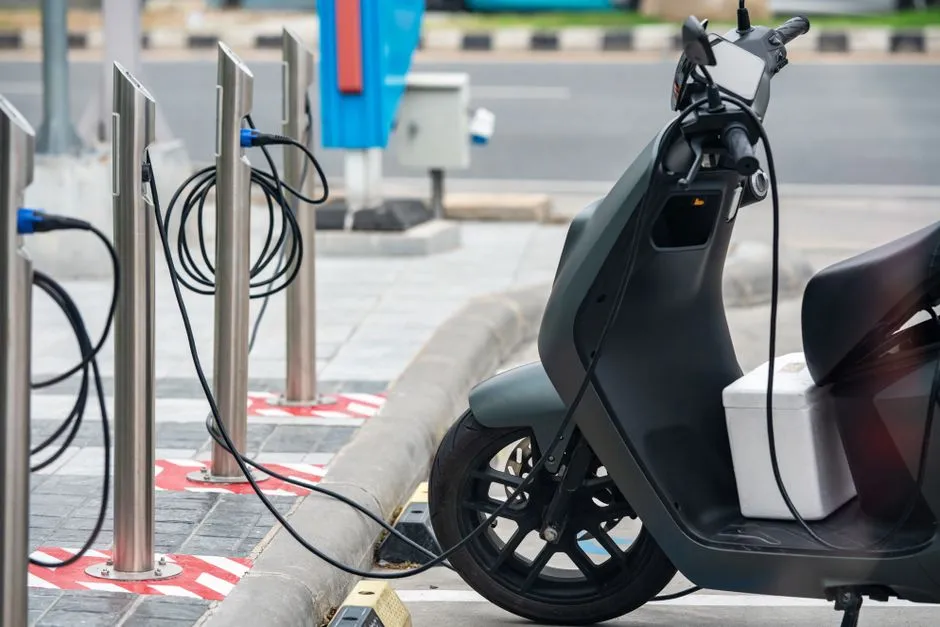
The network runs more than 400 swapping stations with over 2,500 charging units across 18 Indian cities, holding roughly 100,000 batteries, and serves electric two- and three-wheelers. A swap takes under two minutes. Chennai and Pune are next, and the battery fleet is planned to roughly double to 200,000 within 12 to 18 months.
Revenue for the financial year ended March 2026 was about one billion rupees, roughly US$10.5m. The company is not profitable; some older stations are EBITDA-positive and management is targeting EBITDA break-even within two quarters.
What the swap count does and does not tell you
Sixty million swaps is the figure that will travel, and it is cumulative since 2023 rather than annual. Set against roughly US$10.5m of revenue in the most recent year, it describes a business where each transaction carries a small amount of money and volume has to do all the work.
The more useful ratio is capital against revenue. About 100,000 batteries and 400 stations support roughly US$10.5m of annual revenue, which is on the order of US$105 per battery per year before the stations, the charging units and the two manufacturing sites are counted. Battery-swapping is an asset-heavy business wearing the clothes of a software one, and the asset in question degrades with every cycle.
That is not a criticism of the model, but an explanation of why it needs an automotive supplier as its majority owner rather than a venture fund. Magna's willingness to increase its stake beyond 51 per cent is the most informative part of the announcement.
The captive-network problem
Between 15 and 20 per cent of last quarter's swaps came from customers other than Yulu, and the company projects 25 per cent within two years. Read the other way, four fifths of the demand still comes from the parent that created it.
A captive network is a good way to reach scale and a poor place to stay. Utilisation is guaranteed, so stations can be sited on the parent's own routes and the demand curve is known in advance. What a captive network does not prove is whether an independent fleet operator will choose it on price and coverage over simply charging its own vehicles overnight.
The five-plus external fleets and integration with more than ten vehicle platforms, including Kinetic Green, Motovolt, BGauss and Quantum Energy, are the evidence that the transition is under way. A projection of 25 per cent external demand in two years is also an admission that three quarters of it will still be internal.
Why two- and three-wheelers are the right place to try this
Battery swapping has repeatedly failed for cars and repeatedly worked for small vehicles for a physical reason, not a commercial one. A car battery weighs hundreds of kilograms and requires automated machinery to exchange, so each station is a capital project. A two-wheeler pack can be lifted by hand, which turns a station into a cabinet.
Standardisation follows the same logic. Car makers treat the battery pack as structural and will not converge on a common format. Small-vehicle manufacturers have far less design attached to the pack, which is why integrating ten platforms is achievable at all.
The economics also favour vehicles that cannot afford downtime. A delivery rider loses income while charging, so paying for a two-minute swap is straightforward arithmetic. A private car owner charging overnight at home has no equivalent problem to solve.
What this means for Southeast Asia
The vehicle mix that makes this work in India is the same mix found across Indonesia, Vietnam, Thailand and the Philippines, where two-wheelers dominate and delivery fleets run all day. The infrastructure argument that fails for cars in the region succeeds for the vehicles people actually ride.
The transferable part is not the technology but the sequence: build for a captive fleet so utilisation is never the question, manufacture the packs and the cabinets yourself so unit cost stays controllable, and open the network only once station density is high enough to be worth joining. Yuma is roughly two thirds of the way through that sequence and has not yet completed it.
The number to watch is not the swap count or the station count but the external share. That is the only figure that separates a public network from an in-house fuelling operation. We reported on Thailand's electric-vehicle push and what it is doing to the ASEAN car industry, a build-out aimed squarely at four wheels. The vehicles that would actually use a swapping network in the region are the ones that policy has paid least attention to.

View author profile → · Editorial policy