AUSTIN, 23 AUG 2026 — Tesla has discontinued Solar Roof, the photovoltaic roof tile it unveiled a decade ago, telling third-party installers it will supply conventional solar panels instead. The company concluded internally that the product was not financially viable.
The scale of the retreat is in two figures. At its peak Tesla was completing roughly 21 to 32 installations a week, more than 95 per cent below the original goal, and it installed about 3,000 systems in the United States across roughly seven years.
What was built, and what was promised
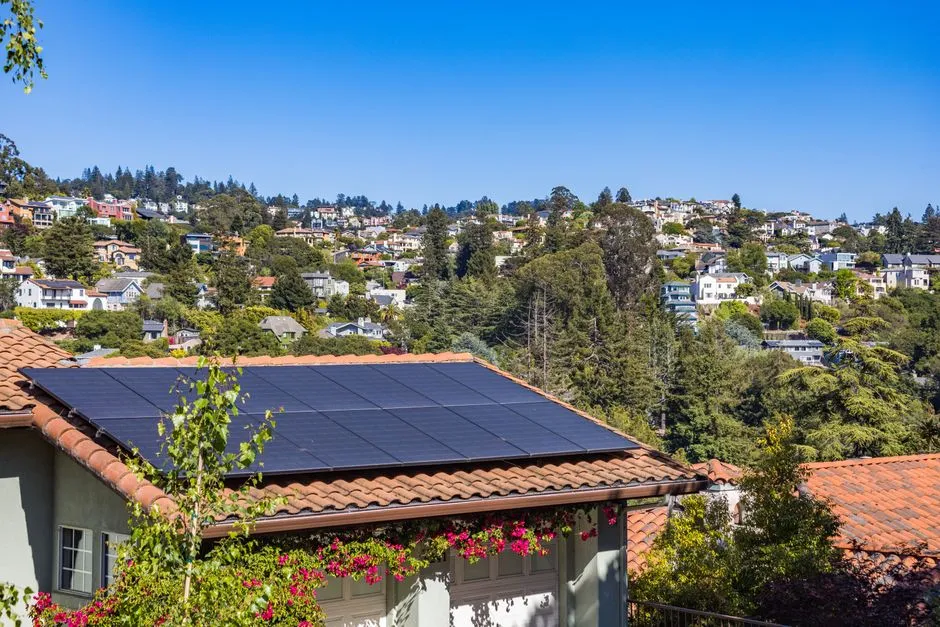
The Solar Roof page on Tesla's website redirects to solar panels, and the product has been removed from the Energy navigation. The stated strategy is to concentrate on conventional panels and Powerwall storage, which carry higher margins and are simpler to deploy.
Three thousand roofs, in a market that fits hundreds of thousands a year
Put that figure against the market it was competing in. The United States installs hundreds of thousands of residential solar systems a year. Three thousand across seven years is not a slow start; it is a product that never entered the market it was announced for.
Volume is what makes hardware work, and at this volume none of it arrived. Nothing was amortised, so unit costs stayed where they started. Installers never did enough jobs to get quick at them, meaning every roof carried the cost of someone learning it. Field data trickled in far too slowly to feed back into the design, and no supplier was going to retool for a customer ordering in the hundreds.
Each of those makes the others worse, which is why products stuck at this volume so rarely climb out of it. Tesla did not run a fair trial at scale and conclude the economics failed. It never got to scale, and stopping is the acknowledgement of that.
The hard part was always fitting it to a roof
A solar tile is a reasonable engineering idea. It replaces a roof covering rather than sitting on top of one, which suits new construction and full re-roofing, and it avoids the aesthetic objections that have limited residential adoption.
The problem is that fitting it is roofing work. Conventional panels are mounted to an existing roof by a crew doing a repeatable task on a structure someone else built. Solar Roof required the installer to build the roof — flashing, penetrations, valleys, edges, weatherproofing — while also wiring several hundred electrically live components, and to be liable for both.
That combination is rare. It needs roofing competence and electrical competence in the same crew, and it makes every unusual roof a bespoke job. Labour-intensive work that cannot be standardised does not get cheaper with volume in the way manufacturing does, which is the specific reason the economics never converged.
Nothing about that is peculiar to Tesla. Wherever the dominant cost of a product is skilled labour performed on site rather than work done in a factory, the scaling curve that makes hardware cheap simply does not reach it.
What this says about the wider strategy
Discontinuing a product a decade after announcing it is an ordinary corporate decision, and the interesting part is which direction the energy business is being pointed.
Conventional panels plus Powerwall is a straightforwardly commercial position. Both are manufactured products installed by a repeatable process, and the storage half is where the margin and the strategic value sit — because a battery participates in grid services, demand response and time-of-use arbitrage in ways a roof covering never could.
This looks like a company withdrawing from a construction-adjacent business it was not equipped to run, to concentrate on the part that behaves like manufacturing. That is a defensible narrowing, and it is also a quiet admission that the integrated home-energy vision the tiles represented did not survive contact with installation reality.
Why the regional implication is not the obvious one
Solar Roof was never sold across Southeast Asia in any volume, so the direct effect here is nil. The lesson for this region is about which solar products are suitable, and it runs opposite to the premium, integrated-roofing model.
Rooftop solar here runs into conditions the product was never designed around. Monsoon rainfall punishes every penetration made in a roof, and this is not a market of asphalt shingle — metal and clay tile dominate. The installation labour market has a different skill distribution again. Underneath all of it sits a price sensitivity that makes paying extra for appearance a hard sell.
What does travel is the storage half. Grid reliability varies considerably across the region, time-of-use tariffs are spreading, and the case for a battery is stronger where the grid is weaker. A vendor concentrating on panels and storage rather than integrated roofing is, incidentally, better aligned with what this market actually buys.
What the customers were actually buying
Three thousand households paid a premium for this, and their position deserves stating because it is the part a corporate decision tends to skip.
A Solar Roof was never a gadget with a two-year life. It is the weatherproof covering of a building, expected to last decades, and part of what people bought was a warranty from a manufacturer that meant to keep making the thing. Discontinuation does not void that warranty. It does change what honouring it takes — replacement tiles for a line nobody produces any more, technicians who still understand the system, and a willingness to keep servicing something the company has stopped caring about commercially.
The failure mode is not dramatic. It is a hailstorm in 2031, a handful of cracked tiles, and an owner discovering that matching units are no longer produced and the remaining specialists have moved on. At that point a roof covering becomes a roof repair problem.
This problem is not unique to Tesla; discontinued lines create the same difficulty across the construction industry. It argues for weighing manufacturer longevity heavily when the product is part of the building itself, not just something inside it.
What remains unconfirmed
Tesla has not made a public announcement in the material reviewed; the discontinuation is reported through communications to installers and observable changes to the website. No official statement of reasoning beyond the reported internal conclusion is available.
Support arrangements for the roughly 3,000 existing installations are not described, including warranty terms, replacement tile availability and how long service will continue. Whether the decision applies outside the United States is not stated, nor whether any inventory or orders are outstanding, nor what happens to installers who built businesses around the product.
What to watch for
The immediate question is what existing owners will be told. A roof is a twenty-five year asset for which these customers paid a premium; the support commitment is the real measure of how this is handled.
It also remains to be seen whether competitors will pursue the category. Several manufacturers offer building-integrated photovoltaics. Tesla's exit either clears the field for them or confirms the economics are fundamentally unworkable.
Finally, what replaces Solar Roof in the product line. A panel engineered for new construction rather than retrofit would mean the integration idea survived in a form somebody can actually manufacture. Reselling ordinary panels would mean it was dropped rather than redirected, and those are quite different outcomes for anyone who bought the original story.

View author profile → · Editorial policy