WASHINGTON, 11 AUG 2026 — The United States will host the launch of an international programme to put nuclear reactors on ships and on floating platforms at sea. The Department of Energy announced it on 5 August; the IAEA event runs in Washington on 26 and 27 August, with an industry day the day before.
The name is ATLAS — Atomic Technologies Licensed for Applications at Sea. It covers two applications: civil nuclear-powered ships and floating nuclear power plants moored offshore.
What is actually being launched
Not a reactor. A framework.
The hard problem with maritime nuclear has never been whether a small reactor can drive a hull — navies have done it since the 1950s. It is that a civilian nuclear ship crosses jurisdictions by design, and nobody has agreed who licenses it, who inspects it, who is liable when something goes wrong in someone else's waters, and which port is obliged to admit it.
That is a treaty-shaped problem, which is why it is being run through the IAEA rather than a shipbuilder. IAEA Director General Rafael Mariano Grossi argued that "Nuclear energy is fast emerging as a game-changer. Small modular reactors offer a safe and viable option for maritime transport and offshore energy systems."
Why shipping, and why now
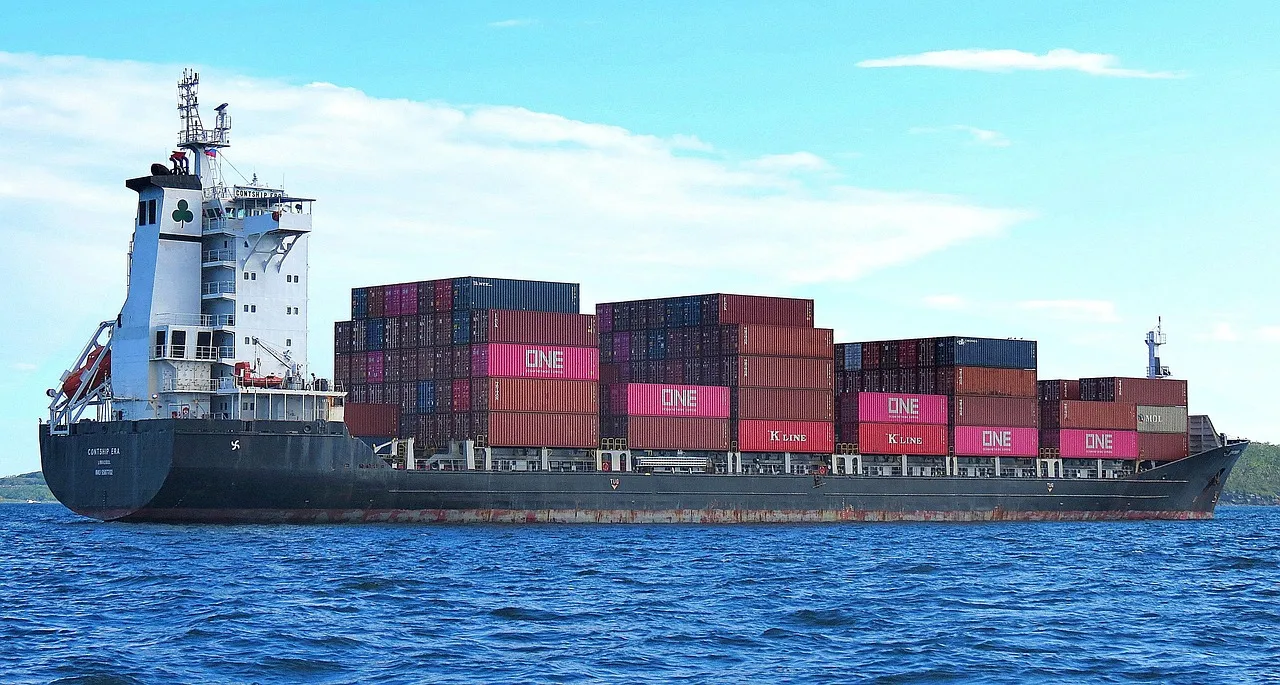
Shipping is a notoriously hard decarbonisation problem. A container vessel needs enormous sustained power for weeks, but the alternatives all have a catch. Ammonia is toxic and its production is currently fossil-fuelled; methanol needs a green feedstock nobody has at scale; batteries are hopeless at ocean range; and sails only help at the margin.
A reactor answers the physics cleanly. It also introduces a set of problems that have nothing to do with physics — crew certification, port acceptance, insurance, security of fissile material in commercial hands, and what happens to a reactor when its ship is sold to a third owner and flagged somewhere else.
ATLAS exists because that second list is the actual obstacle, and none of it can be solved by one country.
The floating plant is the nearer-term half
Floating power plants are the less exotic of the two applications, and likely to appear first.
A moored barge carrying a small modular reactor sidesteps several things that make land-based nuclear slow: the site does not need to be found and fought over, the plant is built in a shipyard under factory conditions rather than assembled on site, and it can be towed away at end of life. For coastal communities, islands, and industrial loads like desalination, this is a practical alternative to land-based power.
It also imports the maritime problem in reverse. A power station that floats can drift, can be hit by a vessel, and sits in a storm environment that a land site does not.
One framing worth attributing carefully
The Register's account of the announcement links the event to the Department of Energy's wider push to supply power for AI data centres.
That connection is plausible and it is not in the DOE's own announcement, which mentions no data centres at all. Energy Secretary Chris Wright's quoted line is general: "DOE remains focused on unleashing American energy dominance, accelerating innovation, and advancing sources of energy that are affordable, reliable, and secure."
The distinction matters because the AI-power framing is doing a lot of work in energy policy at the moment, and it is worth knowing when it is the government's framing and when it is a reasonable inference somebody else has drawn. Here it is the latter.
The inference is reasonable, though. Grid connection queues are the binding constraint on new data centre capacity in several markets, and a generator that arrives by sea and connects at the coast routes around exactly that queue.
What this means for a region of islands and ports
Geographically, Southeast Asia is the textbook case for these technologies. It has thousands of inhabited islands, heavy coastal industry, the world's busiest shipping lanes, and several countries with no plans for a land-based nuclear programme.
A framework for sea-based reactors matters here even for countries that never buy one. A nuclear-powered container ship transiting the Malacca Strait is a port-state question for Singapore, Malaysia and Indonesia the first time it happens, and the rules for that will be written by the people who show up to write them.
What to watch
Will the launch produce a licensing pathway, or just a statement of intent? Ministerial events reliably produce the latter; only the former would be consequential.
Which flag states engage. A nuclear merchant vessel needs a flag, and the open registries that flag most of the world's tonnage are not obvious candidates for nuclear oversight.
And whether any operator commits to a hull. Until a shipping line orders one, this remains a regulatory scaffold waiting for something to hold up.

View author profile → · Editorial policy