TAOYUAN, 31 AUG 2026 — Taiwanese prosecutors raided Unimicron, a top supplier of chip substrates to Nvidia and Intel, over allegations that China-made circuit boards were relabelled as Taiwan-made. Shares fell 10 per cent. The charges are Taiwanese criminal ones, not American trade ones.
What was done and under what law
Taoyuan prosecutors and investigators raided Unimicron's headquarters in Guishan District and a plant in Zhongli District on Friday, taking 14 executives and employees for questioning.
A printed circuit board department general manager surnamed Wang and others are suspected of using forged documents and making false product markings, under articles 216, 210 and 255 of Taiwan's Criminal Code. Wang and a deputy general manager surnamed Wu were released on bail of NT$15m and NT$12m. Three others were bailed at between NT$300,000 and NT$5m, and the remaining nine were released without bail. Company spokesperson Chung Ming-feng said Unimicron is cooperating fully.
Origin laundering is the wrong frame for these charges
The phrase attached to this story implies US trade enforcement — tariff evasion, or circumvention of export controls. That is not what has been charged.
False product marking under the Criminal Code is a domestic Taiwanese offence about documents and labels, prosecuted in Taiwan by Taiwanese prosecutors. It does not require any US authority to be involved, and none is reported to be. Whether a separate American proceeding follows is unknown and is a different question with a different burden of proof.
The distinction matters because the consequences are so different. A Taiwanese false-marking conviction attaches to individuals and produces criminal penalties. A US customs or export-control finding attaches to shipments and can produce duties, denial orders and customer contamination. Reporting that merges them makes the first sound like the second.
Why origin is worth committing a crime over
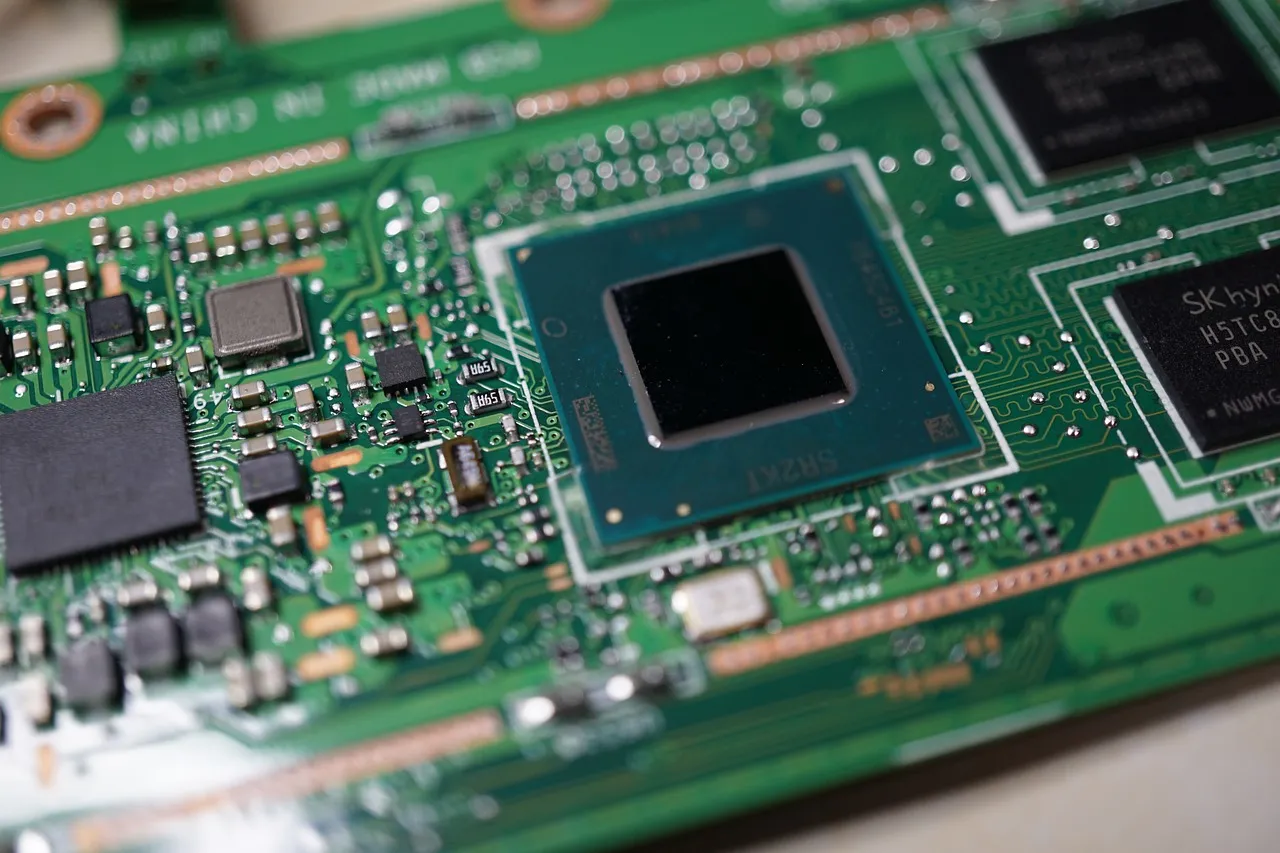
A printed circuit board is not physically different for having been made across the strait. Its origin label is what changes.
Origin determines tariff treatment, and increasingly it determines whether a US customer may buy the part at all. For a substrate going into an American accelerator, a China-made designation can trigger duties, procurement restrictions and internal supply-chain policies that a Taiwan-made designation does not. Same board, different regulatory object.
This is the incentive, and it explains why this kind of allegation is becoming more common. As origin rules tighten, the value of a label rises, and anything valuable enough attracts falsification. The tightening produces the fraud it then has to detect.
The share move is about customers, not courts
A 10 per cent fall is a large move for an investigation in which no charge has yet been laid against the company and the individual bail amounts are modest.
The market is not pricing legal risk. It is pricing the commercial risk that Nvidia, Intel, Google or Amazon reduce orders while they audit their own exposure — a consequence that requires no conviction. Reports naming Kinsus and Nan Ya PCB as potential beneficiaries of order shifts describe exactly that mechanism.
For a supplier at this tier the reputational consequence typically arrives before, and independently of, any legal one. A customer with its own compliance obligations does not wait for a verdict to decide whether to keep buying.
What is unresolved
Four load-bearing questions are not yet answered.
Whether the relabelled boards reached the named customers, or stayed in other product lines. Whether this was a departmental practice or company policy, which is the difference between individual criminal liability and corporate exposure. What volume and value were involved, which nobody has published. And whether any US authority opens its own matter.
Until those are answered the story is an investigation with fourteen people questioned and thirteen released, most without bail. That is a serious thing and it is not a finding.
The regional context
Taiwan prosecuting a Taiwanese firm for passing Chinese product off as Taiwanese is a signal about enforcement posture, and it is aimed as much at Washington as at the defendants.
Taiwan's economy depends on the credibility of its origin designations, because that credibility is what lets its manufacturers sit inside American supply chains while cross-strait trade continues. A high-profile domestic prosecution demonstrates that the designation is policed from the Taiwanese side, which is worth more to the country than any individual case.
The same pressure runs through Southeast Asia. Malaysia, Vietnam and Thailand have all absorbed manufacturing displaced by tariffs, and all three face the identical question of whether value was genuinely added locally or a label was applied to something finished elsewhere. This is adjacent to a problem we identified when we reported that the 1260H list is a procurement instrument rather than an export control. The designations that determine market access are only as good as their enforcement, which is now visibly a national interest and not a favour to a trading partner.