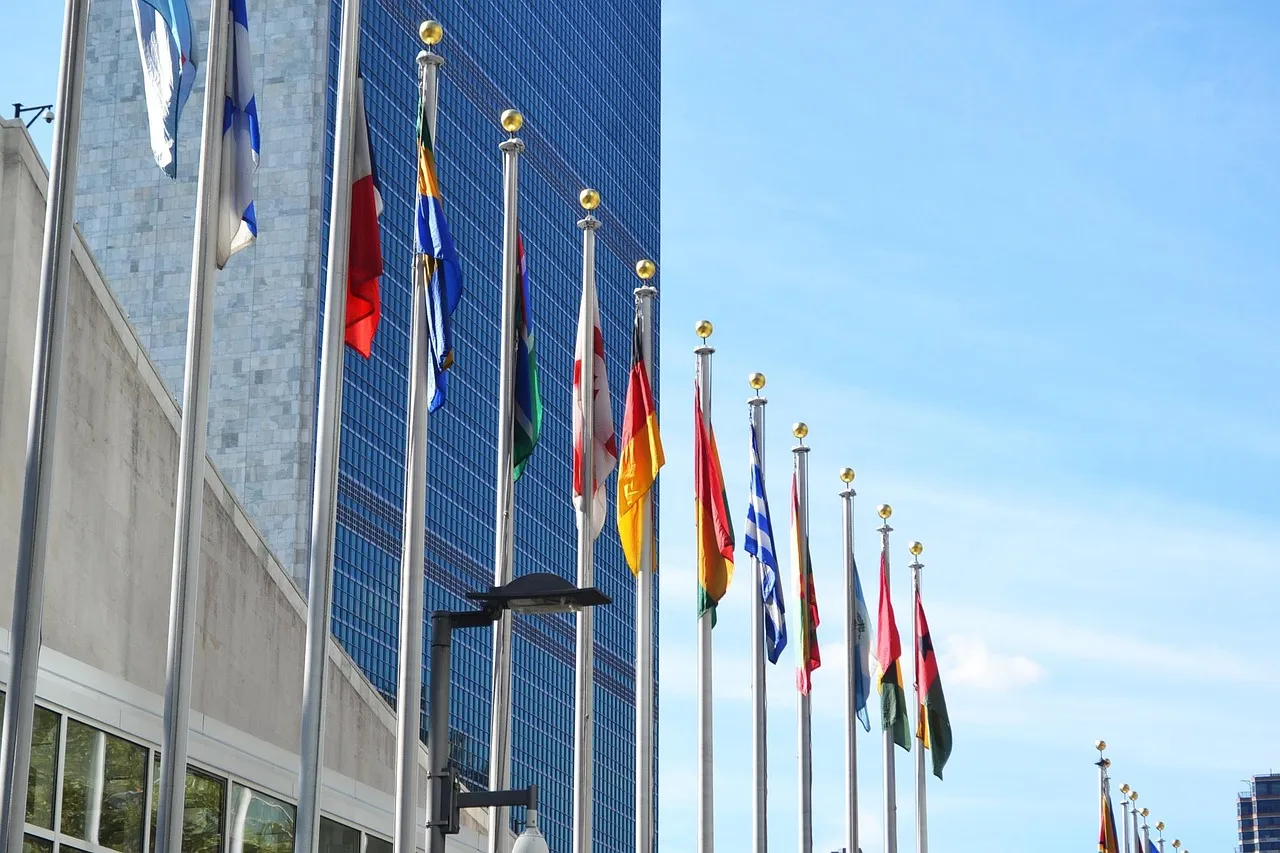
27 SEP 2026 — The UN Security Council held its first meeting on the safety risks of increasingly capable AI systems on 23 September. The heads of OpenAI, Anthropic and Hugging Face were among the briefers. They asked for international rules; the United States, one of the five permanent members, signalled that it does not want them.
It was a briefing, so no decision was on the table. The speeches mapped how far the people building these systems are from several of the governments in the room.
Who spoke and why it was unusual
France, which holds the Council presidency in September, convened the briefing, and its foreign minister, Jean-Noël Barrot, chaired it. The briefers were Yoshua Bengio, co-chair of the UN's Independent International Scientific Panel on AI, Sam Altman of OpenAI, Dario Amodei of Anthropic, who spoke remotely, and Clément Delangue of Hugging Face.
The Council has met six times before on AI's wider geopolitical effects, Security Council Report notes. This was the first meeting on the specific risk that capable AI systems cause harm or slip out of human control. France's concept note raised attacks on critical infrastructure and systems that develop more capable successors on their own.
What the briefers asked for
Bengio proposed licensing for frontier models, liability insurance, incident reporting and shared safety requirements, Science Times reports. "The dangers are real and imminent," he said, according to Reuters.
Amodei called for international agreements on AI-enabled biological weapons and for standardised testing to identify serious risks before systems are deployed. "If managed poorly, I even believe that AI could be a risk to humanity as a whole," he said.
Altman argued that the most consequential decisions should involve democratic institutions. "If AI is to be democratic, the most important decisions cannot be made by labs in San Francisco alone," he said, Reuters reported.
Where the governments stand
The governments disagree over who writes rules and who enforces them. Security Council Report sets out three approaches. The European Union relies on risk-based law. The United States leans on existing legislation, state measures and voluntary frameworks, while China supports international standards with a central role for the UN.
Russia has questioned whether a broad subject like AI belongs on the Security Council's agenda at all, and prefers more specialised forums.
The American position is the one the briefers most needed to move, and it points the other way. Reuters reported that President Donald Trump rejected what he called "globalist schemes" to control AI, and that the administration favours encouraging the industry over restraining it.
What the UN already has
The UN has two bodies on AI. The scientific panel Bengio co-chairs provides evidence; the Global Dialogue on AI Governance offers a forum. Neither has regulatory authority.
That gap is the same one we examined this month when three laboratories, including Anthropic, discussed an industry standards body. The proposal would test and audit models, but nothing stood behind it to enforce the result. A Security Council briefing adds weight to that request without supplying anyone to enforce it.
A note on our interest
RECATOOLS is written with the assistance of Claude, made by Anthropic, whose chief executive was one of the briefers. We have relied on the published record and on reporting of what was said, and readers should weigh that interest.
View author profile → · Editorial policy