
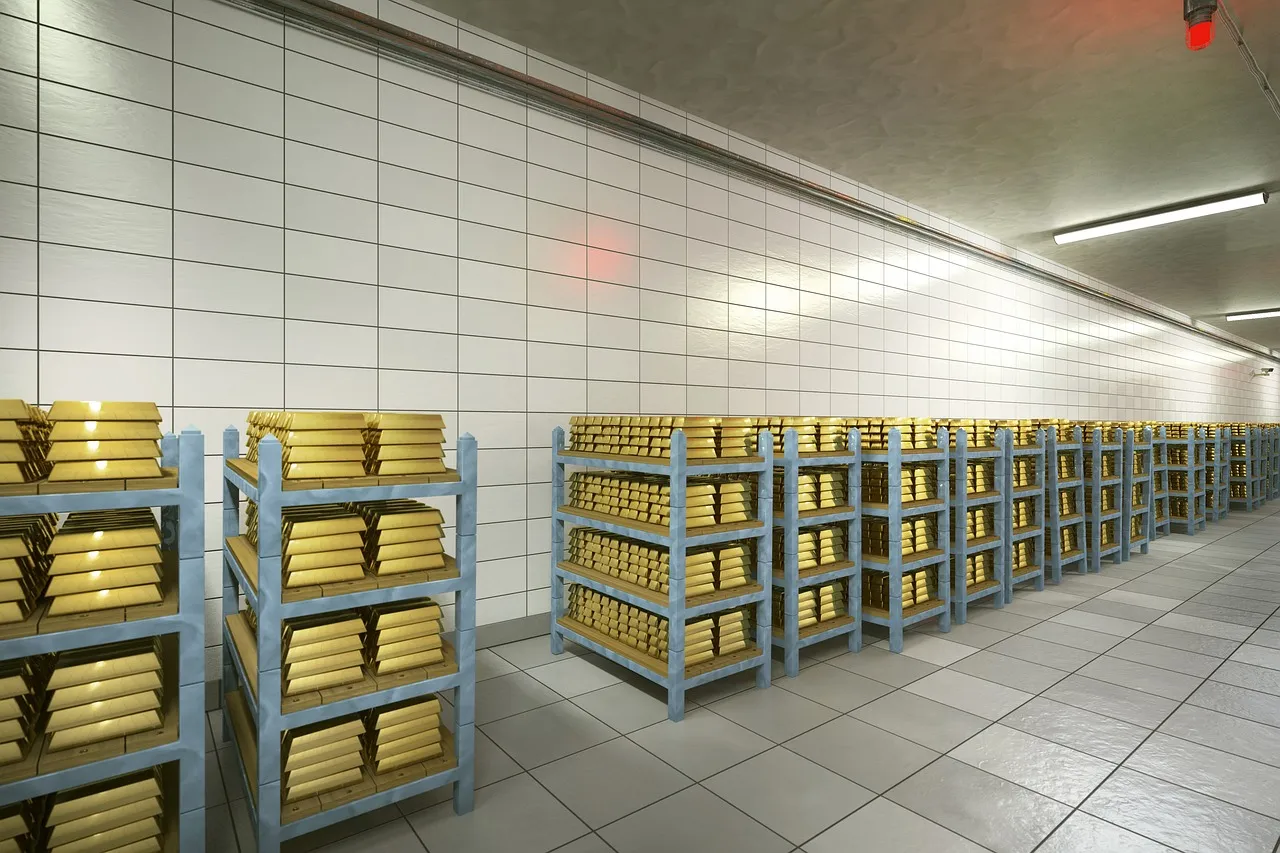
11 NOV 2026 — Singapore has opened its national currency vault to gold owned by other countries' central banks, sovereign entities and multilateral financial institutions. The Monetary Authority of Singapore (MAS) announced the move on Tuesday, 10 November. The vault can hold up to 500 tonnes. In the same release, MAS and the Ministry of Finance said Goods and Services Tax (GST) would be waived on specified wholesale gold services such as vaulting, refining, assaying and broking, with the change expected from April 2027.
The service arrived slightly later than first promised. At a precious metals conference on 15 June, Deputy Prime Minister Gan Kim Yong, who chairs MAS, said the central bank would introduce it "by October this year". The 10 November release does not explain the gap and does not say whether any central bank has signed up.
How the custody service works
Gold is held on an allocated basis, according to the MAS service page. Particular bars are assigned to each customer and recorded individually. Deposits must meet the London Bullion Market Association's Good Delivery standards. MAS will also open custody accounts for a few bullion banks based in Singapore, so that official holders can get trading liquidity from those banks through bilateral arrangements.
That 500 tonnes is about two and a half times the gold Singapore keeps in its own reserves. The reserves data Singapore reports to the International Monetary Fund (IMF) show 6.546 million fine troy ounces at the end of September (IMF reserves data). At 31.1035 grams an ounce, that is about 203.6 tonnes, and 500 divided by 203.6 is roughly 2.5. The same series rises from 6.223 million ounces in April to 6.549 million in June, an addition of about 10 tonnes on our arithmetic. None of the sources we read say where MAS stores its own gold. Private vaults are larger still. Gan put commercial capacity in Singapore at more than 2,000 tonnes.
Fourteen years of building a gold market
-
GST removed from investment gold
Singapore stops charging GST on investment precious metals. The World Gold Council later counted the move among the building blocks of Singapore's bid to become a regional bullion hub.
-
A kilobar contract on SGX
The Singapore Exchange (SGX) sets this date for its physically delivered Singapore Kilobar Gold Contract, traded in lots of 25 one-kilogram bars, according to a joint announcement.
-
Working group formed
MAS and the industry's Singapore Bullion Market Association (SBMA) set up a Gold Market Development Working Group with banks, SGX and the World Gold Council.
-
Focus areas published
The group names gold capital-market products, vaulting and logistics standards, and an over-the-counter (OTC) clearing system for large bars and kilobars. Vaulting for foreign central banks is flagged as a possibility.
-
Six clearing banks sign up
Singapore's DBS, OCBC and UOB, along with Deutsche Bank, ICBC Standard Bank and J.P. Morgan, agree a memorandum of understanding with SGX. Deutsche Bank's release says the system will handle both bar sizes, and that interbank trading should start to build in 2027.
-
Vault opens, tax plan announced
MAS says industry testing of the clearing system is complete and its rulebook will be finalised soon.
-
Clearing system ready
SGX and the six banks aim to finish preparations.
-
Live trading
Trading and market operations are expected to begin.
-
GST waiver expected
Details are due at Budget 2027.
-
Kilobar futures
SGX targets a physically deliverable Gold Kilobar Futures contract.
The scope of the tax change
Two existing measures stay in place. The import and local supply of investment precious metals are already exempt from GST, and an Approved Refiner and Consolidator Scheme waives the tax on related goods passing between approved refiners and consolidators. The new framework extends the waiver to specified wholesale services between the institutional participants it covers, so long as the gold is "not for domestic consumption", in MAS's words. It names no qualifying institutions and no legislation yet.