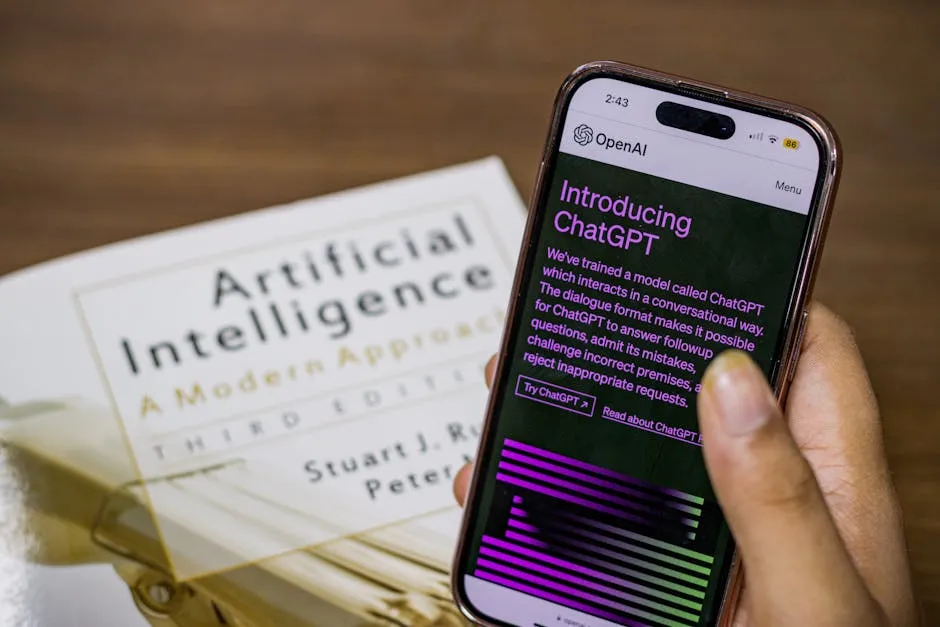
OpenAI made GPT-5.5 Instant the default model for ChatGPT on 5 May 2026. The release moves the assistant's baseline behaviour onto a new model and rolls out memory features that span past conversations, uploaded files and connected Gmail accounts — a significant expansion of the assistant's persistent context surface and one that has reorganised the security and product conversation around ChatGPT in the weeks since.
Disclosure: RECATOOLS is written with the assistance of Claude, made by Anthropic, which is also named in this article. Readers should weigh that interest.
OpenAI's published comparisons are against GPT-5.3 Instant, the default it replaced; in internal evaluations, it says, GPT-5.5 Instant produced 52.5% fewer hallucinated claims on high-stakes prompts covering areas such as medicine, law and finance. What changed most in user experience is not the marginal intelligence gain but the addition of cross-session, cross-surface memory.
What "memory" actually means
ChatGPT has had a limited memory feature for over a year. The behaviour was opt-in, scoped narrowly, and intended to remember user-stated preferences ("I prefer concise answers," "I work in finance"). The GPT-5.5 release expands the scope dramatically.
The default behaviour now includes search across the user's prior chat history at query time, retrieval of relevant context from uploaded files held in the user's ChatGPT account, and — for users who connect their Google account — search of Gmail content for relevant signals. The user is not asking explicitly for any of these sources; the model decides at query time which past artefacts to consult based on the current question.
The user-visible effect is a markedly more personalised assistant. Ask a follow-up question without restating context, and the model has the context. Ask a question that touches an old conversation you forgot you had, and the model surfaces the relevant detail. Ask a question that interacts with email content, and the model integrates it without an explicit retrieval step.
The trade-off OpenAI is making
Persistent memory and Gmail integration are not free changes. They expand the assistant's data surface in three directions that each carry consequences.
The first is privacy. ChatGPT now reads more about the user's life than it previously did, and inevitably more than the user holds in active working memory. Even with opt-out controls, the default behaviour is for the model to know more across more sessions. OpenAI describes temporary chats that do not use or update memory and per-surface disconnects (Gmail can be unlinked), and it added "memory sources", which show what context, such as saved memories or past chats, was used to personalise a response, with options to delete or correct it.
The second is security. The same indexing capabilities that produce personalisation produce prompt-injection vectors. An assistant that reads Gmail to personalise answers is also an assistant that reads any malicious content arriving in Gmail. EchoLeak-class vulnerabilities — zero-click prompt injection where indexed content hijacks the assistant — are now applicable to ChatGPT in a way they previously were not.
The third is competitive. OpenAI's pitch with GPT-5.5 Instant is not raw intelligence; it is contextual fluency. Microsoft Copilot integrates with the same Gmail, Calendar and Drive surfaces; Google's Gemini-in-Workspace has the same data access by design. OpenAI is racing to match the contextual depth those competitors get for free from owning the productivity surfaces, while keeping its independent positioning intact.
Product surface vs model surface
A subtle effect of the change is that GPT-5.5 Instant is more a product surface than a model upgrade. The underlying intelligence improvements are modest; the integration surface is the headline. This pattern matches the broader 2026 trajectory of frontier AI: differentiation is happening less at the model layer and more at the agent, memory and tool-use layers.
The Instant change is one piece of a strategy to move ChatGPT from a clever chat box to the default surface where most knowledge work happens.
How enterprises are reacting
For enterprise IT teams, three immediate questions arise:
Whether to allow the new memory features. OpenAI said enhanced personalisation from past chats, files and connected Gmail was rolling out first to Plus and Pro users, with Business and Enterprise plans to follow in the coming weeks. Enterprises will want to decide whether to allow it before it arrives, given data-egress concerns and a desire to control what gets retained across sessions.
Whether existing Gmail content audits cover ChatGPT ingestion. Compliance teams have spent years scoping who and what can read corporate Gmail. ChatGPT becoming an indexed reader changes the assessment. Organisations may prefer to control OpenAI's Gmail integration at the workspace administrator level rather than rely on user-level controls.
Whether to renegotiate vendor contracts. Memory features change the data-processing posture of OpenAI's offering. Larger customers may seek contract amendments that explicitly scope memory retention, deletion guarantees and audit rights.
None of these are unsolvable, and OpenAI's enterprise product is structured to accommodate them. But the rollout is likely to prompt a round of vendor-risk reviews.
What the benchmark profile actually looks like
The detailed scoreboard at the frontier in May 2026 looks roughly like this:
| Model | GPQA Diamond | SWE-bench Verified | Input $ / M | Output $ / M |
|---|---|---|---|---|
| Claude Mythos Preview | 94.6% | — | Restricted access | |
| Grok 4 | ~87.5% | mid 70s | $3.00 | $15.00 |
| Gemini 2.5 Pro | ~86% | high 70s | $1.25 | $10.00 |
| GPT-5.5 Instant | ~84% | low 80s | $1.25 | $30.00 |
| DeepSeek V4-Pro | — | 80.6% | $0.435* | $0.87* |
GPT-5.5 Instant is not the best at any single axis. It is the best-integrated assistant for the largest active user base. The 2026 product question is whether the latter is a more durable advantage than the former.
* DeepSeek V4-Pro prices are a 75% promotional rate that ran to 31 May 2026; list prices were $1.74 input and $3.48 output. Gemini 2.5 Pro prices are for prompts of up to 200,000 tokens.
Note: rapid-release variants (Flash, mini, nano) typically drop to $0.25 per million input tokens, with proportional output reductions. Pricing for proprietary frontier models updates monthly; figures above reflect published rates as of mid-May 2026. The benchmark numbers in the scoreboard are themselves moving targets — every major lab is running new evaluations against newer model checkpoints monthly, and harnesses differ in ways that produce 2–3 point swings on the same underlying capability. Treat the table as a snapshot, not a permanent ranking.
What to watch next
Three signals will shape the next quarter for OpenAI's product strategy. First, retention metrics on the new memory defaults — whether users keep them on or churn back to a more constrained mode tells you whether the personalisation gains outweigh the privacy frictions. Second, EchoLeak-class disclosures against ChatGPT specifically — the data-surface expansion changes the attack surface. Third, enterprise adoption curves under the new default — whether contract renewals accelerate or slow.
The change is not a frontier breakthrough. It is a product bet that contextual fluency beats marginal intelligence for the majority of users, and that the trade-offs it introduces will resolve in OpenAI's favour. The market will adjudicate the bet over the rest of 2026.
What developers building on the API need to know
The default-model change affects ChatGPT, but developers can reach the same model through the API, where OpenAI offers it as chat-latest. OpenAI says the model's responses are tighter and more to-the-point; its announcement does not give API-specific latency or context-window figures for the new model.
What has not changed materially is pricing. Frontier-tier API pricing remains at the $1.25 input / higher-output range that has held for several months, with the smaller variants (mini, nano) at substantially lower price points. Developers evaluating GPT-5.5 against alternatives like DeepSeek V4-Pro will continue to face the cost-versus-integration trade-off that has defined the market through the first half of 2026. The Instant change is best understood as OpenAI sharpening its existing product wedge rather than repricing it.
For organisations rolling out ChatGPT internally through enterprise tenants, four operational changes should land on the next-quarter roadmap. Update internal acceptable-use policies to address the memory features explicitly — employees need clear guidance on what kinds of personal or work data they should allow into cross-session memory and what kinds they should explicitly mark as not-to-be-remembered. Refresh the data-classification documentation to reflect that ChatGPT now reads more sources than it did. Audit the OpenAI workspace administrative settings to confirm that the appropriate memory scopes are enabled or disabled per the organisation's posture. And brief security and compliance teams so that any incident response involving ChatGPT can account for the new persistent-memory surface — incidents that previously could be scoped to a single session may now have multi-session implications.
Correction, 18 October 2026: An earlier version compared GPT-5.5 Instant with GPT-5 rather than GPT-5.3 Instant, described a memory admin panel OpenAI has not announced, and gave wrong prices for DeepSeek V4-Pro and Gemini 2.5 Pro. We have also removed unsourced claims about enterprise customers, OpenAI's wider business and the model's API performance.
Sources

View author profile → · Editorial policy