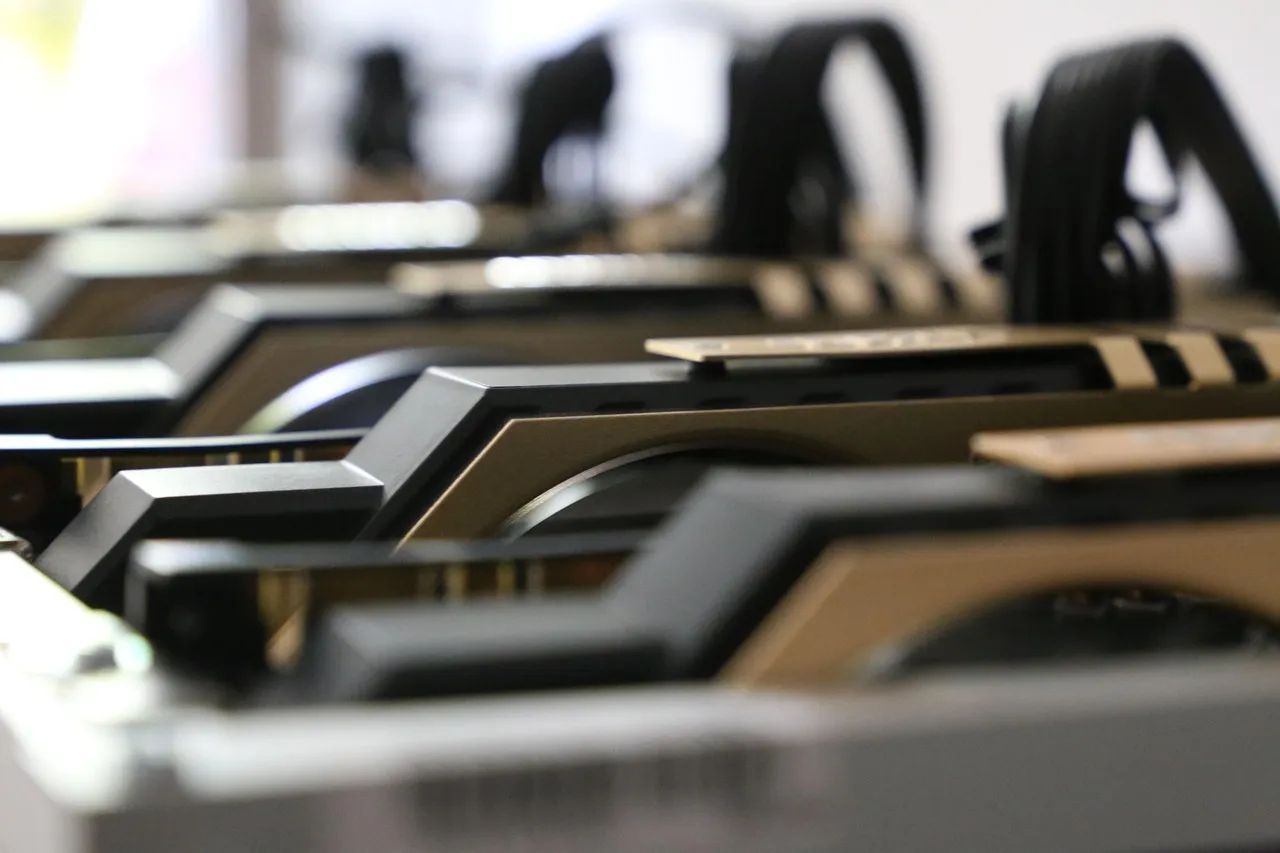
China is weighing whether to let its leading artificial-intelligence companies buy a limited number of Nvidia's H200 chips, technology outlet The Information reported on 8 July 2026, citing people familiar with the matter. The report — relayed by CNBC and Reuters and not confirmed by Beijing — describes a potential partial reversal of China's own restrictions on the US-designed processor, with officials said to have told firms including Alibaba, ByteDance and DeepSeek they may be permitted to buy a capped quantity. The total under discussion is reportedly below 200,000 units, less than half of what Chinese firms had sought, and no final policy has been announced.
This is a reported deliberation, not a decision, and it should be read as one. But if it holds, it would resolve a standoff that has run for most of a year, and it exposes the central feature of the current US-China chip relationship: both governments are now managing a mutual dependence that neither fully controls.
The confirmed ground beneath the report
Strip away the unconfirmed reporting and the established facts are these. On 8 December 2025, President Trump announced the US would allow H200 exports to approved customers in China. On 13 January 2026 the Bureau of Industry and Security published a final rule — effective 15 January — moving the H200 and AMD's MI325X from a presumption of denial to case-by-case licensing review. To qualify, applicants must show the exports will not reduce chip-making capacity available to US customers, that Chinese buyers have adopted customer-screening compliance, and that the products pass independent third-party testing in the United States. A separate Section 232 proclamation on 14 January imposed a 25% duty. In the words of Under Secretary for Industry and Security Jeffrey Kessler, the rationale was that export controls should evolve with technology while protecting national security, and that permitting H200 sales under controlled conditions would strengthen the American technology ecosystem.
Under that framework, the US reportedly cleared roughly ten Chinese firms to buy the H200, with a cap of about 75,000 units per customer. And then very little happened — because the gating factor moved to Beijing's side. Nvidia's own accounts make the stall concrete: on the company's Q1 FY2027 earnings call on 20 May 2026, chief financial officer Colette Kress said the US had approved H200 licences for China-based customers, but that Nvidia had yet to generate any revenue and was uncertain whether any imports would be allowed, and so was again excluding China data-centre compute from its outlook. Nvidia shipped no Hopper products to China that quarter, against $4.6 billion of Hopper products shipped to China a year earlier. A chip Washington had spent political capital to license was sitting untouched because China would not clear it in.
Why Beijing kept it out — and why it may be relenting
China's reluctance was strategic. Beijing has pushed its technology sector toward domestic chips, principally Huawei's Ascend line, as part of a long-running self-sufficiency drive, and it has cited cybersecurity concerns about relying on US hardware. Tightly controlling who may buy the H200 lets Beijing draw in foreign compute without undercutting the home industry it is trying to build; some reporting suggests Beijing may favour domestic accelerators for inference workloads while reserving imported compute for selected training tasks. Some reports also suggest restrictions around the classes of workloads and data the imported chips could process, although no formal rules have been published.
What appears to be shifting the calculus is scarcity. Chinese AI developers, like their US counterparts, are short of the computing capacity needed to train advanced models, and domestic supply plus a dwindling grey market has not closed the gap. That pressure is the reason the reported reconsideration is credible even though it cuts against Beijing's stated preference for home-grown silicon.
The Huawei question
Whether China can afford to keep leaning on domestic chips is the analytical crux, and here the most detailed public assessment comes from the Council on Foreign Relations, whose senior fellow Chris McGuire argued in a December 2025 analysis that Huawei's position is weaker than its rhetoric. By that account — drawing on Huawei's own public roadmap and an acknowledgment attributed to DeepSeek — Huawei's best current chip, the Ascend 910C, performs roughly 60% as well as Nvidia's H100 — a chip similar to the H200 but with lower memory bandwidth — by DeepSeek researchers' estimate, and the chips Huawei plans to ship in 2026 reportedly carry a lower processing-performance rating than the 910C, with McGuire noting that Huawei does not plan a chip exceeding the H200's performance until a future-generation Ascend product slated for late 2027. On that reading, even an aggressive scale-up would leave Huawei producing only a small fraction — CFR estimates around 4% — of Nvidia's aggregate AI compute.
That is one side of a contested debate, and it comes from an organisation that favours maintaining export controls, so it should be weighed as an argued position rather than a neutral measurement. The counter-view, held by those who supported loosening, is that keeping Chinese developers inside the Nvidia software ecosystem preserves US technological influence more effectively than ceding the market to Huawei entirely. Both cannot be fully right, and the reported H200 reversal is, in effect, the market testing which is closer to the truth.
Washington is not of one mind either
The evenhanded reading has to acknowledge that the US position is itself divided. The Commerce Department built the licensing pathway; reporting through the year described the State Department pressing for tougher conditions, and members of Congress pushing legislation to harden controls and remove executive discretion. So the picture is not a decisive America facing an ambivalent China. It is two capitals, each internally split, each trying to convert a technological lead or lag into leverage, and each periodically reversing course. For anyone downstream, the operative fact is instability: rules on both sides have moved more than once and could move again.
What it means beyond the two capitals
For AI builders outside the US and China — including across Asia — the durable signal is bifurcation. Analysts increasingly describe a compute world splitting into a Nvidia-CUDA stack dominant in the US and allied markets and a Huawei-Ascend stack inside China, a split that raises costs for any developer who must support both. From a neutral vantage such as Singapore's, the H200 episode is less a story about who wins than about how much of global AI infrastructure is now shaped by two governments' export decisions rather than by the technology on its merits.
Key Takeaways
The Information reported on 8 July 2026 that China is weighing limited H200 purchases for firms including Alibaba, ByteDance and DeepSeek, reportedly capped below 200,000 units; Beijing has announced no final policy.
The US has permitted H200 exports since a BIS rule effective 15 January 2026 — case-by-case licensing, a 25% duty, and testing and compliance conditions — and has reportedly cleared about ten firms at up to 75,000 units each.
Nvidia's CFO said in May the H200 had generated no China revenue, as Beijing, not Washington, had been the gating factor.
Some reporting suggests any imports could be steered toward training while domestic chips serve inference, with limits on data and workloads — but no formal rules have been published; the effect would protect Huawei's Ascend line.
CFR argues Huawei's chips trail the H200 and that its 2026 roadmap regresses; this is an argued pro-control position, countered by those who say engagement preserves US influence.
Correction, 18 October 2026: An earlier version attributed the Council on Foreign Relations analysis to Brad Setser and dated it 7 July 2026; it is by Chris McGuire and was published on 15 December 2025. The 60% performance comparison is against Nvidia's H100, not the H200. We have also clarified that the reported cap of 75,000 units per customer comes from news reporting rather than US government materials.