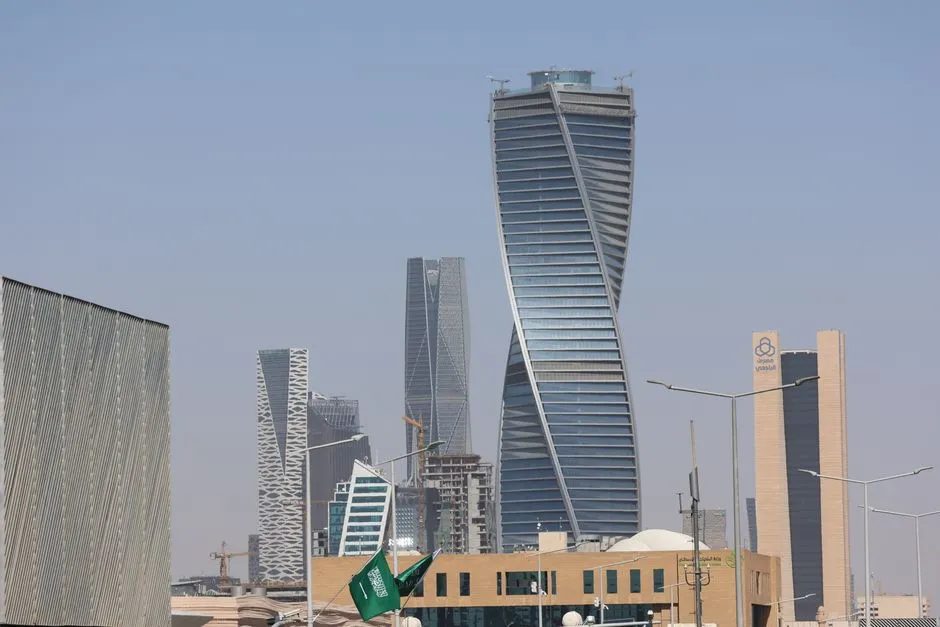
5 SEP 2026 — HUMAIN, the Saudi Public Investment Fund's artificial intelligence company, unveiled humain-m3 at LEAP in Riyadh on 3 September and described it as a frontier Arabic language model. The architecture is the tell: 428 billion parameters, 23 billion active per token, a mixture of experts. That is MiniMax-M3, which Shanghai's MiniMax open-weighted on 1 June. MiniMax built it, and MiniMax's licence will govern it.
What HUMAIN commissioned and what MiniMax delivered
The announcement is unusually direct about this, which is to its credit. HUMAIN commissioned the model and MiniMax developed it. The company's own release calls humain-m3 a model developed by MiniMax, in research preview on HUMAIN Node.
MiniMax did add work of its own: further pre-training on more than a trillion tokens of Arabic-native content. That is what separates the result from the base model anyone could download in June.
This is not a Saudi ground-up build. The parameter count, the active-parameter count and the mixture-of-experts design all come from M3, on base weights MiniMax released publicly three months earlier.
The benchmark claim has no numbers in it
HUMAIN says that across seven public Arabic benchmarks, humain-m3 achieved the highest average score among the frontier models tested. Read that sentence for what it does not contain.
The announcement names none of the seven benchmarks, publishes no score on any of them, and does not list the other frontier models in the comparison. The phrase "among the models tested" describes a set the announcing party chose. There is no independent run.
An average across seven unnamed tests is not a result anyone can check, reproduce or dispute. The claim sounds strong, and it omits the one piece of information a reader would need to disagree with it.
This is the same pattern we found in OpenAI's Astra launch two days earlier, where the headline figure depended on a harness the lab built. The difference is that OpenAI at least published figures to argue with.
The licence is where sovereignty stops
HUMAIN says the weights will be released after additional safety training, targeted for next month, under the MiniMax Community License.
A national AI model announced as a sovereign capability will be distributed under terms written by a Chinese company, and any restriction in that licence — on fields of use, on downstream training, on redistribution — applies to Saudi Arabia's model because it applies to the lineage it was built from.
Sovereignty in AI is usually claimed at four layers: the chips, the data centre, the data and the model. HUMAIN has a strong claim on the middle two. The Arabic corpus is its own contribution, and serving runs on its own node. The model layer is licensed, and the announcement does not pretend otherwise.
The other Arabic model, three weeks ago
The contrast with HUMAIN's first Arabic model is the telling part. In August, Microsoft moved HUMAIN's ALLAM model onto Foundry and into Copilot, which we covered at the time. ALLAM is the Saudi-developed line.
Three weeks later, the model called frontier is built on Chinese weights. That is a reasonable engineering call: starting from a strong open-weight base and specialising it is cheaper and faster than pre-training 428 billion parameters. It is also a statement about where the capability frontier can be reached from.
It says the ceiling on a national model is not ambition or capital, both of which Saudi Arabia has, but access to a base. And the accessible bases at this scale are increasingly Chinese, because Chinese labs release weights that American labs at the same tier do not.
What this makes MiniMax
MiniMax gets something from this that is easy to miss in a story about Riyadh. Its shares rose on the announcement, but the durable gain is structural. Its licence is now the governing document for another country's national model, and its architecture is the substrate.
Open-weighting a frontier model is often read as giving something away. This is what comes back. A lab that publishes weights at 428 billion parameters becomes the default starting point for every government and enterprise that wants a specialised model and cannot pre-train one. Each of those inherits the lab's licence terms.
American labs at the same capability tier have kept their frontier weights closed. That is a defensible safety position, but it carries a competitive cost: the sovereign-AI market is being built on the weights of the labs that publish.
What would make the claim checkable
Three things, none of them expensive. Name the seven benchmarks. Publish the per-benchmark scores rather than an average. And name the models in the comparison, with the date each was run, because a frontier comparison ages in weeks.
Until then the verifiable content of the announcement is this: a Chinese open-weight model has been specialised on a trillion tokens of Arabic and is being served in Saudi Arabia under a research preview, with weights to follow under a Chinese licence. That is still an achievement, and it is a smaller claim than a frontier Arabic model built by a national champion.

View author profile → · Editorial policy