
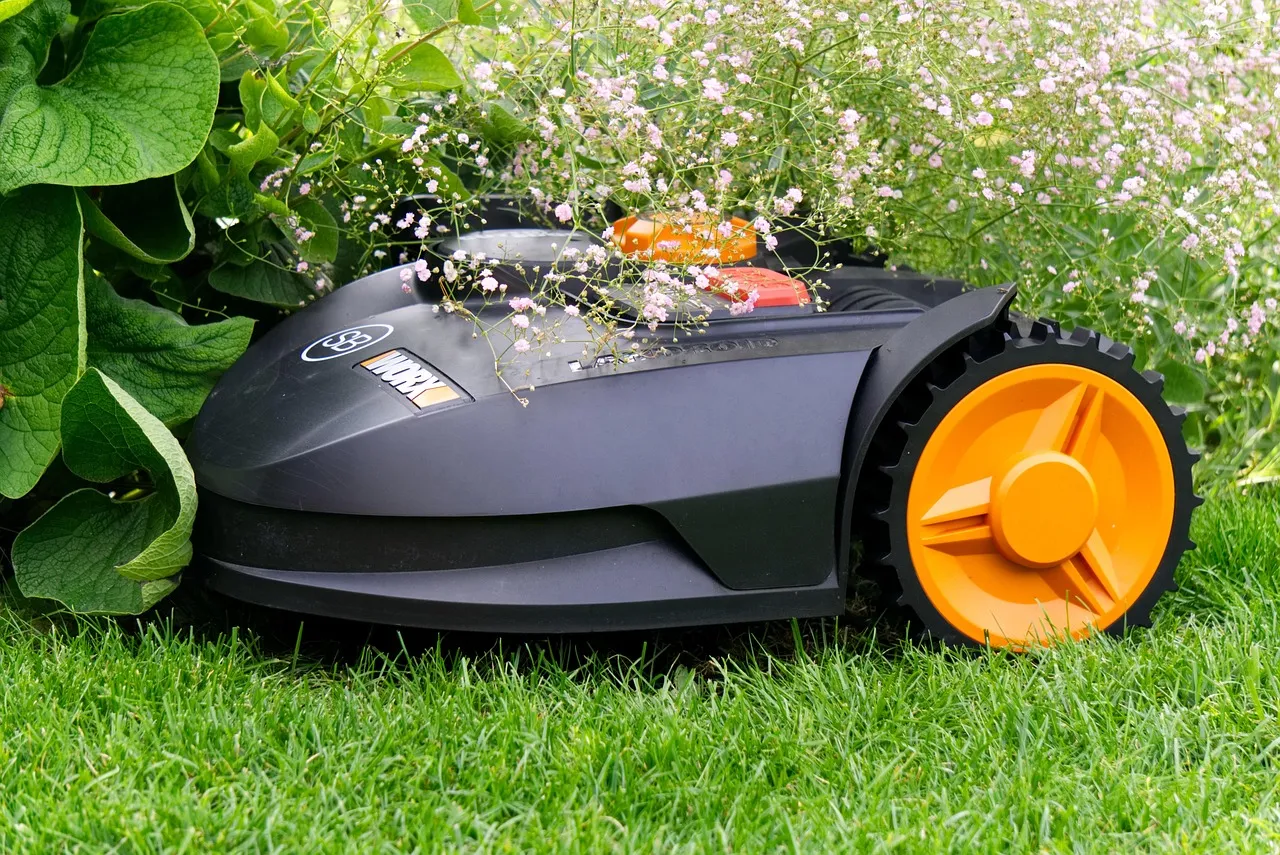
1 SEP 2026 — Chinese robot vacuum and lawn mower makers are turning to Europe and Australia after the FCC added advanced robotic devices to its list of equipment banned on national security grounds. Europe is preparing an investigation of its own, and more than 40 per cent of these exports already go there.
What the American rule actually does
The FCC added advanced robotic devices to its covered list, reaching humanoids, quadrupeds, robot vacuums and lawn mowers. To gain authorisation, a robot must be assembled in the United States with at least 65 per cent of its components by value produced domestically, rising to 75 per cent in 2029.
Devices that already held FCC authorisation before 28 July 2026 are unaffected.
The grandfather clause changes what this is
Exempting every model already authorised does not clear the shelves. It freezes the product line in place.
Chinese robot vacuums and mowers authorised before the cut-off can continue to be imported and sold. What cannot happen is a new model entering the market. The practical effect is an American market where existing Chinese devices remain available but are not refreshed, while competitors ship new hardware annually.
That is a real commercial disadvantage and it is a slow one. It also means the security rationale sits awkwardly: if these devices present a national security risk, the ones already in American homes present the same risk, and they are explicitly permitted to stay.
Read the rule as industrial policy
The instrument is a domestic content requirement, which has specific effects.
The 65 per cent US-content threshold, rising to 75, tests where the value was added. It says nothing about who made the device or wrote its software. A Chinese manufacturer that assembles in the United States with a domestic supply base qualifies; an American brand assembling in Vietnam does not.
That has a specific consequence for this region, and it is the opposite of the usual one. The standard response to American restrictions on Chinese goods has been to move assembly to Malaysia, Vietnam or Thailand, and the resulting relocation has been a significant source of regional manufacturing investment. This rule closes that route by requiring American assembly. Southeast Asia is not the workaround, and firms should read the text rather than assume the usual precedent applies.
The pivot goes to a market that is already looking
Ninebot, Ecovacs, Mova, Roborock and a cluster of startups are showing product in Europe, and Shenzhen-based LDRobot, which sells mowers under the Anthbot brand and listed in Hong Kong in May, is launching in Australia.
Europe is where the exports were going anyway. More than 40 per cent of Chinese robotic lawn mower exports are destined for the EU, and they grew 37.7 per cent over the first three quarters. So the pivot mostly intensifies a concentration that already existed.
And the EU is expected to open an investigation into Chinese robotic lawn mowers. Increasing dependence on a market that is preparing a trade action against your category is a shorter runway than the coverage suggests, not a solution to the American problem.
Is a lawn mower a security risk
Calling this absurd is the easy response, and the facts make it harder than that.
A modern robot mower carries cameras, GPS or RTK positioning, persistent connectivity and a detailed map of the property it works on. It knows the boundaries of a garden, when people are home, and in some implementations streams video. It is a sensing platform in a private space. The concern is real.
What is contestable is the remedy. The risk described is a property of connected devices with cameras and mapping, and it applies to any manufacturer. Addressing it through country of origin and domestic content, rather than through rules on data handling, firmware updates and where telemetry is sent, leaves an American-assembled device with identical capabilities facing no equivalent requirement. Provenance is what the rule can measure. Behaviour is where the risk lives.
The pattern with this regulator
The FCC's covered list was built for telecommunications equipment, and it is being extended into consumer robotics.
We reported that the FCC's Chinese optical transceiver measure was a draft rather than a rule, which is the caution that applies whenever this list expands: the announcements and the enforceable instruments are not the same document, and coverage regularly conflates them. This one has a stated content threshold and a dated cut-off, which are the marks of a rule rather than a proposal.
The direction is clear enough. A list created to keep specific Chinese network vendors out of American carrier infrastructure now covers devices people buy to cut their grass, on the same statutory basis. Whether that is proportionate is a policy question. That it is a large expansion of scope is not in dispute.
What a regional buyer should take from it
Two things, and neither is about American policy.
Product availability in this region is unaffected. These devices remain on sale across ASEAN, and a market that loses American demand is a market with more supply and more competitive pricing everywhere else.
The privacy question does travel, and it is the one worth acting on. The FCC's description of the capability is accurate whatever one makes of its remedy, because these devices do map a property and they are connected. So the question to ask about a machine you are buying concerns behaviour rather than origin. What does it send, how often, and does it still work with the cloud connection turned off? Very few buyers ask, and the answer is usually in the specification.