WASHINGTON, 3 AUG 2026 — The Federal Communications Commission added advanced robotic devices to its list of restricted imports on 29 July, barring new models of machines that walk on two or four legs from entering the United States on national security grounds. China's government has called the measure unilateral bullying and said it will take countermeasures.
The headlines suggest a broad ban. The restriction is narrow, and that narrowness is what matters. It applies to new device models seeking authorisation. Robots already purchased, and models previously authorised, are unaffected.
What was decided
The FCC placed "advanced robotic devices" and "mobile robots" on its restricted equipment list. The category is defined by locomotion: machines that mimic human or animal movement by standing on two or four legs.
The justification came from a White House task force, which concluded that foreign-built robots present "a cybersecurity risk that threatens the security of critical infrastructure" and "the safety and security" of US residents. It is the same logic already applied to telecommunications gear and network cameras: a box with sensors, always-on connectivity and vendor-controlled firmware is treated as an intelligence surface rather than an appliance.
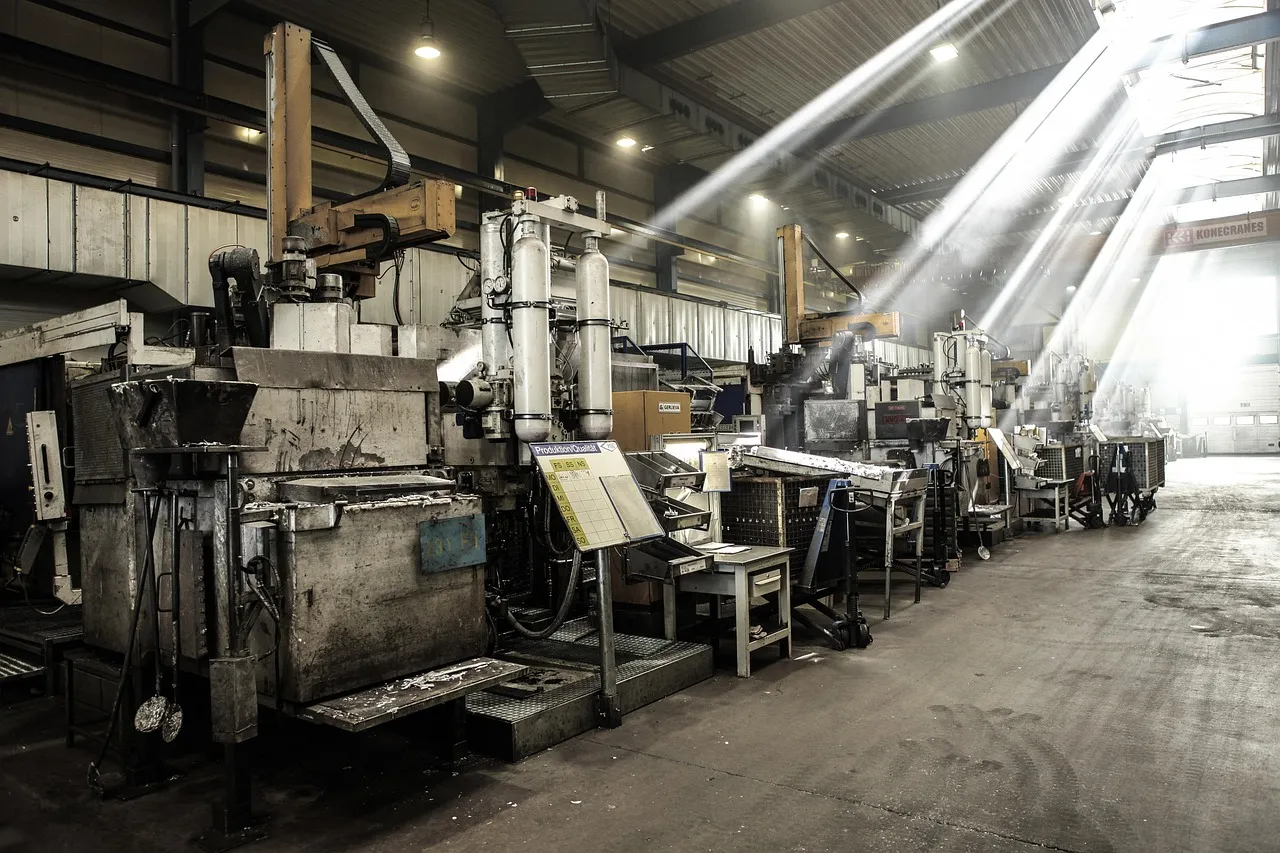
Most affected machines in the United States are industrial rather than domestic. They work in confined spaces — automobile plants, storage warehouses — where a fixed layout and repetitive movement suit a legged platform.
Beijing's response
Foreign Ministry spokesperson Mao Ning said China "has always firmly opposed the US overstretching the concept of national security to suppress Chinese companies", and that the ministry would take "necessary measures" to protect the interests of Chinese firms. The argument advanced was that protectionism of this kind damages American competitiveness and American consumers.
The Ministry of Commerce went further, saying China would "resolutely retaliate" if Washington insisted on acting unilaterally, and describing the measure as market distortion. Its statement referenced power inverters alongside robots — a second category caught by the same restriction, and one with far larger installed volumes, since inverters sit between solar panels and the grid.
The timing is deliberate on both sides. A leaders' summit is on the calendar for September.
Why robots and inverters end up in the same paragraph
The pairing looks odd until the security argument is accepted on its own terms. The restriction is not about what these products do. It is about what they are: networked hardware, sitting inside infrastructure, taking firmware from a vendor beyond the reach of domestic legal process.
| Property | Humanoid robot | Grid inverter |
|---|---|---|
| Sits inside operational premises | Yes — factory floors, warehouses | Yes — behind the meter, on the grid edge |
| Carries sensors | Cameras, lidar, microphones | Electrical telemetry |
| Persistent network connection | Yes | Yes |
| Firmware controlled by the vendor | Yes | Yes |
| Failure mode if compromised | Surveillance; physical action in a workspace | Grid instability at scale |
RECATOOLS comparison of the two product categories caught by the same restriction, drawn from the stated national-security rationale. The properties are ours; the rationale is the White House task force's as reported.
Read that way, it is not robotics policy. It is the same supply-chain doctrine applied to a new device category, and it was applied before the market matured rather than after.
What it does and does not do
Because the restriction binds new model authorisations, its effect is prospective. Nothing is recalled. An operator running imported machines today continues to run them, and the installed base ages out on its own schedule.
What changes is the pipeline. A manufacturer that cannot obtain authorisation for its next model loses the American market at the point where the current generation is superseded, which for this category is measured in a year or two rather than a decade. For buyers, the question is not whether their current machines keep running. It is whether the next order can come from the same supplier.
Where this lands in Southeast Asia
Reporting on the ban puts China's share of the global humanoid robot market at roughly 85 per cent. Most units sold in the United States are imported, predominantly from China, and the restriction is written around country-of-origin risk rather than performance. That combination tends to move assembly rather than eliminate it.
Malaysia and Vietnam have both absorbed electronics manufacturing displaced by earlier rounds of US-China restriction, and Singapore hosts a concentration of robotics research and systems integration disproportionate to its size. A restriction tied to manufacturing location and firmware ownership creates an obvious opening for any supplier that can keep design authority and update infrastructure outside China.
Whether the opening is taken depends on something the measure does not address. Assembling a robot in Penang does not by itself change who writes its firmware, and the security argument here is about the update channel as much as the origin label. Regional manufacturers that can demonstrate control of the software supply chain, not merely the factory, are the ones positioned to benefit.
For ASEAN operators, the immediate consequence is a market that splits in two — the models available in the United States and everything else — with support lifecycles splitting alongside them.
What to watch
Three things will show whether this escalates. Whether Beijing's countermeasures name specific American firms or stay at the level of rhetoric. Whether the restriction is broadened from new authorisations to installed equipment, which would convert a prospective measure into an immediate cost for operators. And whether the September summit takes it up at all.