12 SEP 2026 — China's AI chipmakers have raised prices as the shortage of high-bandwidth memory reaches them, according to a Reuters report on 10 September. Huawei is said to be asking more than 250,000 yuan, about 37,000 US dollars, for the Ascend 950DT still expected in the fourth quarter — an increase of 20 to 50 per cent on quotes from two months ago. The export controls on HBM did not stop the chips being built. They made them dearer.
The numbers, across four vendors
Huawei is the headline, but the trend is broader. Cambricon has repriced its next-generation part, provisionally the 690, at 20 to 30 per cent above its quotes from two months ago. The smaller rivals MetaX and Iluvatar CoreX have made similar increases.
The most useful data point is the one that is already shipping. The Ascend 950PR sold for roughly 60,000 yuan a card at the start of the year and now fetches more than 80,000, a rise of about 30 per cent.
The distinction matters. Forward pricing on an unreleased part can be aspirational, but a 30 per cent increase over nine months on a card with an established street price shows a market clearing higher.
Why memory is the constraint
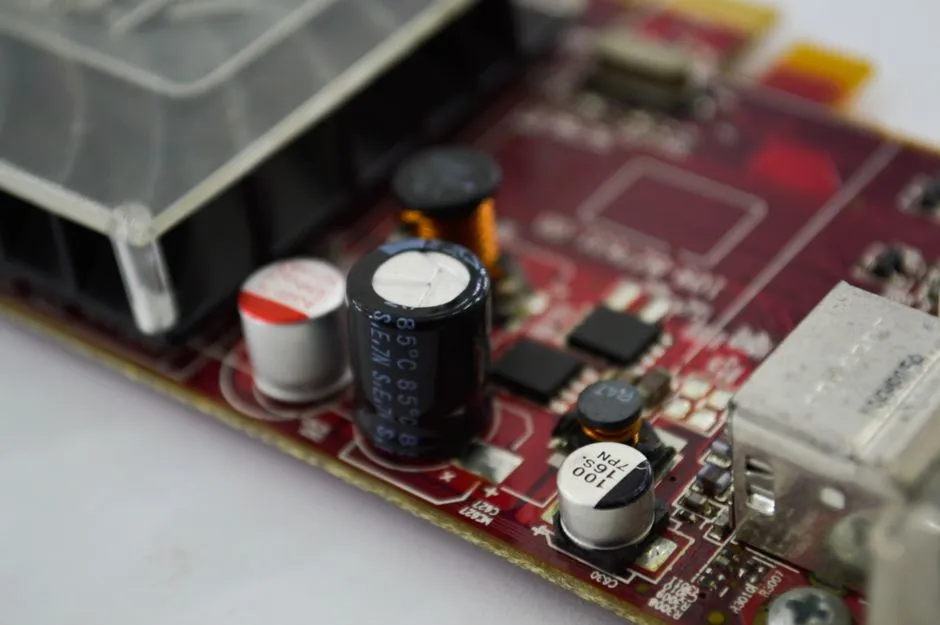
High-bandwidth memory is the stack of DRAM bonded next to the processor on an AI accelerator. Training and inference are both limited far more often by how fast parameters can be moved than by how fast arithmetic can be done, which is why HBM capacity and bandwidth, rather than transistor count, decide what a modern accelerator is worth.
It is also produced by very few companies, at high cost, with capacity booked well ahead. We wrote in August that the memory bolted to an AI chip costs more than most people assume, and separately that one maker forecasts five more years of shortage. This is that forecast arriving as a price.
What the export controls actually did
The United States restricted HBM exports to China in December 2024. The stated purpose was to deny Chinese developers the memory that frontier accelerators require.
Nearly two years on, the measurable effect is not a shortage of Chinese chips. Chinese manufacturers turned to grey-market supply, and the chips are being built and sold — at prices 20 to 50 per cent above where they were, and above the global rate for the same components.
Read that as a tariff rather than an embargo, and the consequences follow straightforwardly. A tax on an input is paid by whoever buys the output, so Chinese AI developers now pay more per unit of compute than competitors buying the same memory at world prices. That is a competitive disadvantage — just not the one the policy intended. It is also a cost a sufficiently determined buyer can absorb.
The full picture, however, is less often stated. A durable cost disadvantage on the industry's most expensive input is significant. Compounded across a training run, 30 per cent on the accelerator is a large number, and it falls hardest on the smaller labs rather than on the ones with state backing.
Who pays, in practice
Not Huawei, on this evidence. A vendor that can raise prices 20 to 50 per cent and still expects to sell is a vendor whose customers have nowhere else to go, and the export controls are part of what removed the alternatives.
The buyers are Chinese cloud providers and model labs, several of which have appeared in this publication recently on their own merits. Their compute cost has moved by a third in under a year while their competitors' has not, and the pass-through reaches the price of inference, the economics of open-weight releases, and how long a lab can afford to keep a model free.
For a buyer in this region the relevant question is narrower. If a model is served from Chinese infrastructure, its unit economics just deteriorated, and pricing that looked structurally cheap may have been reflecting a hardware cost that is now rising.
The other half of the squeeze
This is not only a China story. Nvidia, facing no export restrictions at all, has signalled server price rises above 15 per cent from the same memory shortage.
That comparison is the most useful thing in the reporting. Roughly 15 per cent is what the shortage costs a buyer with full legal access to the global HBM market. The 20 to 50 per cent is what it costs a buyer without it. The gap between those two figures is the price of the export controls.
What to watch
Whether the Ascend 950DT actually ships in the fourth quarter at the quoted price. A pre-launch quote is a negotiating position until units are in customers' hands, and the 950PR's move is currently the firmer evidence.
And whether Chinese HBM production changes the arithmetic. Domestic capacity is the announced answer to this constraint, and the question that will decide whether the premium persists is whether that capacity can reach the bandwidth and yield current accelerators need. Announcements of fabs are not the same as connections to them, which is a pattern we have had cause to note in announced capacity that never became connections.