Two American services spent 2026 replacing the same measurement with the same replacement, and arrived at rules that disagree about who is too fat and about what happens next.
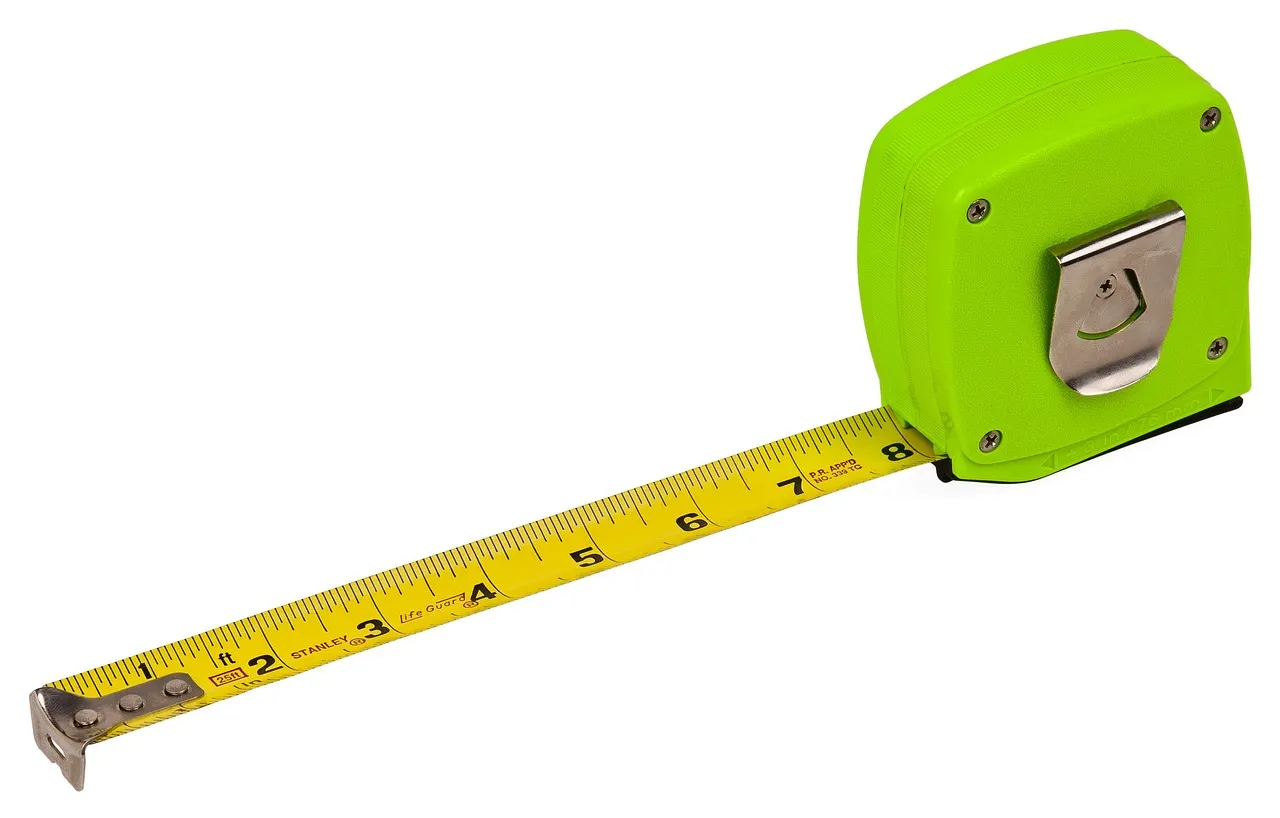
Both moved to waist-to-height ratio: waist measured at the navel, divided by height. Both apply it twice a year. One set the line at 0.55, the other at 0.52, and only one of them kept the tape test that WHtR replaced.
What each service actually did
The Army signed Army Directive 2026-13 on 1 July 2026. WHtR became the sole authorised body-composition standard across the Regular Army, National Guard and Reserve, with the threshold at less than 0.55. The older circumference-based tape test and the other body-fat assessments were rescinded — and not merely demoted. A soldier who exceeds the ratio cannot ask for a tape measurement to overturn it, because the method no longer exists in the programme.
The Marine Corps had moved first, with an effective date of 1 January 2026 and a threshold of 0.52 or less. But the Corps kept a second stage: a Marine who exceeds the screen goes on to a body-fat assessment, either the multi-site tape method or bioelectrical impedance, with the stated intention that impedance replaces taping once the equipment is fielded.
The two services took the same instrument and drew opposite conclusions about what it is. For the Army the ratio is a verdict; for the Marines it is a screen.
What the two numbers mean in inches
A ratio does not become intuitive until you multiply it by a person. Because both thresholds are ratios, the gap between them widens with height.
| Height | Army limit (0.55) | Marine limit (0.52) | Difference |
|---|---|---|---|
| 5 ft 4 in | 35.2 in | 33.3 in | 1.9 in |
| 5 ft 8 in | 37.4 in | 35.4 in | 2.0 in |
| 5 ft 10 in | 38.5 in | 36.4 in | 2.1 in |
| 6 ft 0 in | 39.6 in | 37.4 in | 2.2 in |
| 6 ft 4 in | 41.8 in | 39.5 in | 2.3 in |
⚠️ Take someone 5 ft 10 in with a 37.5-inch waist. Their ratio is 0.536. They are comfortably inside the Army standard and outside the Marine one. The same body, measured the same way on the same morning, is compliant in one service and referred for further assessment in the other.
There is also a smaller difference hiding in the comparison operators. The Army standard is stated as strictly less than 0.55; the Marine standard is 0.52 or equal to. Someone landing exactly on their service's number passes in one and fails in the other, which is the sort of detail that only matters to the person it happens to.
The asymmetry that matters more than the two decimals
Most coverage compares 0.55 against 0.52 and stops. The consequential difference is what a failure leads to.
Under the Marine arrangement, exceeding the ratio starts a process. WHtR is cheap and fast, which is what a screen should be, and the expensive measurement is reserved for the people the cheap one flags. A Marine who is unusually built — heavily muscled through the trunk, or simply proportioned oddly — has a route to a measurement that looks at body fat rather than at circumference alone.
Under the Army arrangement there is no second stage, by design. The ratio is the standard, and the directive removes the alternatives explicitly rather than by omission. That buys consistency and speed, and it means a soldier whose ratio is wrong for reasons unrelated to fat has nothing to appeal to inside the programme.
Neither rule is obviously better. A screen with an appeal is fairer to the individual but slower and more expensive in aggregate, while a single number is the opposite. It is odd that two services with near-identical requirements evaluated the same trade-off in the same year and came to opposite conclusions.
Why waist-to-height at all
The attraction is that it needs a tape and a height, has no correction factors, and cannot be gamed by posture in the way multi-site taping can. It also travels: the same 0.5-ish figure appears in civilian public-health guidance as a rule of thumb, usually phrased as keeping your waist to less than half your height.
That civilian rule of thumb is 0.50. Both services sit above it — the Marines by two hundredths, the Army by five. These are not health targets. They are administrative screens for a specific population, set at a level the organisation chose.
What to do with this
If you are serving, use your own service's number and its own measurement protocol, because the navel-height convention matters as much as the threshold and both services specify it. If you are between services, or advising someone who is, the two-inch difference at average height is the practical fact.
If you are simply curious where you stand, the ratio takes ten seconds. Our waist-to-height ratio calculator and body fat calculator both work from tape measurements; the second implements the older circumference method, which is the one the Army has now removed from its own programme and the Marines have kept as a second stage. That explains why the two calculators can give different, valid answers for the same person.
Where this comes from, and what will date it
The Army threshold, the sole-standard language and the rescission of the alternatives are from Army Directive 2026-13 and the Army's own announcement of it. The Marine threshold, the retention of the multi-site tape and the intention to move to impedance are from the Corps' administrative message and its accompanying release. The inch conversions are arithmetic on the two ratios and reproduce with a calculator.
Two limits apply to this comparison. We have described the screening thresholds and the appeal structure, not the full programmes — both services have exemptions tied to fitness-test scores, and the Marine arrangement carries body-fat allowances that we have not worked through here. And these are administrative standards for military service; nothing above is a health threshold, and the civilian 0.5 figure is included as context rather than as a target.
This dates on the next revision. The Marine side has signposted a change already, stating an intent to replace taping with impedance as equipment reaches units. The two services would then still differ on the threshold and agree that a screen deserves a second stage.

View author profile → · Editorial policy