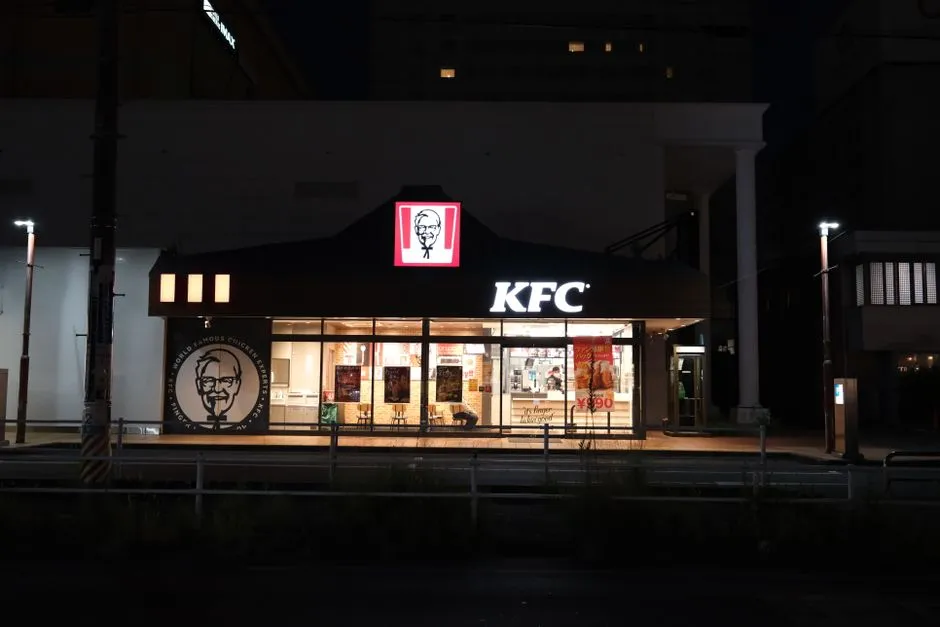
A cyberattack on a single Japanese logistics company has done what few data breaches ever manage: it emptied shelves and shut down ordering at one of the country's biggest restaurant chains. Nichirei Corporation, Japan's largest cold-chain and frozen-food logistics operator, first detected system failures on 13 July 2026 and, after investigation, confirmed on 16 July that the cause was a cyberattack involving unauthorised access to its servers. The consequences were not abstract. KFC Japan, which relies on Nichirei to move ingredients to its stores, warned that all of its more than 1,300 restaurants could face shortages, reduced menus, shorter hours or temporary closures.
How a data-security incident became a food-supply incident
The mechanism here is worth understanding precisely, because it is the whole story. When Nichirei detected the unauthorised access, it did what incident-response playbooks advise: it disconnected affected systems to contain the intrusion and protect data. But Nichirei is not an ordinary IT shop — it runs the temperature-controlled warehousing and transport that roughly 5,000 customers depend on, across around 140 refrigerated distribution centres. Disconnecting those systems to contain the attack also halted inbound and outbound operations at the refrigerated warehouses and stopped frozen-food shipments. In Nichirei's case, in other words, containment and operational shutdown amounted to much the same thing.
That is the uncomfortable trade-off at the centre of cyber-physical incidents. In a purely digital business, pulling systems offline buys time at the cost of some internal disruption. In a logistics operator, pulling systems offline stops trucks and freezes shipments — and the disruption immediately becomes someone else's, cascading downstream to every business that depended on the flow of goods.
The downstream cascade
For KFC Japan the effect was direct. Ingredient deliveries, including its signature Original Recipe chicken, were disrupted from 14 July, and the chain suspended online ordering through its website and app, along with delivery services, saying it could not predict when normal deliveries would resume. Individual stores were left to manage shortages as inventory ran down.
It did not stop at fried chicken. Kura Sushi, the conveyor-belt sushi operator, reported shipment delays for some products in western Japan, and Aeon, one of the country's largest supermarket chains, reported delays and product shortages. All of it flowed from one compromised logistics network. Nichirei worked with an external cybersecurity specialist and said it planned to resume operations sequentially from 17 July; its shares fell as much as 6.5 per cent intraday during the week, the sharpest drop since August 2025, and the company said the financial impact was still being assessed.
A few things should be stated carefully rather than assumed. The attacker has not been identified, and Nichirei has described the incident as unauthorised access and a cyberattack without confirming it was ransomware, so it should not be labelled as such. Separately, Nichirei found that some affected servers held personal information and notified Japan's data-protection authorities, but it has not confirmed any data leakage — that part remains open. Confectioner Ezaki Glico has also reported ice-cream shipment delays, because some of its products rely on Nichirei's refrigerated warehouses. Other recent cyberattacks on Japanese firms are separate events with no indicated link.
Key Takeaways
Nichirei, Japan's largest cold-chain logistics operator, detected unauthorised access on 13 July 2026 and confirmed a cyberattack on its servers on 16 July.
Containing the attack meant disconnecting systems, which halted refrigerated-warehouse and frozen-food operations serving around 5,000 customers.
KFC Japan's 1,300-plus restaurants faced shortages, menu limits and closures; it suspended app, website and delivery ordering. Kura Sushi and Aeon also reported delays.
The attacker is unattributed and the method unconfirmed — it should not be called ransomware; potential personal-data exposure was flagged to regulators but not confirmed.
The core lesson is operational resilience: just-in-time distribution turns a single logistics operator into a chokepoint, and containment that stops the physical operation is its own risk.
Correction, 18 October 2026: An earlier version described shipment problems at Ezaki Glico as a separate incident; Glico's ice-cream delays stem from the same attack on Nichirei, whose warehouses it uses.
View author profile → · Editorial policy