Eva Chin writes for RECATOOLS on business and commerce in Southeast Asia: the commercial decisions small businesses actually face, and the markets and regulation around them. She also covers Chinese naming and cultural practice, education and qualifications across the region, and the arithmetic of a tropical home. Coverage of cultural practice is educational — it explains what a tradition holds and where it came from, and does not make predictive claims.

194
Articles
Business
Primary beat
Jul 2026
Writing since
~1230 min
Total reading

Articles · Chinese Culture Showing 11–20 of 46

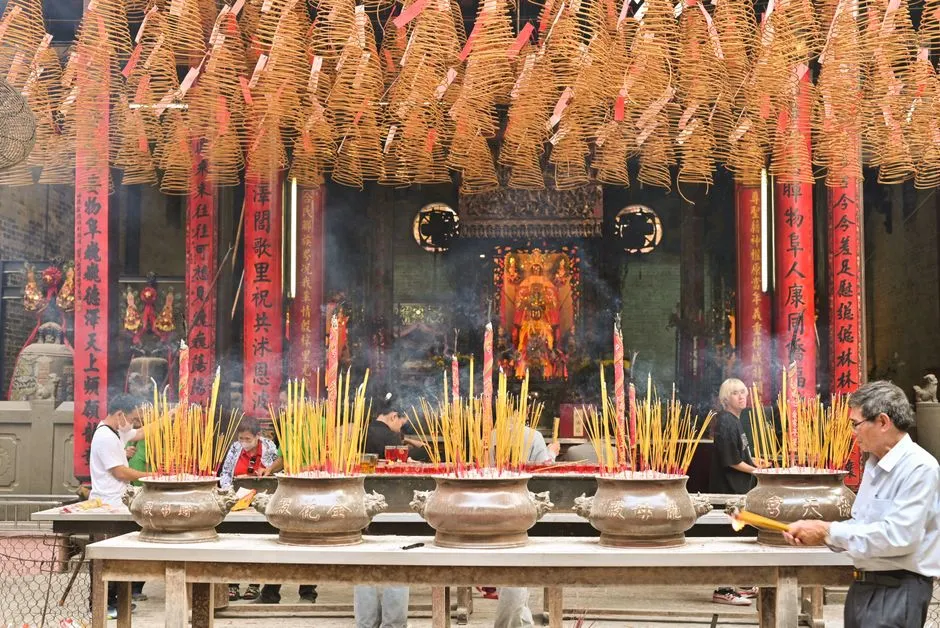
Incense coils hang above rows of burning joss sticks at a temple altar while a man tends the offerings
Chinese Culture

Fan Tai Sui 2027 and why the lists of signs disagree

Four of five counting schemes name the same four animals for 犯太岁 in the 2027 Goat year: the Goat, Ox, Dog and Rat. What they disagree on is the labels, the day the year starts, the general's name, and what Singapore temples list.

30 Sep 2026 · 7 min read
A scroll of Chinese characters held flat by two wooden paperweights
Chinese Culture

Who wrote the Zhou Gong dream book, and why copies disagree

No dream book can be traced to the Duke of Zhou. His name most likely came to the genre through a line of Confucius. The only complete early copy is a 10th-century Dunhuang booklet in Paris, a different book from the one online, and two public copies of the web text differ on 330 of 952 lines.

27 Sep 2026 · 7 min read
Rows of round red lanterns with gold tassels strung in lines across a traditional Chinese street, with a white hanging banner of brushed characters at the left
Chinese Culture

Chinese character riddles, and how to solve them

一口咬掉牛尾巴 — one mouth bites off the ox's tail. Bite the tail off 牛, put 口 underneath, and you have written 告. That is nine riddles in ten: we worked all 88 in our own collection by hand and 88 per cent were solved by taking a character apart, not by thinking about oxen.

25 Sep 2026 · 8 min read
An antique brass balance scale with two hanging pans
Chinese Culture

What bone weight (称骨) most people get

In the 称骨 bone-weighing reading, the most common weight is 3两9钱 and the middle one is 4两. We added up the weight for every hour of every day from 1950 to 2009 to see how often each result comes up, how the four tables work, and where they came from.

22 Sep 2026 · 4 min read
A palace gate plaque written in traditional Chinese characters
Chinese Culture

How China, Taiwan and Unicode each choose between 峰 and 峯

峰 and 峯 are one word with one sound. Whether they count as one character depends on who is asking. Here is how the mainland, Taiwan, Hong Kong, Singapore and Unicode classify variant characters, with worked examples and what it means for search.

21 Sep 2026 · 6 min read
Close-up of a microphone grille against a blue background
Chinese Culture

Counting the sounds a Mandarin tongue twister is built to drill

Mandarin tongue twisters are built from pairs of sounds that some speakers pronounce the same. Counting those pairs in the pinyin shows which speakers each twister catches, and that they barely touch the tone changes they are often used to drill.

21 Sep 2026 · 6 min read
An open antique book beside a metal armillary sphere in low light
Chinese Culture

A Ziwei chart is four numbers and some arithmetic

The static chart is a function of the year stem, the lunar month, the lunar day and the birth hour. Locating the Life Palace, deriving the bureau and placing the emperor star are all arithmetic, and the leap month is where implementations genuinely disagree.

21 Sep 2026 · 8 min read
An old book of Chinese text lying open under a spotlight
Chinese Culture

Most of a Chinese almanac entry is arithmetic, and the rest disagrees

The day's stem and branch, officer, mansion and clash all follow from the date by formula. The suitable and avoid lists come from a table instead, and for 21 September 2026 one almanac lists opening a business as suitable while another lists it as something to avoid.

21 Sep 2026 · 7 min read
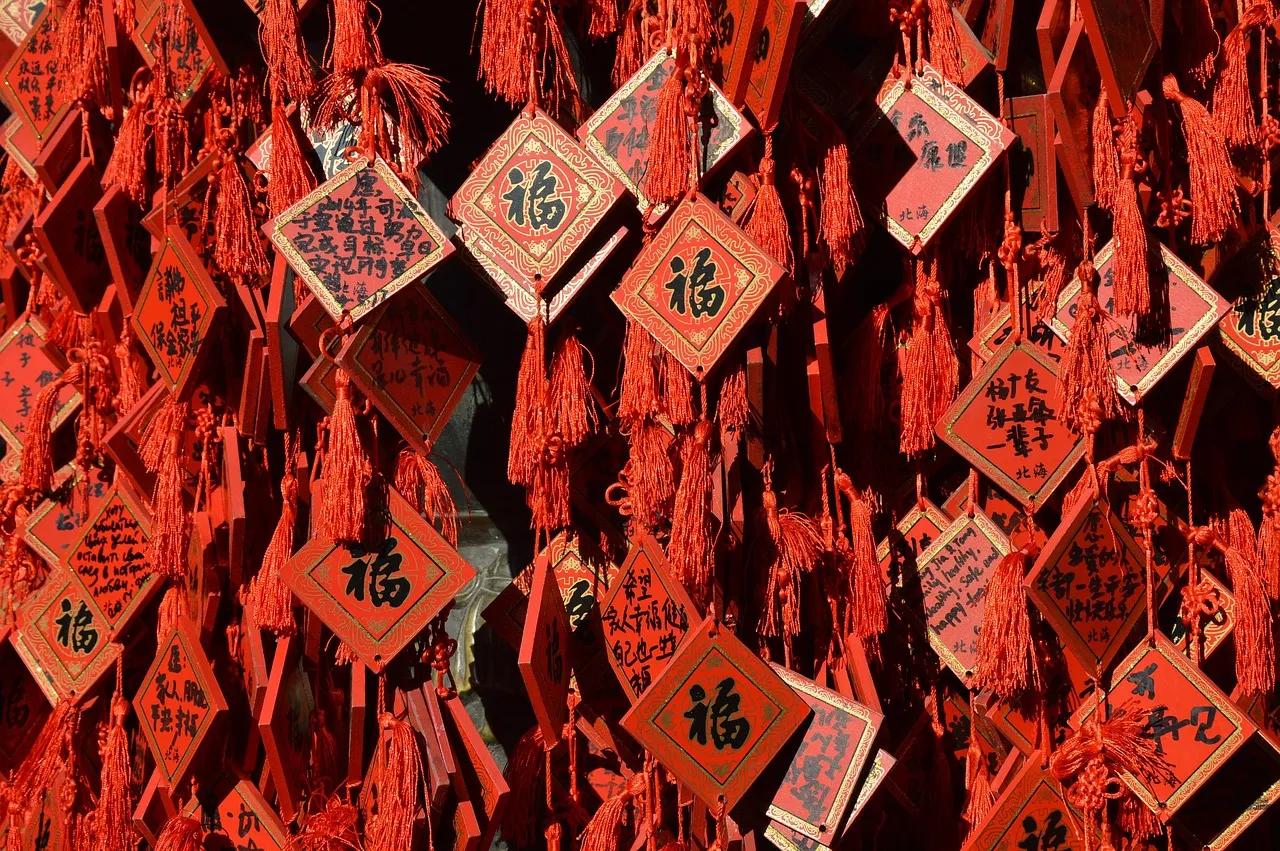
Red wooden prayer plaques marked with the character 福 hanging at a temple
Chinese Culture

Two temples print the same Guanyin oracle and not one of its hundred poems matches

The Guanyin oracle is a set of a hundred numbered poems, drawn by lot in temples across Hong Kong, Taiwan and Singapore. Comparing two complete editions character by character, not one of the hundred is identical and sixty-nine differ by nine characters or more — though the story attached to each number still matches on ninety-five.

21 Sep 2026 · 8 min read
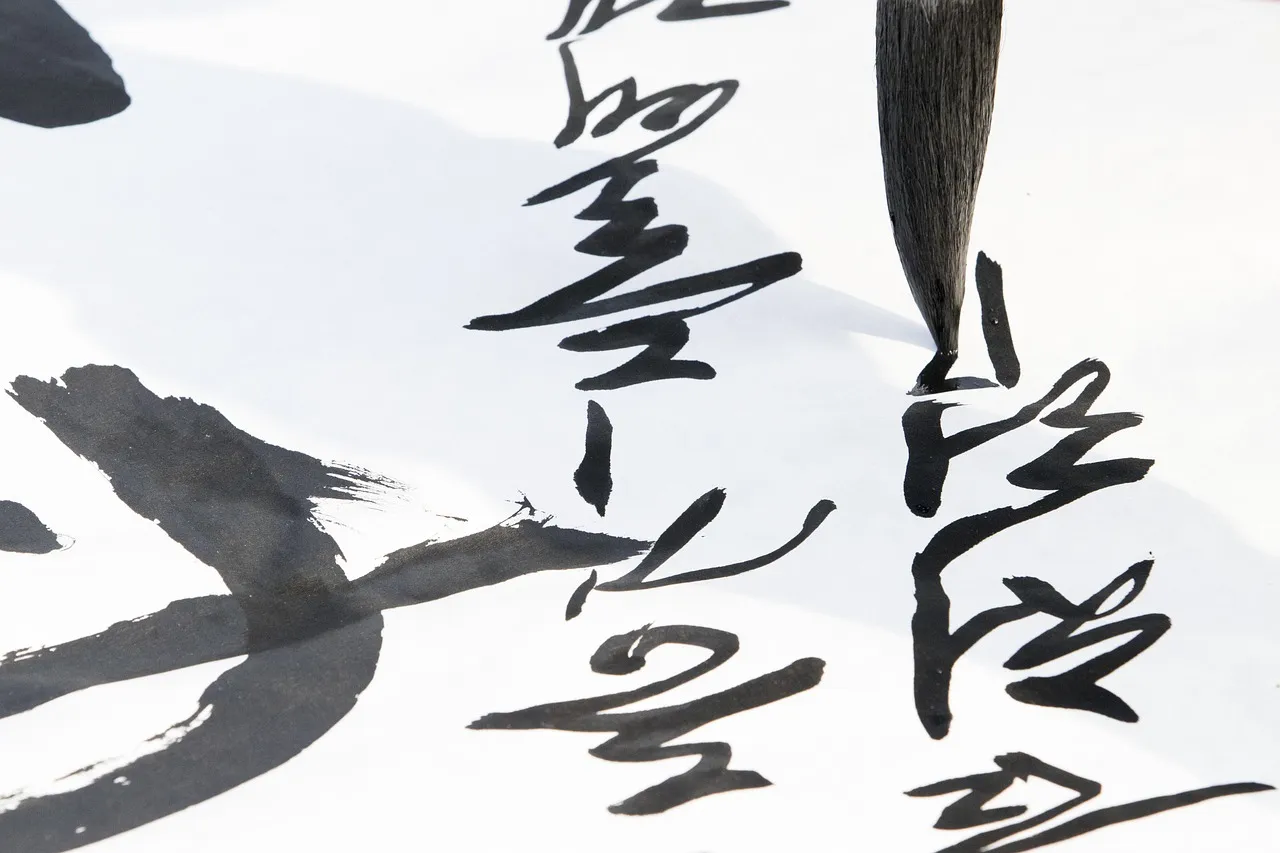
A calligraphy brush beside Chinese characters written in black ink
Chinese Culture

Four governments publish stroke order and only one publishes the rules

Taiwan publishes seventeen numbered principles. The mainland publishes 8,105 per-character orders and no principles at all. Hong Kong publishes animations it tells you not to rely on, and Japan's general-use kanji list mentions stroke order zero times.

21 Sep 2026 · 10 min read
Editorial Policy →
Advertisement