OpenClaw
Your own open-source personal AI agent that actually does things — the lobster way
Overview
OpenClaw is a free, open-source (MIT) personal AI agent, created by Peter Steinberger, that runs locally on your own devices and connects a large language model to your files, apps, and the web. Now among the most-starred projects on GitHub, it is stewarded by the non-profit OpenClaw Foundation (established July 2026, backed by OpenAI, NVIDIA, Microsoft, and Tencent), with Steinberger as technical steward.
Pricing
Pricing shown for reference only. These figures reflect RECATOOLS research as of 16 Sep 2026 and may be out of date or incomplete. This is not financial or purchasing advice — always confirm the current price on the provider’s official website before making any decision.
Use cases
What you can produce with OpenClaw
- A personal agent you talk to from WhatsApp, Telegram, Slack or iMessage, rather than yet another separate app
- Shell commands, file edits and dev workflows executed on your own machine from a chat message
- Scheduled recurring jobs that report back into the same chat thread
- Browser-driven research and form-filling carried out on your behalf
- New capabilities installed from ClawHub's 13,000+ community skills in about a minute each — vet every one before installing, since a Snyk audit flagged 13.4% for critical issues including malware and prompt injection
- A fully self-hosted, MIT-licensed agent with no vendor account and no per-seat cost
ASEAN Perspective
OpenClaw in Southeast Asia
Runs entirely on your own hardware with your own LLM keys, so no user data need leave the region — attractive for PDPA/GDPR-sensitive workflows. It works through messaging apps already ubiquitous in Southeast Asia (WhatsApp, Telegram, LINE, WeChat).
OpenClaw earns its hype: a free, MIT-licensed agent that lives in your existing chat apps and acts on your machine — files, shell, browser, APIs — with a 13,000-skill ClawHub registry and bring-your-own-LLM economics. Self-hosting keeps your automation out of other people's clouds, which suits privacy-conscious ASEAN developers. Two things changed in early 2026: creator Peter Steinberger joined OpenAI and the project moved to an independent foundation (it stays open), and security researchers put numbers on the risk — a Snyk audit flagged 13.4% of ClawHub skills for malware, prompt injection or leaked keys, and the registry has no review gate. This remains power-user software: setup is technical, and you own the sandboxing. Treat every skill as untrusted code and it's the most capable personal agent you can run yourself.
What people say
Three names in three months: launched as Clawdbot in November 2025, renamed Moltbot after an Anthropic trademark complaint in late January 2026, then OpenClaw three days later. The churn didn't slow anything down — the project became one of the most-followed on GitHub by late February 2026, and roughly half a million systems now run it.
What users rave about is the glue. OpenClaw sits in the chat apps you already use — WhatsApp, Telegram, Slack, iMessage and more — and actually does things on your machine: files, shell, browser, cron jobs. The skills ecosystem is the multiplier; ClawHub lists over 13,000 community skills, and installing a handful takes under a minute. People feed it YouTube videos to bootstrap new skills or hand it OAuth provisioning and let it run.
That same openness is the sharpest criticism. ClawHub has no review process, and a Snyk audit flagged 13.4% of skills for critical issues — malware, prompt injection, exposed API keys. Academic security papers now use OpenClaw as their case study in agent attack surfaces. Vetting every skill before install is not optional, and giving an autonomous agent shell access remains the fundamental risk you own. Setup is still firmly power-user territory.
Governance shifted in February 2026: creator Peter Steinberger joined OpenAI, and the project is moving to an independent foundation that keeps it open and MIT-licensed. Early signs point to continuity, but the maintainer question is fair to ask. For tinkerers who accept the risk, this is the most interesting personal-agent project going; anyone security-sensitive should sandbox it hard before letting it near real accounts.
Summary of public user & expert reviews, compiled by RECATOOLS.
Notable facts
- Created by Peter Steinberger, founder of PSPDFKit
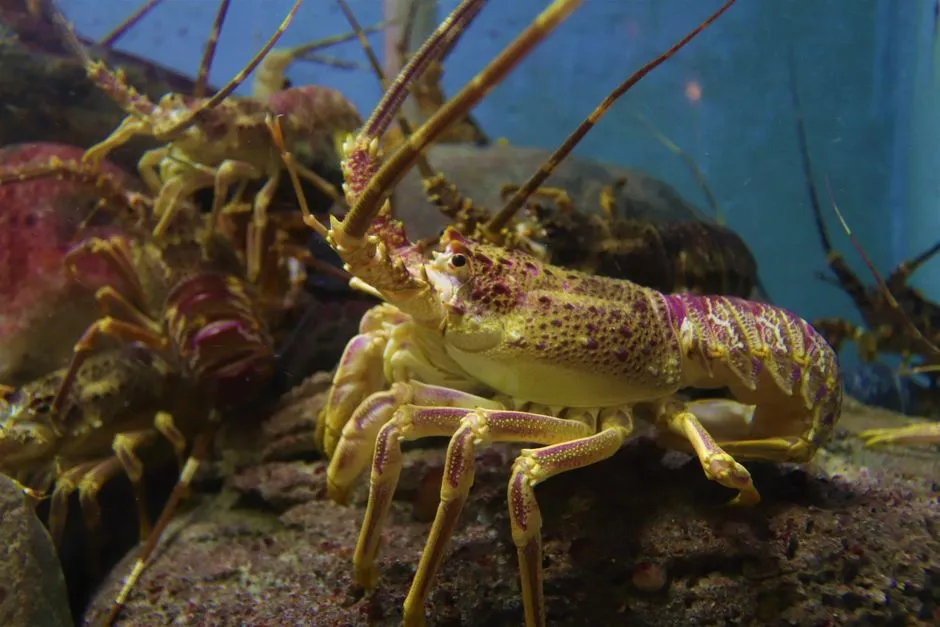
- Its mascot is 'Molty', a space lobster — hence 'the lobster way'
- Was previously known as clawdbot / moltbot before settling on OpenClaw
- Connects to 20+ messaging platforms as its interface, from WhatsApp to WeChat
Frequently asked questions
About this listing
This entry was compiled from publicly available data including OpenClaw's official website, press releases, documentation, and reputable third-party publications. RECATOOLS is not affiliated with OpenClaw unless explicitly stated.
Third-party AI tools update their pricing, features, availability, and policies frequently. Information here may be outdated by the time you read this — we make reasonable efforts to keep listings current, but cannot guarantee absolute accuracy.
For the latest details, please refer to OpenClaw directly →
Spotted something out of date? Suggest an update →



Alternatives to OpenClaw



More in Agents & Automation