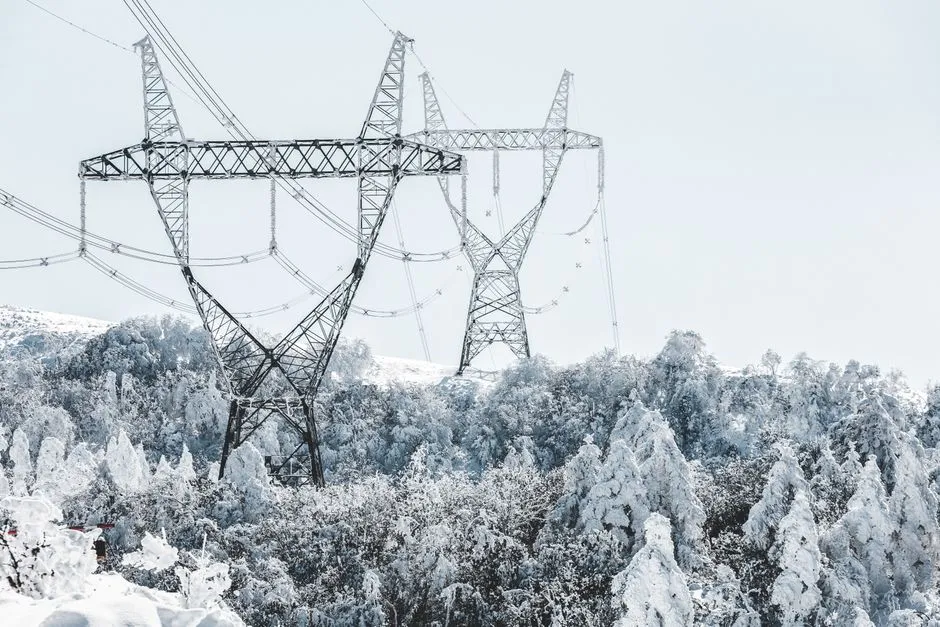
The cost of powering a data centre is being reassigned. In the United States, a tightening grid, record-priced capacity auctions, state-level tariff rules and a voluntary federal pledge signed in March 2026 are all pointed at the same question: when a hyperscale data centre needs hundreds of megawatts, who pays to generate and deliver that power — the operator, or everyone else on the grid? The emerging policy answer is that the operator should carry more of the cost. In Asia-Pacific, the same AI-driven demand is hitting hard power constraints too, but governments are more often managing it at the approval gate than through the electricity bill.
The market signal: demand is outrunning supply
The clearest price signal comes from PJM Interconnection, the grid operator for 13 states and Washington, DC. Its capacity auction for the 2027/2028 delivery year, announced on 17 December 2025, cleared at the FERC-approved cap of $333.44 per megawatt-day across the entire footprint, a 1.3% rise on the previous auction. At that price the cleared supply was worth about $16.4 billion, though PJM notes not all load pays the clearing price because of self-supply and bilateral contracts.
Two figures explain why the price is pinned to its ceiling. The forecast peak load rose roughly 5,250 megawatts over the prior auction, and PJM attributes nearly 5,100 megawatts of that increase to data-centre demand. For the first time, the entire regional market — including areas under the Fixed Resource Requirement — fell short of the reliability requirement, by 6,623 megawatts, leaving a 14.8% reserve margin against a 20% target. PJM's market-services head Stu Bresler put the imbalance plainly, saying that data centres' demand "continues to far outstrip new supply." PJM's independent market monitor, Monitoring Analytics, has separately argued that data-centre load forecasts are a major driver of recent capacity costs, much of it tied to facilities not yet built. The next auction is scheduled for June 2026.
A capacity price is a wholesale signal, not a retail bill, and it is only a fraction of what households pay. But it is the cleanest available proxy for scarcity, and it is what regulators are now reacting to.
The federal answer is voluntary
On 4 March 2026 the White House published the Ratepayer Protection Pledge, signed the following day by seven companies — Amazon, Google, Meta, Microsoft, OpenAI, Oracle and xAI — at a roundtable. The document asks leading hyperscalers and AI firms to build, bring or buy the power their data centres need, "paying the full cost of their energy and infrastructure, no matter what." Its five commitments cover new generation, delivery-infrastructure upgrades, separately negotiated rates payable whether or not the power is used, local workforce investment, and making backup generation available to the grid in emergencies.
The pledge is non-regulatory and unenforceable on its own terms. Legal analysts at Perkins Coie and Mintz both note that its effect depends entirely on implementation through utility tariffs, state regulatory processes and grid planning — none of which the federal government controls directly. In other words, the pledge restates a direction of travel; the binding work is happening one jurisdiction at a time.
Where the rules actually bite: Ohio and Texas
Ohio went first. On 9 July 2025 the Public Utilities Commission of Ohio approved a data-centre tariff for AEP Ohio that requires large new facilities to pay for at least 85% of the capacity they reserve — whether or not they consume it — on contracts running up to 12 years, with the rules applying to facilities above a 25-megawatt threshold. The commission framed it as protecting other industrial and residential customers from the cost of grid expansion. AEP Ohio reported in a February 2026 filing that it now holds binding contracts for 17,861 megawatts of data-centre load, of which 5,642 megawatts were signed under the new tariff. The framework is not settled: the Ohio Manufacturers' Association has challenged it at the Ohio Supreme Court, arguing it singles out one customer class.
Texas took a different route through legislation. Legal analyses of Texas Senate Bill 6 describe it as applying to large loads of 75 megawatts or more, signed by Governor Greg Abbott on 21 June 2025, and making them responsible for their own interconnection costs rather than spreading those costs across other ratepayers. They also describe ERCOT authority to order such loads to curtail or switch to on-site generation during emergencies, and a requirement that facilities interconnecting after 31 December 2025 install remote-disconnection equipment — a provision the industry has nicknamed the "kill switch." The Public Utility Commission of Texas published its draft interconnection rule, 16 TAC §25.194, on 12 March 2026, turning the statute into operational detail.
The direction has continued into 2026. On 10 June 2026 Governor Greg Abbott directed the PUC and ERCOT to require data centres to fully fund the electric infrastructure needed to serve them, so those costs are not passed to residential ratepayers, and asked the two agencies for a joint plan by 17 July 2026.
The common thread is mechanical, not rhetorical: minimum-demand charges, long contract terms, interconnection-cost responsibility and curtailment authority all move financial and reliability risk toward the operator that creates the load. That is a shift away from models where some grid-upgrade and capacity risks could be spread across broader rate classes. The policy trade-off is blunt: make the data centre pay too little and other customers subsidise the grid build-out; make it pay too much or too unpredictably and the project moves to a looser market.
APAC rations at the gate, not the meter
The Asia-Pacific faces the same demand curve, but the binding constraint is physical rather than financial, and the policy instrument is different. CBRE's regional team has described grid-power access as the biggest constraint on the market, particularly in Japan, where Tokyo is among the world's costliest places to build a facility.
Singapore is the clearest contrast with the US model. Rather than letting demand connect and then arguing over who pays, it controls supply at the point of approval. After imposing a moratorium on new data centres in 2019 — lifted in phases from 2022 — the government now allocates capacity through structured calls. Its second Call for Application (DC-CFA2) released 200 megawatts with a mandatory 50% green-energy requirement, with applications closing on 31 March 2026, building on a Green Data Centre Roadmap that targets at least 300 megawatts of additional capacity plus a further 200 megawatts reserved for operators meeting green standards. Singapore's installed base already exceeds 1.4 gigawatts across more than 70 facilities, according to a February 2026 parliamentary reply from its Ministry of Digital Development and Information. The effect is that cost discipline and reliability are embedded in the eligibility criteria — power-usage efficiency targets, green-energy share, workload value — rather than imposed afterward through a tariff.
For an ASEAN operator, the practical implication is that the US and APAC are asking the same question with different timing. In Texas or Ohio, a project proceeds through tariff and interconnection rules that assign costs and curtailment obligations to the large load. In Singapore, the threshold question is whether the project qualifies for capacity allocation at all. The same constraint shows up either as a bill, a contract term, or an approval gate.
Key Takeaways
PJM's 2027/2028 capacity auction cleared at the $333.44/MW-day cap, with data-centre demand accounting for nearly 5,100 MW of the load-forecast increase and the first RTO-wide reliability shortfall.
The March 2026 Ratepayer Protection Pledge is voluntary; the enforceable rules are at state and grid-operator level.
Ohio's AEP tariff (85% minimum, 12-year terms, >25 MW) and Texas SB6 (≥75 MW, interconnection-cost responsibility, emergency curtailment, and a remote-disconnection requirement for facilities interconnecting after 31 December 2025) both push grid costs toward operators — reinforced by Governor Abbott's 10 June 2026 directive.
APAC rations the same demand at the approval gate — Singapore's green-energy and efficiency mandates decide who connects at all.

View author profile → · Editorial policy