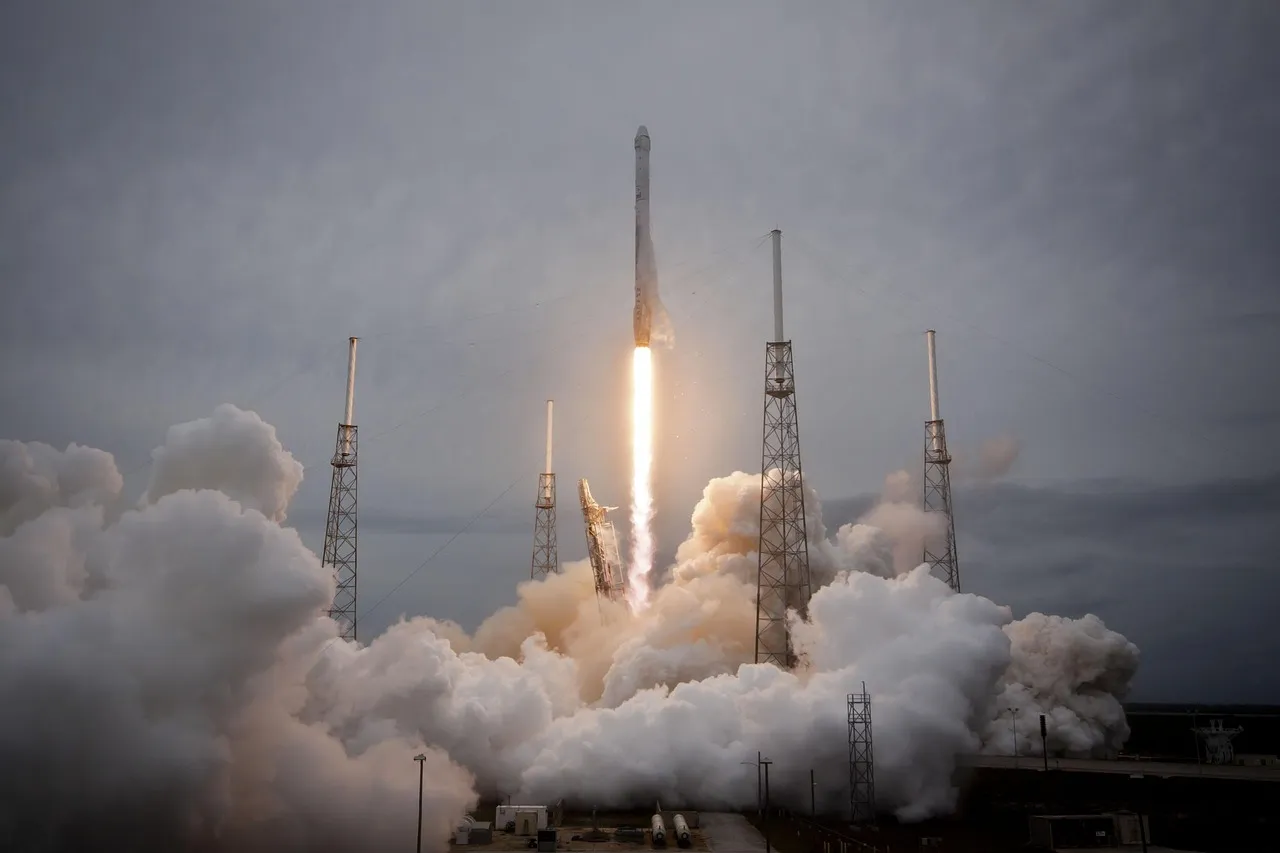
VERMILION PARISH, 27 AUG 2026 — SpaceX is building what it calls Starbase Louisiana, a US$100bn launch complex on 125,000 acres of former Exxon land on the state's southern coast. Construction is scheduled to begin by the end of 2027, with initial operations expected in 2030.
State officials describe it as the largest capital investment in Louisiana's history. President Gwynne Shotwell likened it to a small city, with at least 3,000 residents and as many as 10,000 permanent jobs.
The figures that got garbled in the retelling
Summaries of this announcement have already produced a different set of numbers from the ones the company gave, and the divergence is instructive.
Several accounts report roughly 3,000 jobs. The 3,000 figure describes the resident population of the community Shotwell was sketching; the employment figure she gave was up to 10,000 permanent positions, of which she expects local residents to fill between 60 and 80 per cent.
The dates have drifted too. Construction is described as beginning by the end of 2027 and operations as commencing in 2030, which has been compressed elsewhere into a first launch in 2029.
This is not bad-faith reporting. It is what happens to numbers during summarisation. The corrections matter because 3,000 against 10,000 jobs, or 2029 against 2030, describe two very different projects.
Why the Gulf coast
Rockets launch over water so that anything shed or lost on the way up falls where nobody lives. That, rather than land price, is why launch sites are coastal.
A site on Louisiana's southern coast, roughly 200 miles west of New Orleans, offers open Gulf to the east and south. It also sits at a lower latitude than most American alternatives, which gives a launch marginally more help from the earth's rotation — a small advantage that compounds over thousands of flights.
The site is remote in the specific way this work requires. Pecan Island is a small rural community about 50 miles south-southwest of Lafayette, which means very few neighbours to be woken by a Starship static fire, and correspondingly little existing infrastructure to build on.
A fourth site buys regulatory headroom, not just pads
More launch sites obviously mean more launches, and the reason is more subtle than pad count.
A site's flight rate is not set by its number of pads alone. It is also capped by its environmental authorisation, by how often surrounding airspace and sea lanes can be closed, and by the noise the local community will absorb. Each of those is negotiated per site, and each is a ceiling that more concrete does not lift.
Raising a cap at an existing site means reopening a review that took years to complete, with every party who objected the first time still present. Opening a new site in a place with almost no neighbours starts that clock fresh, in a jurisdiction whose government is publicly enthusiastic.
The 125,000 acres are therefore less about room for concrete and more about distance from anyone with standing to complain. That distance is the scarcer resource.
Building on land that is disappearing
The coastal site has a complication obvious to anyone in the region, though the announcement did not mention it.
Louisiana's coast has been losing land for decades, through subsidence, sea level rise, canal cutting and the levee system that stopped the Mississippi from depositing the sediment that built the delta in the first place. Vermilion Parish is squarely in that landscape, and it is exposed to Gulf hurricanes.
A facility designed to operate for decades on that coast is a substantial engineering commitment before a single launch pad is poured — elevation, storm hardening, and a plan for what happens when a category four arrives during a launch campaign. Those costs are presumably inside the US$100bn, and none of them has been described.
The former Exxon ownership is its own footnote. Land held for decades by an oil major on the Louisiana coast comes with an environmental history, and what remediation the site requires has not been made public.
Louisiana is collecting very large commitments
This is not the state's first enormous industrial announcement this year. Amazon has committed US$18bn to a third data centre campus there, a project with its own water and power requirements.
Louisiana's development strategy is clear. It offers cheap land, available power, a coastline and a state government that competes hard on incentives. That is a coherent development strategy and it has evidently worked.
What is consistently missing from coverage of such announcements is the other side of the ledger. Investments of this scale are negotiated alongside tax abatements, infrastructure commitments and workforce programmes, and those are public costs. The headline figure is what the company says it will spend; the figure that would let a resident judge the deal is what the state agreed to forgo, and that is rarely announced on the same day.
What a hundred billion dollars means in an announcement
The number deserves the same scepticism as any headline investment figure, and for structural reasons rather than suspicious ones.
A US$100bn programme running from 2027 into the 2030s is a projection of cumulative spending over a decade or more, contingent on the Starship programme continuing to need this much capacity, on regulatory approvals, and on the company's finances across that entire period.
Announced totals of this kind are best read as intentions scaled to the ambition rather than as budgets. That applies to any multi-decade industrial commitment announced at a press conference with a governor present.
The figures that will actually indicate whether this happens are smaller and duller: permits filed, dredging contracts let, and the first concrete poured by the end of 2027.
What it means from here
For readers in this region the relevance is launch capacity rather than Louisiana. Satellite deployment, and increasingly the connectivity that depends on it, is bounded by how often a heavy-lift vehicle can fly.
A fourth and largest launch site is a bet that the constraint on Starship will be pad availability rather than demand. If that proves right, the cost of getting mass to orbit continues falling, and everything downstream of it — broadband to places without cable, earth observation, regional space programmes buying rides rather than building rockets — gets cheaper on the same curve.
The 2030 date is the discipline here. Initial operations then means the effects reach a customer in this region well into the next decade, which a great deal of the coverage has missed.

View author profile → · Editorial policy