Abbott — the company that makes everything from glucose monitors to cardiac stents — just led a US$55 million round into a startup using quantum physics to reimagine both cancer imaging and drug development. That combination, in one company, is still rare enough to be worth paying attention to.
What NVision Actually Does
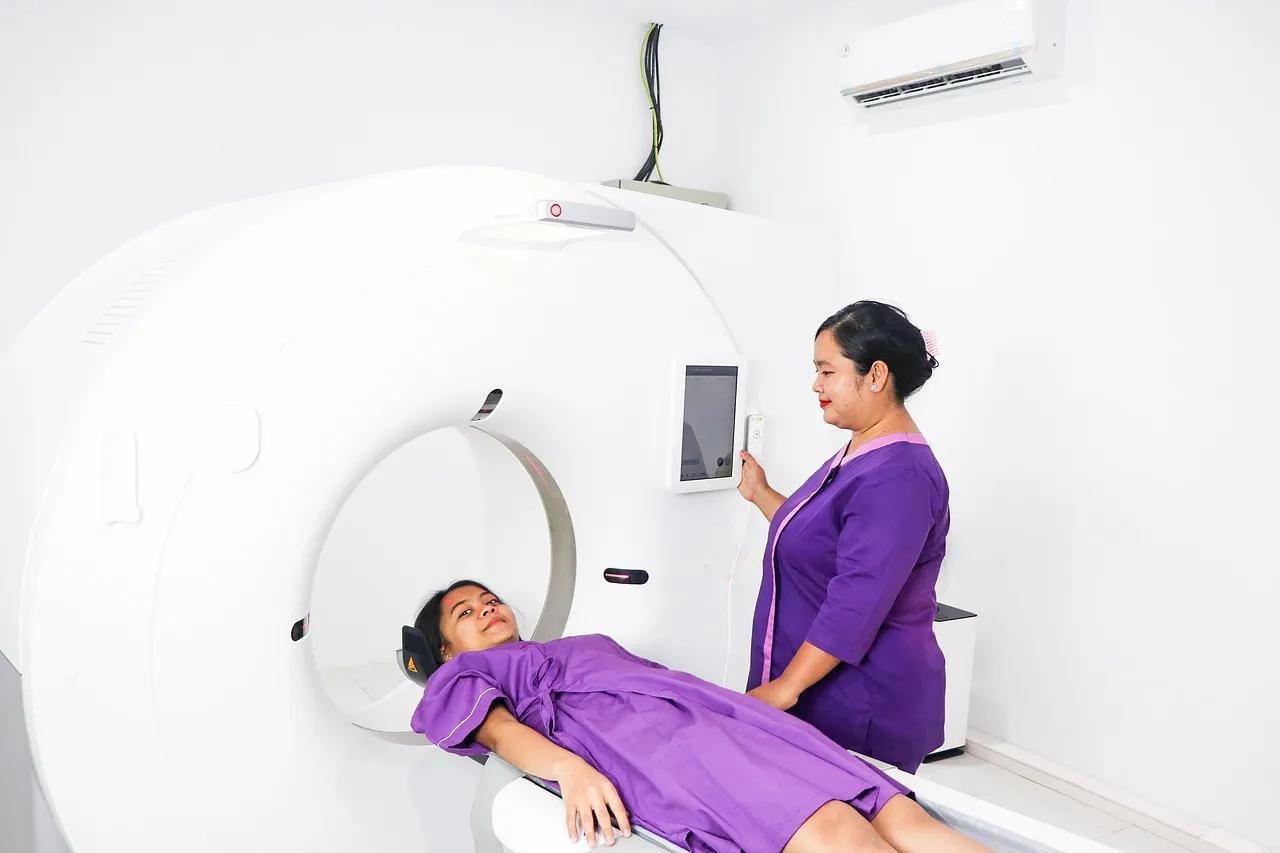
Founded in 2015 and headquartered in Ulm, Germany, NVision Quantum Technologies built its name around POLARIS — a quantum-enhanced sensing platform that amplifies the MRI signal from sugar-based imaging agents by orders of magnitude. In plain terms: where a conventional MRI might show you a tumour's size weeks after treatment starts, POLARIS can detect how that tumour's metabolism is responding within hours to days. The difference matters enormously in oncology, where earlier reads on treatment response can spare patients from ineffective courses of therapy.
POLARIS systems are being installed at sites including Memorial Sloan Kettering Cancer Center, the University of Cambridge, and the Technical University of Munich. The company expects around 20 deployments across the US, Europe, and Asia by the end of 2026.
The New Bet: Organic Molecule Qubits on Photonic Chips
The bigger news in this round is not the MRI side. During POLARIS development, NVision says its researchers identified an entirely new class of organic molecule-based qubits. These molecules emit single photons and can be integrated as a thin organic layer directly onto photonic chips — forming the basis of what the company now calls PIQC (Photonic Integrated Quantum Circuits, pronounced "Pixie").
The approach is architecturally different from the superconducting qubits that IBM and Google have built their quantum computing programmes around. Superconducting systems require cooling to near absolute zero; the organic-photonic route is designed to be more compatible with standard semiconductor manufacturing and, potentially, with clinical environments. Whether that advantage holds up at meaningful qubit counts remains to be proven, but the direction is deliberate.
The plan is to use PIQC to simulate and design drug molecules for hard-to-treat diseases, then validate candidates directly in living biological systems using POLARIS. CEO and co-founder Sella Brosh put it plainly: "I see a future where quantum computers generate an explosion of drug hypotheses for diseases that are exceptionally difficult to treat today."
Who Put in the Money
Abbott anchored the round as the sole strategic investor in diagnostics, joined by Playground Global, Matterwave/b2ventures, Entrée Capital, and CDP Venture Capital. The European Investment Bank contributed a US$17 million venture loan, bringing the full raise to US$55 million and total funding to US$120 million since founding.
Abbott's rationale, per Peter Karabatsos, Divisional Vice President of New Technology at Abbott: the investment gives the company early access to quantum sensing and computing capabilities for disease detection and monitoring. That is a measured framing — "early access" rather than a commercial deployment commitment — but it signals that a major medical-device incumbent is now hedging toward quantum-native infrastructure, not just AI. The "New Technology" remit in Karabatsos's title is itself telling: this sits inside Abbott's forward-looking function, not its commercial product division.
Why This Is Different from the Usual Biotech Raise
Most quantum-in-healthcare stories are still at the "we believe this will eventually be useful" stage. NVision is unusual in that its sensing hardware is already being installed in clinical research settings — the first cancer-centre installations are under way, not merely projected. The quantum computing expansion is still early-stage, but the company is not starting from a blank sheet: the organic molecule qubits emerged from the same research programme that produced POLARIS, giving it a tighter connection between the two platforms than most "quantum drug discovery" pitches can claim.
The combination of compute (design a drug molecule) and validate (confirm it works in a living system, fast) in a single integrated pipeline is also genuinely novel. Whether the photonic qubit approach scales, and whether the drug-design outputs hold up in larger trials, are open questions. But the structure of what NVision is attempting is coherent in a way that warrants watching.
Correction, 18 October 2026: An earlier version said POLARIS systems were already installed at the named cancer centres; NVision said they are being installed. Abbott's role is now described as NVision stated it, as the sole strategic investor in diagnostics, and an unconfirmed list of earlier backers has been removed.

View author profile → · Editorial policy