14 SEP 2026 — Eleven thousand people wore a light sensor on their wrist for a week. Three years later they had their hearts scanned. The ones who had slept in more light had thicker left-ventricle walls, less room inside the chamber, and early signs that the muscle was not flexing as well as it should.
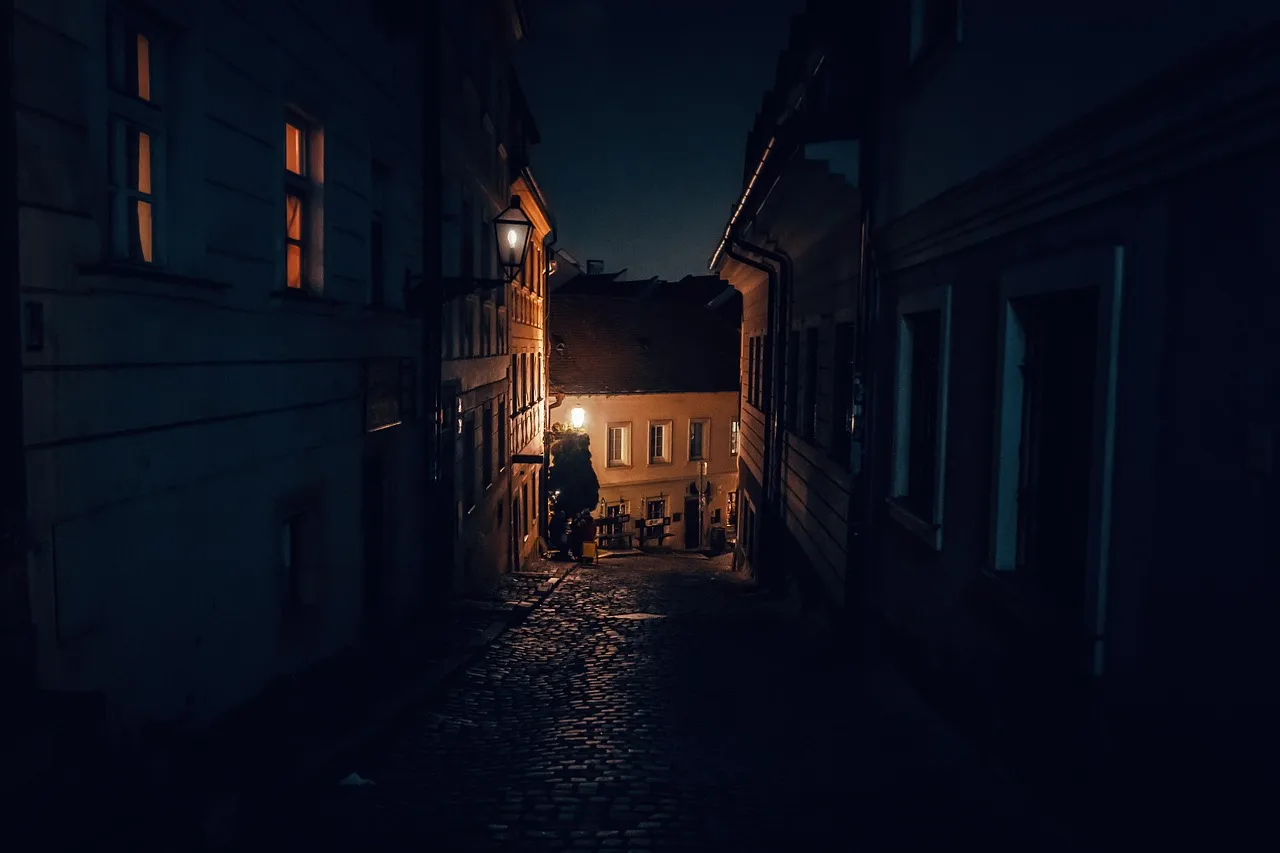
The threshold in the comparison is the number worth carrying away. Researchers set it at more than three lux against almost no light at all. Three lux is not a lamp. It is a streetlight through thin curtains, or a television left on standby across the room.
How the measurement was done
The work was published in the European Heart Journal on 10 September and led by Professor Lu Qi of Tulane University in New Orleans. It draws on 11,071 participants in the UK Biobank, a long-running cohort with the kind of follow-up that makes this sort of question answerable at all.
Each participant wore a wrist-mounted light sensor for seven days, which is the part that separates this from most research on the subject. Studies of night-time light usually rely on satellite imagery of outdoor brightness or on people estimating their own bedroom conditions, and neither measures what actually reaches a sleeping person. A wrist sensor does.
Cardiac MRI scans followed roughly three years later. The gap matters: the exposure was measured before the outcome was imaged, rather than both at once, which is a stronger design than most of what gets reported in this area.
What the scans showed
The headline finding is thickening of the wall of the left ventricle, the chamber that pushes blood out to the rest of the body, with a corresponding reduction in the space inside it. There were also changes in the right ventricle and the left atrium, and signs that the heart muscle was less able to flex during a beat.
That pattern has a name in cardiology — remodelling — and it is not a diagnosis. It is the structural change that tends to precede one. A thicker, stiffer left ventricle is associated with heart failure and with atrial fibrillation, and it is the sort of thing a cardiologist would want to explain rather than ignore.
What it does not show
It does not show that light at night damages hearts. This is observational, and the usual objection applies with real force here: the people sleeping in brighter rooms are not a random sample of everybody.
Brighter sleepers are more likely to live on busy roads, with the traffic noise and air pollution that come with them. They are also more likely to be shift workers, which is separately and strongly linked to cardiovascular disease, and more likely to sleep badly, to live in denser housing and to sit further down the income distribution. Every one of those is its own cardiac risk factor. Studies adjust for what they can measure, and residual confounding is what remains after they do.
The accompanying editorial by Professor Thomas Münzel of the University Medical Center Mainz argues the case is stronger than that objection allows: biologically coherent, clinically meaningful effect sizes, and an unambiguous dose-response. Dose-response is the strongest of those three. When more of the exposure produces more of the effect in a consistent gradient, coincidence becomes a harder explanation. It is still not proof.
Why the mechanism is plausible
Light at night suppresses melatonin and shifts the circadian clock, and the cardiovascular system runs on that clock. Blood pressure is supposed to drop overnight — clinicians call the failure to do so non-dipping, and it is an established predictor of exactly the kind of structural change this study found.
So there is a route from the exposure to the outcome that does not require anything exotic. A plausible mechanism does not establish causation either, but it does make the association harder to dismiss as an artefact.
What a reader can reasonably do
The intervention here is unusually cheap, which changes the calculation. Most contested health findings ask for something costly or unpleasant. This one asks you to make your bedroom darker.
Blackout curtains or a sleep mask deal with light from outside. Standby lights on televisions, chargers and air-conditioning units are the indoor source people forget, and a strip of tape solves them. A phone face-down or out of the room removes the rest.
None of that has a plausible downside. The reason to consider it is not that the study proved anything, but that the cost of acting on an unproven risk is close to zero. If you already have a diagnosed heart condition, this is a conversation for your doctor, and nothing here is a substitute for one.
What would settle it
Replication in a cohort that is not UK Biobank comes first. That cohort skews healthier, whiter and more affluent than the population it was drawn from, and a result that only appears there is a result about that group.
An intervention trial would settle it properly. Randomising people to darker bedrooms is feasible, unlike most exposures of this type, and nothing short of that will separate the light from everything that travels with it.
The three-lux figure is the part most likely to be misused. It will be quoted as a safety limit. In this study it was the boundary of a comparison.

View author profile → · Editorial policy