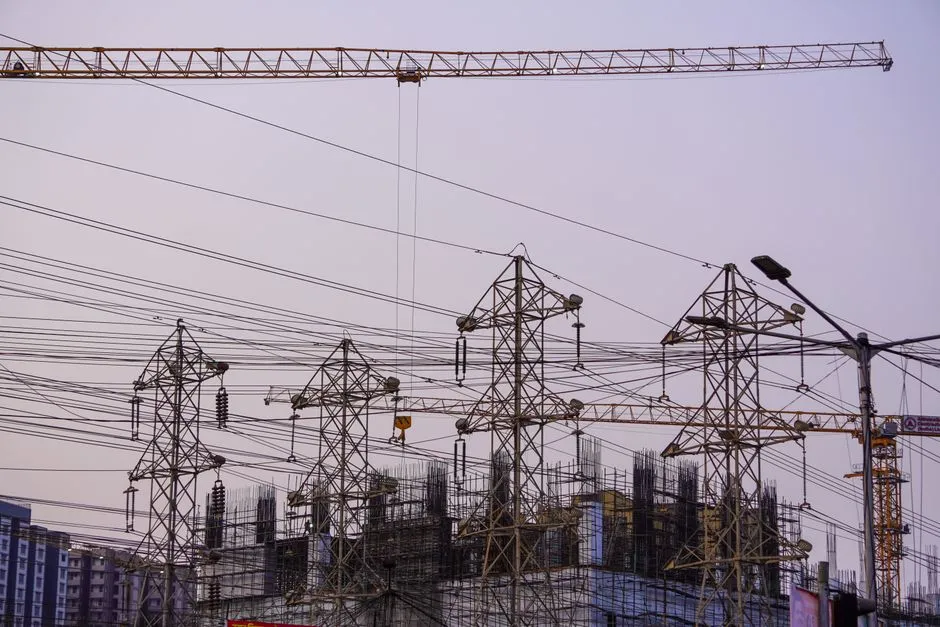
Southeast Asia has spent two years being sold as the next great data-centre frontier, and the investment figures are real. But the region is now running into limits that capital cannot remove quickly: power, grid readiness, water and cooling infrastructure. In Johor — the Malaysian state that has become the build-out's centre of gravity — the government is already turning away some projects whose cooling requirements its water infrastructure cannot yet support. Singapore is releasing new capacity only through a calibrated process, and Indonesia's ambitions are tied closely to grid readiness and its energy mix. The useful way to read the ASEAN data-centre story in 2026 is that the megawatts, not the announcements, have become the binding constraint.
The constraint is also not a single shortage. In Johor, the immediate problem is water-supply infrastructure for liquid cooling and energy-efficiency screening; in Singapore, it is land, power and sustainability limits; in Indonesia, it is grid readiness and energy mix. They are related pressures, but not the same one, and they call for different fixes.
The scale of the build-out
Johor state executive councillor Lee Ting Han told Nikkei Asia that the state has 15 operational data centres, 11 under construction and 25 approved, for a combined capacity of about 5.3GW — a pipeline that, on the reporting of Nikkei and industry observers, has made Johor one of Southeast Asia's fastest-growing data-centre hubs, fed by overflow from neighbouring Singapore and the incentives of the Johor-Singapore Special Economic Zone. The named projects are large and specific. YTL Power has completed an Nvidia-powered AI data centre — running liquid-cooled NVL72 Grace Blackwell (GB200) systems — at its 600MW Green Data Center Park in Kulai, now operating as the YTL AI Cloud. A Telekom Malaysia-Nxera joint venture has topped out a 280MW campus in Iskandar Puteri, and DayOne, the international arm spun out of China's GDS, committed around US$3.5 billion to Johor. Large cloud-provider investment has followed, including multibillion-dollar commitments in Malaysia.
The pull factors are straightforward — cheaper land and power than Singapore, physical proximity to Singapore's connectivity, and supportive state policy. The result is that Johor now develops several times its current operational capacity, and Malaysia as a whole has become a genuine challenger to Singapore's long-standing regional dominance.
Where the build-out meets its limit
The constraint is physical, and Johor is the clearest example. Nikkei Asia reported that the state's investment-review committee has begun rejecting new data-centre applications that rely on water-hungry liquid cooling, because the water-supply infrastructure cannot yet support them. Lee Ting Han said Johor is building three new water-supply facilities, with the first phase due in June 2027, and is telling applicants to change their cooling approach or risk refusal. Ember separately reports that Johor has rejected almost 30% of data-centre applications, citing energy efficiency among the reasons, and projects that Malaysia's data-centre electricity demand could rise from about 8.5TWh in 2024 to around 68TWh by 2030. Those are projections, not certainties, but they show the size of the infrastructure challenge.
This is the part of the story the investment announcements gloss over. A data centre is not just a building and a contract; it is a sustained draw on the grid and, for many designs, on the local water supply. When that draw outpaces local infrastructure, the limiting factor stops being demand or capital and becomes whether the megawatts and the cooling water physically exist. Johor's response — vetting applications and pushing back on the thirstiest designs — is what that limit looks like in practice.
Singapore: the command centre that rations growth
Singapore illustrates the same constraint from the other direction. MDDI told Parliament in February 2026 that Singapore's total data-centre capacity exceeds 1.4GW and that the country hosts more than 70 cloud, enterprise and co-location data centres. A month later, MDDI said Singapore has no fixed upper limit for total capacity but works within its resource constraints and long-term environmental commitments, assessing new-capacity applications through a competitive process that weighs power and water efficiency. Around the same time, the Economic Development Board's Green Data Centre Roadmap set out plans to add at least 300MW of new capacity — and potentially much more — provided it is matched by efficiency gains and greener energy, and the government has signalled a proposed Digital Infrastructure Act that would hold existing and new data centres to power-usage-effectiveness standards.
The model is deliberate: Singapore remains the region's mature connectivity and cloud command centre, but capacity growth is rationed by land, power and sustainability limits rather than by demand alone. That overspill is a large part of why Johor grew so fast — and why Johor now feels the physical limits Singapore chose to manage through caps.
Indonesia: ambition ahead of the grid
Indonesia has the region's largest domestic user base and major data-centre ambitions, but the energy constraint is visible there too. Ember notes that Indonesia had around 307MW of operational data-centre capacity as of February 2025, concentrated around Greater Jakarta with Batam emerging as a secondary hub, and flags risks tied to the country's coal-heavy power mix. The macro backdrop has not helped: analysts at Fitch and Moody's both moved Indonesia's sovereign outlook to negative in April 2026, which tends to raise the cost of the capital that grid and data-centre projects need. Industry analysts have estimated that Indonesia, Vietnam, Malaysia and Thailand together need on the order of US$155 billion in transmission upgrades by 2030 to move power — much of it intended to be solar — from where it is generated to where the data centres are. Those are analyst estimates rather than settled figures, but the direction is consistent: announcing a campus is the easy part; powering and cooling it reliably is the hard part, and that is where the gap between ambition and delivery is widest.
The counter-case: constraints are being worked, not ignored
It would be wrong to present this as a region that has hit a ceiling. The constraints are being actively addressed rather than simply absorbed. Johor is building the water facilities it needs; Malaysia is developing large-scale solar to supply the Johor-Singapore zone and has committed to grid upgrades; Singapore is releasing capacity in step with efficiency rules; and across the region, operators are turning to on-site renewables and higher-efficiency designs. The honest framing is not that the build-out is failing, but that it has moved into a harder phase where growth is gated by physical infrastructure and sustainability limits rather than by demand. The risk worth naming is that if grid, transmission and water investment keep lagging the pace of approvals, the region builds capacity it cannot reliably power — and the environmental cost becomes harder to manage.
Key Takeaways
Johor has become one of Southeast Asia's fastest-growing data-centre hubs, with about 5.3GW across 15 operational, 11 under-construction and 25 approved projects, according to Johor official Lee Ting Han via Nikkei Asia.
The build-out is now constrained by power and water: Johor's investment-review committee is rejecting applications that need water-hungry liquid cooling and, per Ember, has rejected almost 30% of applications; new water-supply facilities are not due until June 2027.
Ember projects Malaysia's data-centre electricity demand could rise from about 8.5TWh (2024) to around 68TWh (2030) — a projection, not a certainty.
Singapore (MDDI, Feb–Mar 2026) reports more than 1.4GW across 70-plus data centres and allocates new capacity through a calibrated, efficiency-weighted process with no fixed cap; Indonesia's ambitions run ahead of a coal-heavy grid (Ember: ~307MW operational as of Feb 2025), with Fitch and Moody's moving its sovereign outlook to negative in April 2026.
Constraints are being worked (water plants, solar, grid upgrades, efficiency rules), but analysts estimate the region needs on the order of US$155 billion in transmission upgrades by 2030; the risk is building capacity faster than it can be reliably powered.

View author profile → · Editorial policy