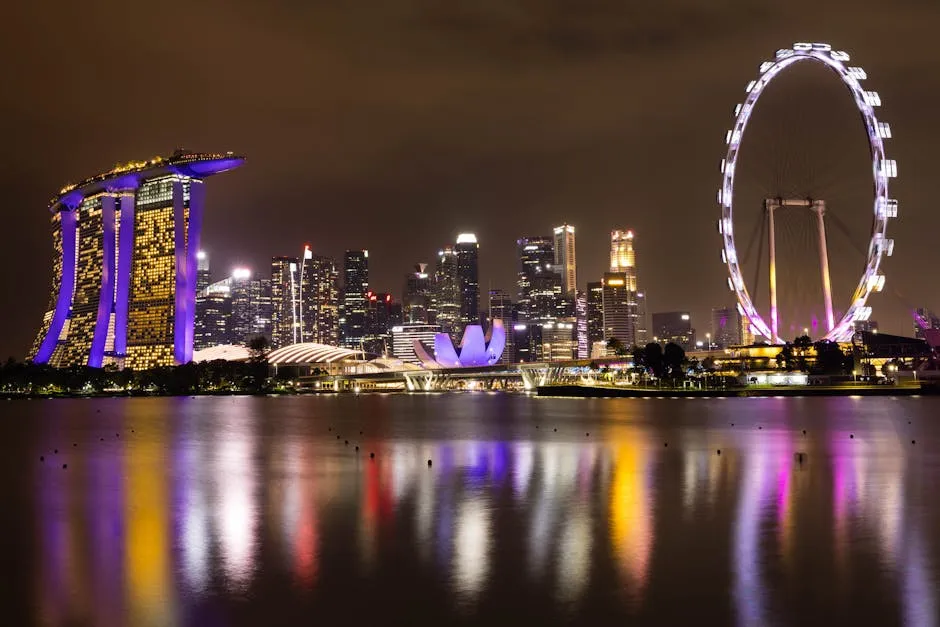
SINGAPORE, 8 MAY 2026 — Singapore Airlines, Malaysia Airlines, Vietnam Airlines, Thai Airways, and Scoot have each announced cabin upgrade and operational modernisation programmes for the second half of 2026, signalling a coordinated acceleration of fleet renewal across Southeast Asia's flag carrier ecosystem at a moment when post-pandemic load factors have recovered sufficiently to justify the capital expenditure that the upgrade programmes require.
The announcements, reported by Travel and Tour World on 8 May 2026, span wide-body aircraft cabin refurbishments, significant frequency increases on key routes, and — the element receiving less headline attention but with the most consequential long-term implications — systematic integration of artificial intelligence into airline operations at every stage from terminal to runway. The passenger-facing upgrades are visible and marketable; the operational AI transformation underway behind them is the structural story that will determine which ASEAN carriers remain competitive through the decade.
Singapore Airlines: The AI-Forward Benchmark
Singapore Airlines has established itself as the most AI-integrated carrier in Asia, a position it has built systematically since 2019 through a combination of internal AI development and strategic partnerships with technology companies. The airline has publicly reported that its AI-powered customer service systems handled over four million customer interactions in a recent twelve-month period — interactions including reservation changes, compensation requests, upgrade queries, and disruption management — without human agent intervention. The quality of those interactions, measured by customer satisfaction scores, was reported to be comparable to human-handled interactions at a fraction of the operational cost.
The operational AI applications extend well beyond customer service. Singapore Airlines deploys predictive maintenance AI across its fleet, analysing sensor data from aircraft systems to identify components approaching failure thresholds before physical symptoms emerge. The financial implications are material: an unscheduled maintenance event that grounds a wide-body aircraft at an outstation — Singapore to Los Angeles, for instance — can cost upwards of US$500,000 in disruption costs, passenger rebooking, and crew positioning. AI that identifies the component failure probability ten days before departure and schedules maintenance during a planned overnight turnaround eliminates those costs entirely.
Revenue management — the algorithmic pricing of seats to maximise yield across the booking window — has been a domain of mathematical optimisation in aviation since the 1980s. Singapore Airlines' current AI-driven revenue management system incorporates real-time competitive pricing signals, forward demand indicators from search data, and macroeconomic variables that earlier systems could not process. The result is pricing that adjusts dynamically at the individual flight level rather than the route-period level, capturing incremental yield that rule-based pricing systems leave on the table.
Changi Airport: AI at Civilisational Scale
Singapore Changi Airport, consistently ranked the world's best airport, is also among the most technologically advanced, and its AI deployment scale reflects the operational complexity of handling approximately 60 million passengers annually across four operational terminals and a fifth under construction. The airport's automated baggage handling system, immigration biometric processing, and smart gate technology collectively represent one of the largest AI-at-scale deployments in civilian infrastructure globally.
Changi's biometric immigration processing — which uses facial recognition and iris scanning to verify passenger identity against travel documents at automated kiosks — now processes the majority of Singapore citizen and permanent resident departures without manual officer interaction. The system's accuracy rate and processing speed have reduced average immigration clearance time substantially, contributing to Changi's consistent performance advantage over competing regional hubs. For the airport's operational management, AI systems monitor terminal crowd density, gate utilisation, and retail queue lengths in real time, enabling dynamic reallocation of staff and resources.
The Jewel Changi development, with its indoor waterfall, retail ecosystem, and multi-modal transport connections, is also an AI-managed environment: visitor flow prediction, retail demand forecasting, and energy management for the 40-metre waterfall's recirculation system are all AI-optimised. The breadth of Changi's AI deployment — from immigration security to waterfall management — illustrates why Singapore's aviation infrastructure is not merely a travel gateway but a technology demonstration at operational scale.
Malaysia Airlines and the Regional Recovery
Malaysia Airlines' cabin upgrade announcement for 2026 arrives at a significant moment in the carrier's history. The airline's recovery from the twin tragedies of MH370 and MH17 in 2014 and the subsequent financial restructuring has been long and demanding. The 2026 upgrade programme signals management confidence that the airline's financial position supports the capital investment required for premium cabin modernisation — a prerequisite for competing for the high-yield business and first-class traffic that Singapore Airlines and Cathay Pacific dominate on trans-Asian long-haul routes.
Malaysia Airlines has been implementing AI in its operations through a partnership programme that has brought in both Western technology companies and Malaysia-based AI capability. Kuala Lumpur's KLIA2 terminal handles a significant proportion of regional low-cost carrier traffic and has been deploying AI-assisted baggage reconciliation and passenger flow management. The carrier's revenue management and crew scheduling systems have been upgraded to AI-driven platforms that match Singapore Airlines' current capability level — closing a gap that was operationally visible in Malaysia Airlines' disruption performance during high-demand periods.
Vietnam Airlines, Thai Airways, and Scoot: The Frequency Story
Vietnam Airlines' inclusion in the regional upgrade announcement reflects Vietnam's rapidly growing aviation market. Vietnam is one of ASEAN's fastest-growing outbound tourism sources, and the country's aviation sector — constrained for years by infrastructure capacity limitations at Noi Bai and Tan Son Nhat airports — is expanding with the acceleration of new terminal construction. Vietnam Airlines has been investing in AI for operational management, with particular emphasis on fuel optimisation — a critical cost variable given Vietnam's geography and the long thin routes between northern and southern Vietnam and international destinations.
Scoot's announcement of significant frequency increases starting June 2026 is the most commercially specific of the five carriers' disclosures. Scoot, Singapore Airlines' low-cost carrier subsidiary, has been expanding aggressively into secondary ASEAN routes — smaller cities in Indonesia, Malaysia, Thailand, and the Philippines that full-service carriers do not serve economically. Frequency increases on these routes reflect demand data that Scoot's AI-driven revenue management system has identified as underserved at current service levels, and represent a specific commercial bet on ASEAN's growing middle-class travel market.
AI, Sustainability, and the Wide-Body Upgrade
The cabin upgrade programmes announced by all five carriers involve wide-body aircraft — the long-range jets that form the backbone of ASEAN's international network. Wide-body renewals are not merely about passenger comfort; they are about emissions performance. New-generation wide-bodies, including the Airbus A350 and Boeing 787 Dreamliner, burn 25 to 30 per cent less fuel per passenger than the aircraft they replace, reducing both operating costs and carbon emissions per revenue passenger kilometre.
Singapore Airlines' fleet renewal programme, which has been ongoing since 2020, has been supported by AI-driven route optimisation that reduces fuel consumption by identifying optimal flight paths in real time based on wind patterns, air traffic control constraints, and weight considerations. The AI-optimised routing system generates fuel savings that, across Singapore Airlines' 130-aircraft fleet, are measured in millions of litres annually — a cost saving that also represents a direct emissions reduction.
The Singapore Tourism Board's data on aviation connectivity's role in Singapore's economic model — aviation enables the movement of the business travellers, tourists, and cargo that collectively underpin Singapore's status as a regional hub — provides context for why the government treats Singapore Airlines' operational performance as a national competitiveness question rather than merely a corporate performance question. When Singapore Airlines' AI systems reduce disruption, improve passenger experience, and optimise yield, the benefits flow through to Singapore's broader economic ecosystem in ways that extend far beyond the airline's own balance sheet.
Sources
- Travel and Tour World — ASEAN Airlines Cabin Upgrades 2026 (8 May 2026)
- Singapore Airlines — Annual Report 2025 / Technology Investment Statement
- Changi Airport Group — Technology Innovation Programme, 2025
- Civil Aviation Authority of Singapore — ASEAN Aviation Market Data, 2026
- Singapore Tourism Board — Aviation Connectivity and Economic Impact Report, 2025

View author profile → · Editorial policy