On 16 September 2026, seal script — 小篆, the formal writing standardised under the First Emperor and still carved on name chops today — was given its own block in Unicode: 11,328 characters at U+3D000 and up, classified as a script in its own right rather than as a style of Chinese. And if you put a normal modern sentence through a seal script converter today, the commonest character in the language, 的, will still come back blank.
Both of those things are true, and together they are most of what there is to know about converting text to seal script. This guide is about what you actually get from a converter, why the gaps are there, and which of them are honest.
What a converter gives you is a typeface, not characters
Until this month, seal script had no codepoints of its own — no numbers in the international character standard that mean "the seal form of this character". Every seal generator therefore worked the same way: it takes your ordinary Chinese characters and draws them in a seal typeface. The characters underneath are unchanged, which is why the seal look evaporates the moment you paste the text somewhere that does not have the font, and why every generator eventually offers you an image instead.
Unicode 18.0 changes that in principle. We read the published data files rather than the announcement: Blocks gives the range U+3D000–U+3FC3F under the name Seal, Scripts assigns it the script property Seal rather than Han, DerivedAge confirms 11,328 characters new in version 18.0, and the characters are named SMALL SEAL CHARACTER-3D000 and so on. They live in Plane 3, an area of the standard set aside for historic Chinese writing.
In practice nothing has caught up. No operating system, phone keyboard or input method ships a font for that range yet, so the practical advice is unchanged: what you can copy out of a converter today is ordinary characters wearing a seal typeface. What has changed is the reason. It is now a statement about tools rather than about the standard, and if you have read elsewhere that seal script "has no Unicode", that page is out of date.
One thing in the new data is a trap worth naming, because it is exactly what a curious person would reach for. Each seal character carries a pointer to a modern character, and it is tempting to count those pointers and announce what percentage of modern Chinese the encoding covers. The standard marks that property provisional and defines it as a handle for referring to the seal character, not a claim about which modern character it is the seal form of — and the data itself shows why that matters: no seal character points at 口, 七, 于 or 句, all of which are in the dictionary beyond any question. We computed a coverage figure from it and threw it away.
Roughly half the characters you use have a seal form anyone can source
A converter leaves gaps because the historical evidence has gaps. Nearly all known seal forms come from one book, the 說文解字, compiled by Xu Shen and presented in 100 CE, which lists characters under their seal forms. If a character is not in it, an honest converter has nothing to draw.
We checked every character of the modern standard table of 8,105 against it.
| characters | seal form recorded | |
|---|---|---|
| the everyday 3,500 | 3,500 | 1,790 (51.1%) |
| the next 3,000 | 3,000 | 1,228 (40.9%) |
| the rarest 1,605 | 1,605 | 555 (34.6%) |
| all | 8,105 | 3,573 (44.1%) |
Barely more than half of the everyday characters, and 44 per cent overall. A converter that never leaves a blank is not better sourced than that — it is setting a font and letting the font draw whatever it has, and a seal typeface will happily produce a confident Qin-looking glyph for 769 characters of that table the dictionary never recorded.
Counting distinct characters, though, treats 的 and 齉 as equals, and running text does not. So we re-ran it weighted by how often characters actually appear, using our own frequency ranking from a count of Chinese Wikipedia. The 200 commonest characters are 51 per cent of everything written. Of those 200, 141 can be drawn as typed, another 45 by falling back to the traditional form, and 14 not at all — which works out at 87.9 per cent of ordinary running text drawn, 69.3 per cent of it without any fallback.
And then there is 的, which is on its own 2.7 per cent of everything written in Chinese and comes back blank. So do 个, 第, 其, 这 and 站. The case of 的 is worth a closer look. It represents a gap in the filing, not a gap in the language: the dictionary does record this word, under the older graph 旳, which does have a seal character in the new Unicode block. Our converter returns a blank for 的 because 的 itself is not a head entry. That is a defensible choice and an annoying one, and it is the single most visible gap you will meet.
Two-thirds in each direction do not overlap
We also counted the dictionary itself rather than repeating a number about it, walking all fourteen substantive chapters of the public transcription. Two results.
The radical sections come to 540 — exactly the 五百四十部 the book's own postface claims, and exactly the number of distinct radical values in Unicode's new seal data. Three unrelated sources, one number; that is the control that says the count is sound.
The head entries come to 9,828, against the 9,353 the postface states. The surplus is not an error in either direction: the transmitted text everyone uses is Xu Xuan's recension of 986 CE, which appends characters Xu Shen never had, and Unicode's data counts those appended characters at 402. Subtract them and you get 9,426, against a major university's figure of 9,430 for the same recension. The transmitted text does not match the dictionary's own count, and that has been known for a long time.
Pitting the dictionary's contents against the modern standard table reduces the whole subject to one observation. Of 9,813 distinct head entries in the dictionary, 3,319 — 33.8 per cent — are still in the modern standard table. Of the 10,387 seal forms our converter can draw, 3,573 — 34.4 per cent — are in that table. Two-thirds of what Xu Shen catalogued has dropped out of modern use, and more than half of what a modern reader writes was never in his book.
Small seal is pruned large seal, and clerical script is its contemporary
The usual potted history runs oracle bone, bronze, large seal, small seal, clerical, regular — a tidy ladder. The dictionary's own postface, which is the earliest connected account we have, is messier and more interesting.
On where small seal came from: when the First Emperor unified the realm, his chancellor Li Si memorialised to unify the script and abolish what did not match Qin writing, and three primers were produced — 「皆取《史籀》大篆,或頗省改,所謂小篆也」. All of them took the large seal of the Zhou-era scribe Zhou and abridged or altered it; that is what is called small seal. Not a new invention: a pruned one.
On clerical script, in the same passage: with official and judicial business heavy, 隸書 first appeared, for speed and ease. The dictionary dates clerical script to the Qin as well. The two were contemporaries — one formal, one the working hand — rather than one succeeding the other, and the excavated evidence pushes the working hand earlier still, to wooden tablets whose own text dates them to 309 BCE, eighty-eight years before unification. Some specialists argue those tablets are better called Qin seal script than early clerical, which is a live disagreement rather than a settled story.
The same postface lists the eight Qin scripts, and the fifth of them is 摹印 — a script specifically for seal impressions, listed separately from small seal. Seal script on chops is not a later aesthetic revival bolted onto an unrelated script; the connection is in the earliest list anyone has.
Simplified characters, and the answer to "should I convert to traditional first"
The common assumption is that simplified characters are twentieth-century inventions and so cannot have seal forms. We compared every character of the 8,105 table with its traditional counterpart. 5,402 are identical in both systems. The 2,703 that differ split like this: for 1,787 only the traditional form is recorded, which is the expected case; for 820 neither is; for 61 both are recorded, and for 35 only the simplified form is — that is, for 35 characters the traditional graph is the later one.
So 96 of 2,703, about 3.6 per cent, are shapes the dictionary already contained. That is the honest version of the claim and it needs a fence around it: a recorded graph is not a recorded word. 几 is a head entry meaning a low table, not the 几 of 几个; 丰 was a different word from 豐. What the count establishes is narrower and still worth knowing — for those 96, the reformers picked up a shape that already existed rather than drawing a new one. The cleanest case is 采, which is a head entry, against 採, which is not: the traditional form is the one with the extra hand radical bolted on.
This data answers the question we are asked most often: should you convert to traditional characters first? It sounds as though it should help, but it does not. On a corpus of 400 four-character idioms, converting each character only when its own form is missing draws 309 idioms completely and 93.5 per cent of characters; converting the whole string to traditional first draws 299 and 92.5 per cent. Blanket conversion destroys twelve already-recorded characters in that corpus alone — among them 采, 于, 群, 游 and 峰 — because it replaces a graph the dictionary has with one it does not. Our converter falls back per character, which is the strategy that measured best.
No law anywhere requires seal script on a chop
The legal status of seal script on chops often surprises people, but the rules are in official documents. In Japan, where personal seals carry real legal weight, script is a free choice; one city's handbook lists five scripts including seal and says any may be used, noting that no statute governs the carving at all. The corporate rule regulates size, not style. Taiwan's household registration authority specifies size, material and the registered name, and bans decorative motifs. And the People's Republic requires the opposite for official seals: a 1999 State Council regulation says the Chinese characters on a seal shall use the simplified characters promulgated by the State Council, in Song typeface. That covers organisational seals rather than a private individual's chop, but it is still a legal instrument pointing away from seal script.
What every jurisdiction does care about is legibility and identity, and where they touch style at all they restrict ornament. There is an irony in that worth sitting with: UNESCO inscribed the art of Chinese seal engraving on its representative list in 2009, in a description that notes how few people can still read the characters — and what is inscribed is the craft of engraving, not the script. Meanwhile the Chinese state requires its own seals in the plainest modern type available.
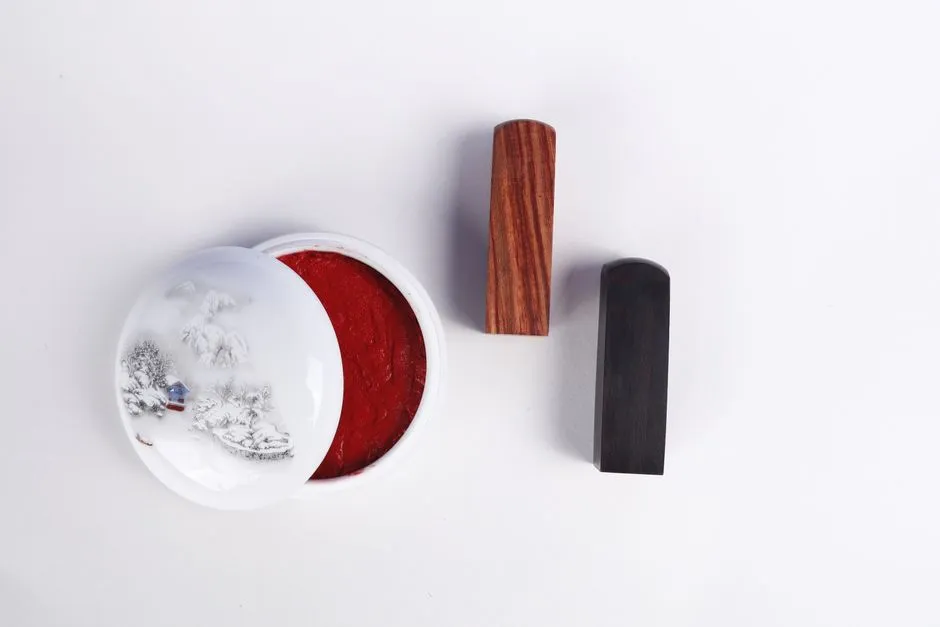
So if you are having a chop carved, seal script is convention and aesthetics, freely chosen. A converter will show you roughly what the characters look like; it will not decide the spacing, the stroke weight, or whether the characters are cut raised or sunk. Those are the carver's decisions, and they are most of the result.
The Unicode facts are read from the 18.0.0 data files published by the Unicode Consortium — Blocks, Scripts, DerivedAge, UnicodeData and the seal source data — fetched on 24 September 2026, with the provisional-property warning taken from the accompanying annex. The dictionary quotations are from the public-domain Wikisource transcription of 說文解字 chapter 15, the postface; it is a transcription, not a manuscript. The chop rules are from the Japanese city handbook, Taiwan's household registration authority and State Council document 国发〔1999〕25号 as published on gov.cn. The coverage counts, the frequency weighting, the simplified comparison, the three conversion strategies and the head-entry count are ours, computed from those public texts on 24 September 2026; the frequency ranking is our own count of Chinese Wikipedia. We did not use the new seal-to-modern pointers to compute any coverage figure, for the reason given above.

View author profile → · Editorial policy