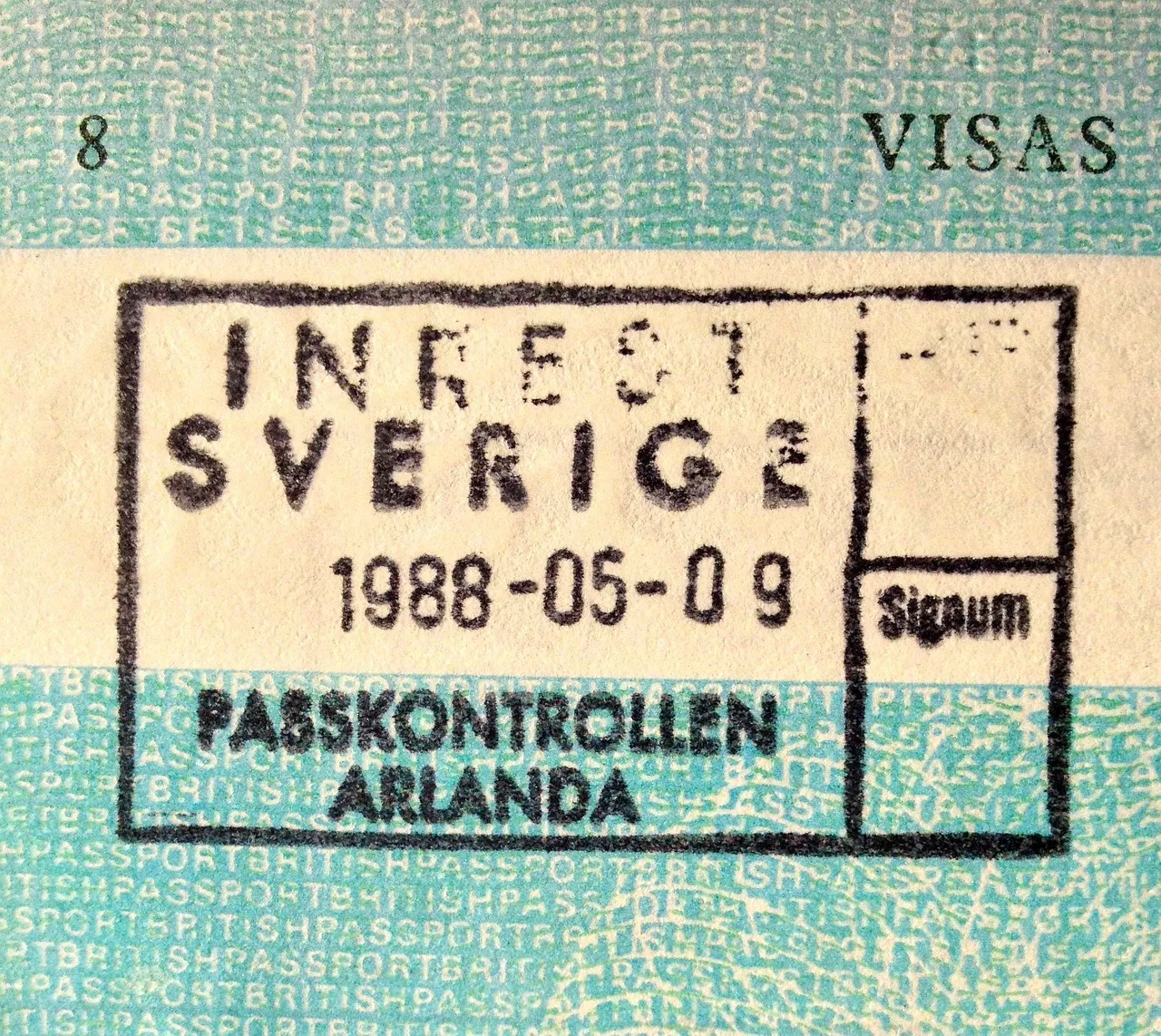
Anyone who has booked a flight in the last decade has met the warning: your passport must be valid for six months beyond your travel dates. Airlines print it, booking sites repeat it, and travel agents treat it as settled international law.
It is not in any international standard. The document that would contain it — ICAO Annex 9, the treaty annex governing how states handle arriving passengers — says something close to the opposite.
What Annex 9 actually recommends
The only provision in Annex 9 about how long a passport should be valid is a recommendation to the issuing state, and it sets a floor rather than a margin:
"Contracting States should normally provide that passports be valid for a period of at least five years, for an unlimited number of journeys and for travel to all States and territories."
A note attached to it recommends a maximum of ten years, "in consideration of the limited durability of documents and the changing appearance of the passport holder over time". Nothing there asks a traveller to hold unused validity in reserve.
The six months that does exist, and what it covers
Annex 9 does contain a six-month rule. It is about visas:
"When issuing entry visas to prospective visitors, Contracting States shall normally provide that such visas be valid for use within a period of at least six months from the date of issue…"
⚠️ That is a duty on the state issuing the visa, not a condition on the traveller's passport. The phrase "six months" occurs exactly twice in the Annex's hundred-odd pages: this clause, and an unrelated provision about depersonalising passenger name record data. Searches for the language the rule is usually stated in — "intended stay", "beyond the period" — return nothing at all.
So where does the rule come from
It is real, but it is national and commercial rather than international.
Individual states set their own entry requirements, and many do require a margin of validity. Those requirements are compiled commercially, most visibly in the database airlines use at check-in. Carriers enforce them because carriers are the ones fined for bringing a passenger a destination refuses, so the incentive at the check-in desk is to apply the strictest plausible reading.
The requirements are not uniform, which is the practical tell that no single standard sits behind them. The Schengen area works on three months beyond departure. The United Kingdom, Japan and Australia generally ask only that the passport be valid for the stay itself.
What this does not mean
It does not mean you can ignore the margin. A rule that is national rather than international is still a rule, and the airline applying it will not be persuaded by a treaty annex at the counter. Being denied boarding is the same experience whichever instrument does or does not require it.
⚠️ Nor does it mean the airlines are inventing anything. They are applying real entry requirements published by real states. What is invented is the attribution — the idea that one global standard says six months.
What to do with it
Check the destination, not the rule of thumb, and check it for every country on the itinerary including anywhere you merely change planes. The margin that applies is the one that country publishes.
The practical consequence is worth planning around: a ten-year passport treated as needing six months of unused validity is a nine-and-a-half-year passport, and the last six months of it are effectively unusable for a large part of the world. Renewing on that basis rather than on the printed expiry date avoids discovering the gap at an airport.
Where this comes from
The quoted provisions are Recommended Practice 3.20 and Standard 3.28 of ICAO Annex 9 (Facilitation), Seventeenth Edition, March 2025, which states that it supersedes all previous editions on 11 July 2025. It was read from a national civil aviation authority's published copy, because icao.int refuses automated requests.
⚠️ The counts above are from that document's own text: "six months" twice, "Contracting States" 339 times, "passport" 31. The same result holds in the superseded Fifteenth Edition of 2017, where the provisions were numbered 3.17 and 3.25 — so this is not a recent change.
What would date this is an amendment to Annex 9 adding a passport-validity margin, or a state changing its own entry requirement. The second happens regularly and is the one to check before a trip.

View author profile → · Editorial policy