Cyber Team is RECATOOLS’ cybersecurity desk, covering vulnerabilities, data breaches, supply-chain attacks, threat intelligence, exploit activity, and security best practices. The desk focuses on practical implications for developers, SMEs, IT teams, and ASEAN organisations.

About this byline

Cyber Team is a specialist RECATOOLS editorial desk focused on cybersecurity coverage. Articles are produced and reviewed under RECATOOLS editorial supervision. The articles listed here keep this byline. New coverage on these beats is published under the persona whose beat it falls in: Kenji Tanaka for vulnerabilities, patching and supply-chain security, and Priya Nair for threat intelligence, attribution and privacy.

Editorial responsibility for this byline rests with Jeffrey Tan (Tan Seng Fei), RECASYS, Singapore. Our Editorial Policy sets out how sources are reviewed, how AI-assisted workflows are used, and how editorial desks and personas are defined.


153
Articles
Cybersecurity
Primary beat
Jan 2026
Writing since
~1054 min
Total reading

Articles · Cybersecurity Showing 31–40 of 140

A wide harvested field with a scattering of hay bales running to the horizon — illustrating a small confirmed-exploitation set inside a very large body of disclosures.
Cybersecurity

Vulnerability Disclosures Will Pass Last Year's Record by August. The Share Anyone Actually Exploits Is Falling

AI code scanning has pushed disclosures to 45,207 in seven months. Our own count of the exploited-vulnerabilities catalogue shows the confirmed-exploitation side rising far more slowly.

1 Aug 2026 · 5 min read
Aerial view of a municipal water treatment works with circular settling tanks — illustrating the kind of small utility reached in this attack.
Cybersecurity

Thirty Minnesota Water Utilities Were Hit in One Weekend. The Flaw at the Centre Is Five Years Old and Has No Patch

A coordinated attack reached operational technology at more than 30 municipal water systems. One plant went offline for two hours, and staff recovered it by hand.

1 Aug 2026 · 5 min read
A phone face-down on a wooden desk beside an open paper notebook and a pen, under a single warm desk lamp
Cybersecurity

Account Security You Can Finish in an Afternoon

Four jobs, ordered by how much loss each one prevents, with the arguments settled by the standard rather than by folklore. NIST advises against the ninety-day password change and the mandatory symbol; it requires the thing almost nobody does. And while writing this we found our own passphrase generator defaulting to something that cracks in ninety seconds while calling it Reasonable — so that is in here too, with the fix.

1 Aug 2026 · 9 min read
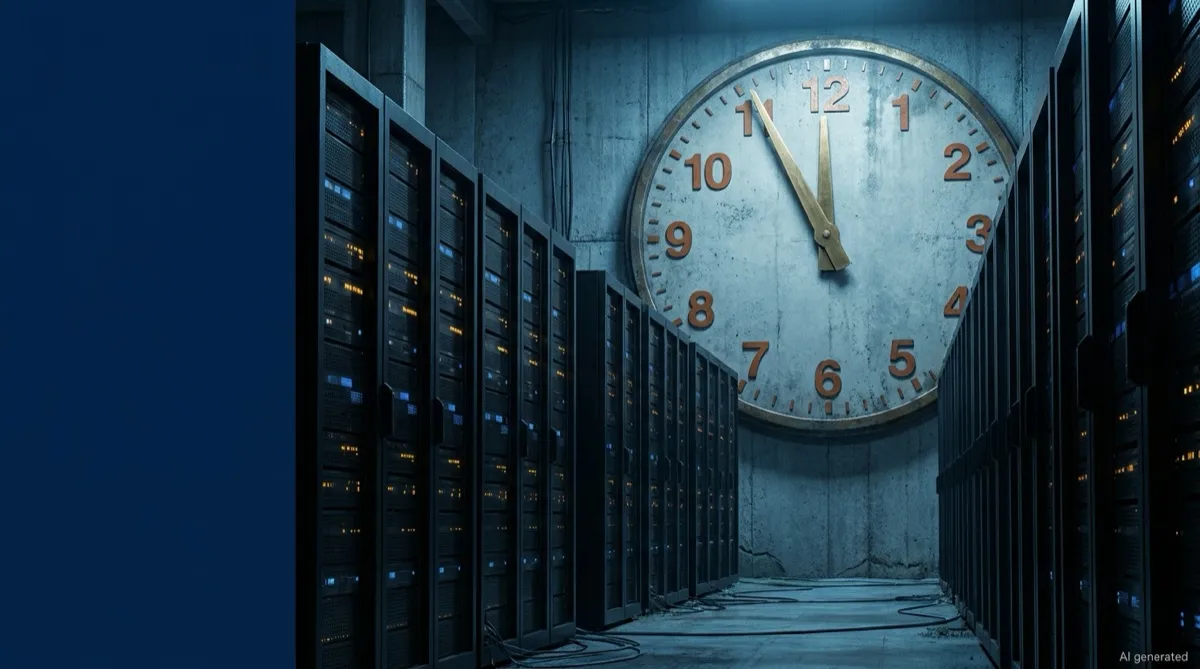
Darkened hall of server cabinets with a wall clock close to midnight — illustrating the three-day remediation clocks these SharePoint entries carried.
Cybersecurity

Four SharePoint Flaws Entered CISA's Catalogue in Twenty-Two Days — One Left a Single Working Day

CVE-2026-50522 was exploited hours after proof-of-concept code appeared, and stolen machine keys survive the patch. Our reading of the catalogue shows four of the fourteen SharePoint entries CISA has ever listed arrived this month.

29 Jul 2026 · 6 min read
Ethernet patch cables plugged into a network switch.
Cybersecurity

Check Point Confirms an Exploited SmartConsole Bypass — Its Second KEV Entry in Forty-Four Days

The advisory is exemplary and the hotfix shipped the same day. The pattern behind it is the story: two of Check Point's three all-time KEV entries landed this summer, both authentication bypasses.

26 Jul 2026 · 6 min read
A retro time clock and stack of punch cards against a dark brick wall in an industrial setting.
Cybersecurity

CISA's Patch Deadlines Collapsed From 21 Days to Three — and It Started Four Months Before the Directive That Gets the Credit

We measured every deadline in the KEV catalog's 1,653 entries. The 21-day window was retired on 5 March; BOD 26-04 arrived on 10 June. Ten of the 32 three-day clocks since then contain a single working day.

26 Jul 2026 · 7 min read
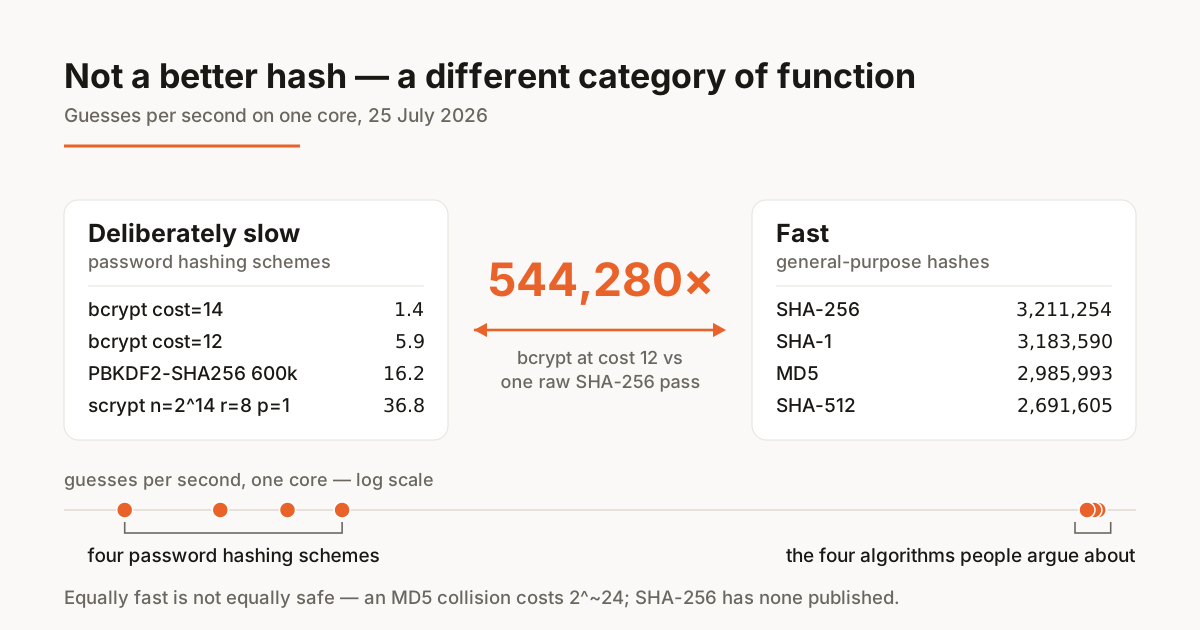
Two categories of hash function on one scale: four deliberately slow password hashing schemes at 1.4 to 36.8 guesses per second, and four fast general-purpose hashes near three million, separated by a factor of 544,280.
Cybersecurity

Which Hash for What: MD5, SHA-256, and the Password Mistake

"MD5 is broken, so hash your passwords with SHA-256 instead" gets both halves wrong, in opposite directions. What broke in MD5 was collision resistance, which password storage never relied on; what makes SHA-256 unfit for passwords is speed, which MD5 shares. This guide separates a collision from a preimage — 2^63.1 against 2^160 — measures four hash functions at three million guesses a second on one core, and ends with a table of which algorithm belongs on which job.

25 Jul 2026 · 22 min read
A snowy directional signpost showing distances to cities from Jonkoping, Sweden.
Cybersecurity

Who Sees Your DNS? DoH, DoT and What Encrypted DNS Actually Hides (2026)

DoT, DoH and DoQ encrypt your DNS queries, but destination IPs, the TLS SNI and your resolver still see plenty. What the RFCs actually promise, 2026 state.

22 Jul 2026 · 12 min read
A close-up of a black leather briefcase with a brass combination lock.
Cybersecurity

That 30-Second Code: How Authenticator Apps Actually Work (2026)

The six digits in your authenticator app come from two short public standards. We walk the algorithm step by step and untangle what NIST really said about SMS.

21 Jul 2026 · 12 min read
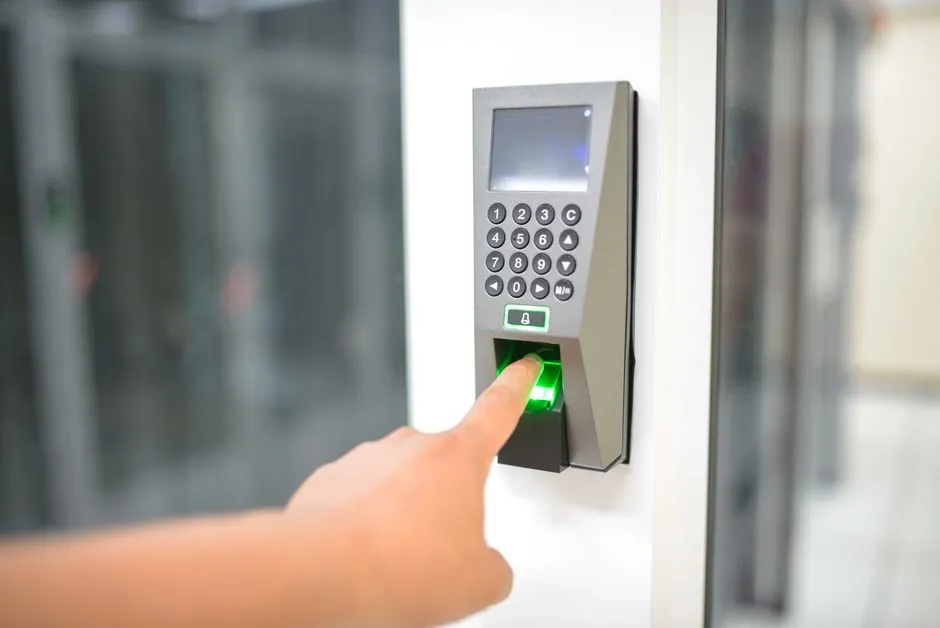
A person using a fingerprint scanner for secure entry in an office.
Cybersecurity

Passkeys Explained: What Actually Replaces Your Passwords (2026)

What a passkey is per the WebAuthn spec, NIST's synced vs device-bound line, recovery on Apple, Google and Windows, and why portability is still a draft.

21 Jul 2026 · 12 min read
Editorial Policy →